




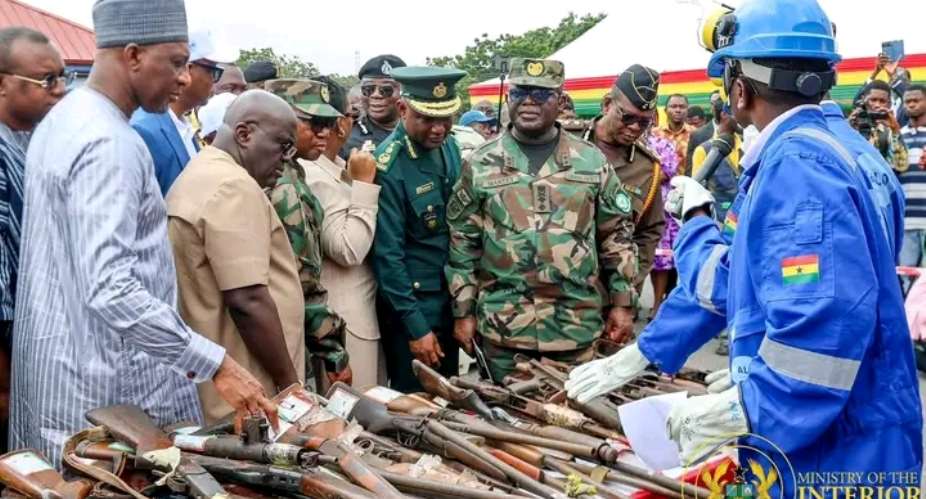
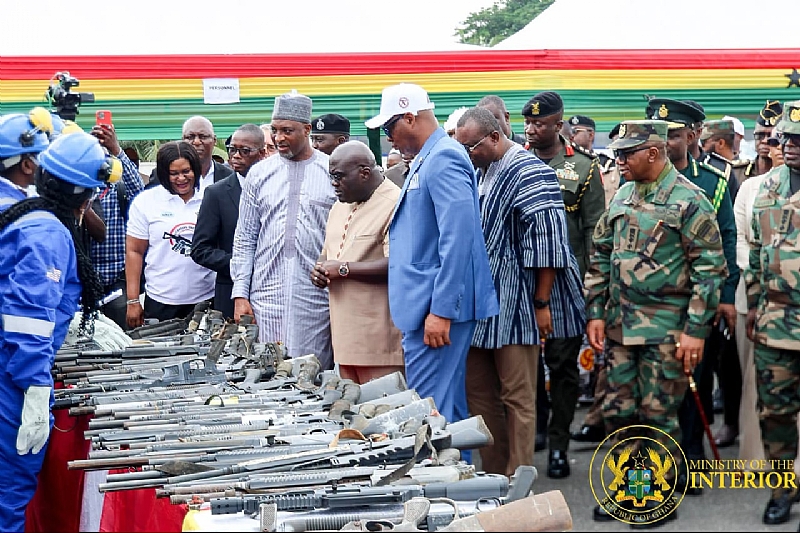
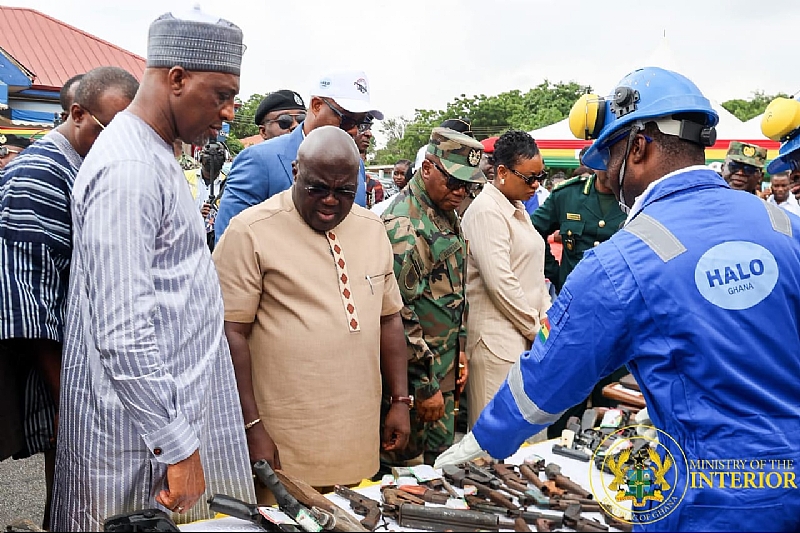
The Republic of Ghana marked its 8th Arms Destruction Ceremony on Thursday, 9th July, 2026, following a Gun Amnesty Programme that ended in January 2026. The Arms Destruction Ceremony, which also marks the United Nations Small Arms Destruction Day, is part of ongoing national and international efforts to strengthen peace, security and public safety by destroying illicit, recovered and obsolete small arms.
The ceremony was organised by the Ministry of the Interior, under the leadership of Hon. Muntaka Mohammed-Mubarak, in collaboration with the National Commission on Small Arms and Light Weapons, the Ghana Police Service, the Ghana Armed Forces and the National Security Council Secretariat.
The periodic destruction of seized and surrendered firearms by the Government of Ghana often raises questions among the general public. Some wonder why firearms confiscated from criminals or recovered during security operations are not simply refurbished and issued to the Security and Intelligence Agencies, notably the Ghana Armed Forces, the Ghana Police Service, the Ghana Prisons Service and others. Such a plan may initially seem economical, particularly given the logistical constraints faced by the Security and Intelligence Agencies. However, seized firearms marked for destruction should never be returned to operational use based on the legal, operational, forensic and national security standpoints.
Destroying confiscated firearms is a deliberate policy meant to lessen the risks associated with illegal firearms and increase public confidence in the country's firearms control system.
 Chief of Staff Julius Debrah and Interior Minister Muntaka Mohammed-Mubarak
Legal Status of Seized Firearms
A seized firearm is one confiscated by law enforcement during criminal investigations, intelligence operations, border interceptions or by the ruling of the court. Once the judicial process has concluded and the firearm is forfeited to the State, the appropriate authorities determine its final disposal.
A firearm essentially leaves the State's inventory when it is determined to be unsuitable for retention, or when it is formally authorised for destruction. The integrity of the disposal procedure would be compromised and there would be doubt about the fate of confiscated weapons if they were returned to operational use.
Unknown History and Integrity of Seized/Surrendered Firearms
Unlike arms and ammunition procured from certified manufacturers through licensed Arms and Ammunition Dealers, seized firearms often have unknown or questionable histories. Many may have been illegally manufactured, smuggled across borders, modified to increase their lethality or poorly maintained. Others may also have been used extensively in criminal activities.
Because their complete maintenance and ownership history cannot be reliably established, their mechanical integrity cannot always be guaranteed. Even if they appear functional, hidden defects may only become apparent during operational use, placing security personnel at unnecessary risk.
Safety of Security Personnel
The primary responsibility of any security institution is to protect its personnel while safeguarding the public. Issuing seized firearms whose reliability cannot be fully verified exposes officers to potential weapon failures during critical operations. Components weakened by corrosion, excessive wear, poor-quality repairs or unauthorised modifications may malfunction when lives depend on them. Similarly, altered firearms may not meet the operational standards required by Ghana's security agencies. No responsible armoury should introduce such uncertainty into its operational inventory.
Forensic and Evidential Concerns
Many seized firearms have been used in criminal offences, including armed robbery, murder, illegal mining, terrorism and organised crime.
Even after legal proceedings conclude, the firearm itself remains an important forensic object and its history forms part of criminal intelligence records. Returning such weapons to active service complicates future investigations should the weapon reappear in another incident.
Maintaining a clear chain of custody from seizure to destruction preserves the integrity of the criminal justice system.
Preventing Diversion into Illicit Circulation
One of the principal objectives of destroying seized firearms is to ensure they never return to criminal hands. If confiscated weapons were routinely retained for operational use, they would remain in circulation indefinitely, thereby increasing the risk of theft, diversion, corruption or unauthorised transfer.
Destruction permanently removes these weapons from both legal and illegal markets, reducing the number of illicit firearms available domestically, regionally and international.
Standardisation Within Security Agencies
Security agencies rely on standardised weapon systems to simplify training, ensure operational compatibility, simplify maintenance and ammunition supply.
Seized firearms often include numerous makes, models and calibres from different countries and manufacturers. Incorporating such a diverse range of weapons into official inventories would complicate armoury management, increase maintenance costs and reduce operational efficiency.
Standardisation enables armourers to stock appropriate spare parts, train personnel consistently and maintain reliable operational readiness.
Public Confidence and Transparency
The destruction of seized firearms demonstrates that government institutions are committed to accountability and to responsible firearms management. If firearms publicly declared destroyed were later found in operational use or diverted into criminal circulation, public confidence in security institutions would be seriously undermined.
Transparent destruction exercises, conducted under official supervision and witnessed by oversight bodies, assure the public that confiscated weapons have been permanently removed from circulation.
International and Regional Legal Frameworks Prohibiting the Reuse of Illicit, Confiscated and Unserviceable Arms and Ammunition Designated for Destruction by Security and Intelligence Agencies
The idea that illegal confiscated and unserviceable firearms designated for destruction should not be reintroduced into circulation, including for use by security agencies is supported by several international and regional legal instruments. Although these documents do not always explicitly state that "security agencies cannot use seized firearms marked for destruction," they do set out clear requirements to prevent the recirculation of weapons designated for destruction.
The following are the most relevant conventions and standards:
1. United Nations Programme of Action on Small Arms and Light Weapons (UNPoA) (2001)
The UN Programme of Action on Small Arms and Light Weapons (UNPoA), established in 2001, is the key international framework for addressing the illicit trade in small arms and light weapons. It urges States to destroy confiscated or surplus weapons, prevent their re-circulation and enforce strict stockpile management. Ghana has committed to the UNPoA by implementing national arms-control policies to support its objectives.
2. International Small Arms Control Standards (ISACS)
ISACS, developed by the United Nations for the UNPoA implementation, includes ISACS 05.50 – Destruction: Weapons, which guides the destruction of firearms. Key points include ensuring firearms are permanently inoperable to prevent reconstruction, eliminating diversion risks and ensuring destruction occurs only after all legal and investigative requirements are met. The standards advise against returning any weapons approved for destruction to operational use, as this undermines accountability and stockpile security.
3. ECOWAS Convention on Small Arms and Light Weapons, Their Ammunition and Other Related Materials (2006)
This Convention is legally binding on all ECOWAS Member States including Ghana. It aims to prevent the accumulation of illicit firearms, promote the destruction of illegally possessed weapons, reduce opportunities for diversion and strengthen stockpile management. It encourages the destruction of seized weapons unless retention is legally justified. The overall goal is to reduce the number of illicit firearms in circulation.
4. United Nations Firearms Protocol (2001)
The United Nations Firearms Protocol (2001), formally known as the Protocol against the Illicit Manufacturing of and Trafficking in Firearms. This agreement requires States to seize illicit firearms, prioritise their destruction, prevent confiscated weapons from re-entering illicit markets and maintain strict records of seized firearms, emphasising destruction as a safeguard against diversion.
5. Arms Trade Treaty (ATT) (2013)
The Arms Trade Treaty (ATT) regulates the international transfer of conventional arms. It requires State Parties to prevent the diversion of firearms, maintain national control systems, ensure secure management of stockpiles and reduce the risk of unauthorised circulation. Reintroducing firearms designated for destruction may jeopardise these goals by increasing the risk of diversion.
6. United Nations Office on Drugs and Crime (UNODC) Technical Guidelines
UNODC guidance on firearms control emphasises that confiscated firearms should be securely stored pending destruction following judicial proceedings, permanently destroyed when authorised and kept out of illicit circulation to ensure public safety and confidence in the criminal justice system.
Why do the above-mentioned international and regional instruments support non-reuse?
Collectively, these international and regional frameworks are grounded in five key principles:
- Preventing Diversion: Destroyed or condemned firearms cannot be stolen, diverted or trafficked.
- Maintaining Accountability: Once a firearm is designated for destruction, reversing that decision undermines audit trails and stockpile management.
- Protecting Public Safety: Seized firearms often have uncertain histories and may be unsafe or unlawfully modified.
- Reduces Illicit Weapons in Circulation: Permanent destruction reduces the overall number of firearms available for misuse.
- Promoting Transparency: Publicly supervised destruction exercises reinforce confidence in state institutions and demonstrate compliance with international obligations.
Implications for Ghana
As a member of the United Nations and ECOWAS and a State Party to relevant international arms control instruments, Ghana is expected to maintain robust controls over confiscated firearms. Once seized weapons have completed the legal process and are officially designated for destruction, international best practice strongly supports their permanent disposal rather than reintroducing them into the inventories of security agencies. This approach strengthens the rule of law, reduces the risk of diversion and aligns Ghana's arms management system with globally recognised standards.
Better Alternative
Newly procured firearms from licensed Arms and Ammunition Dealers meet certified manufacturing standards, including quality assurance, warranties, technical documentation and predictable maintenance requirements. They also support standardised training and operational capability across all Security Agencies. When Security Agencies require additional firearms, the solution is transparent procurement from authorised manufacturers and suppliers rather than reusing seized illicit weapons.
Conclusion
Seized firearms marked for destruction should never be reintroduced into operational service. Their uncertain history, questionable mechanical integrity, potential forensic significance and the risk of diversion make them unsuitable for use by Ghana's Security and Intelligence Agencies.
Destroying confiscated firearms is not a waste of valuable resources; it is a necessary safeguard that protects security personnel, strengthens the criminal justice system, supports accountability and enhances national security. By permanently removing illicit weapons from circulation, Ghana reinforces its commitment to responsible arms control and the rule of law.
Finally, I wish to commend the current Government of Ghana, under the leadership of His Excellency President John Dramani Mahama and previous governments, for their continued commitment to combating the proliferation of illicit firearms by destroying seized and surrendered weapons. This policy reflects Ghana's adherence to international and regional arms control standards and demonstrates a collective resolve to enhance public safety, strengthen national security and prevent illicit firearms from re- circulation. Sustaining this initiative will further reinforce public confidence in the country's security institutions and contribute to a safer, more secure Ghana.
About the Author
Patrick K. YEBOAH | Analyst | HR Generalist | Systems Administrator |
The author possesses educational and professional background in Peace, Security and Intelligence, Strategic Human Resource Management and Information Technology. Drawing on expertise across these disciplines, he is dedicated to uncovering critical information, fostering strategic thinking and supporting informed decision-making. His multidisciplinary approach reflects a commitment to excellence, integrity and continuous learning. Guided by the enduring mantra, "Honour to the End, in Service for God and Country," In both his personal and professional endeavors, he upholds the principles of professionalism, moral leadership and selfless service.
References
- Economic Community of West African States. (2006). ECOWAS Convention on Small Arms and Light Weapons, Their Ammunition and Other Related Materials. ECOWAS Commission. https://www.ecowas.int/wp-content/uploads/2021/12/Convention-on-SALW.pdf
- Government of Ghana. (1972). Arms and Ammunition Act, 1972 (NRCD 9) (As amended) Assembly Press.
- Government of Ghana. (2023). National Commission on Small Arms and Light Weapons Act, 2023 (Act 1087). Assembly Press.
- National Commission on Small Arms and Light Weapons. (2025). Gun Amnesty Programme. https://www.smallarmscommission.gov.gh/
- National Commission on Small Arms and Light Weapons. (2025). Ghana declares nationwide gun amnesty to reduce illicit firearms in circulation. https://www.smallarmscommission.gov.gh/
- The HALO Trust. (2025). Ghana: Managing weapons to keep the peace. https://www.halotrust.org/where-we-work/africa/ghana/
- United Nations. (2001a). Programme of Action to Prevent, Combat and Eradicate the Illicit Trade in Small Arms and Light Weapons in All Its Aspects. United Nations. https://digitallibrary.un.org/record/446051
- United Nations. (2001b). Protocol against the Illicit Manufacturing of and Trafficking in Firearms, Their Parts and Components and Ammunition, Supplementing the United Nations Convention against Transnational Organized Crime. United Nations. https://www.unodc.org/unodc/en/firearms-protocol/
- United Nations Office on Drugs and Crime. (2011). Criminal justice assessment toolkit: Firearms. United Nations Office on Drugs and Crime. https://www.unodc.org/unodc/en/organized-crime/firearms-toolkit.html
- United Nations Office on Drugs and Crime. (2015). Model law against the illicit manufacturing of and trafficking in firearms, their parts and components and ammunition. United Nations Office on Drugs and Crime. https://www.unodc.org/unodc/en/firearms-protocol/model-law.html
- United Nations. (2013). Arms Trade Treaty. United Nations. https://thearmstradetreaty.org/
- United Nations Office for Disarmament Affairs. (2018). International Small Arms Control Standards (ISACS): Module 05.50—Destruction: Weapons (Version 1.1). United Nations. https://www.un.org/disarmament/isacs/
- United Nations Office for Disarmament Affairs. (2015). International Ammunition Technical Guidelines (IATG) 10.20: Demilitarization and destruction of conventional ammunition. United Nations. https://www.un.org/disarmament/convarms/ammunition/iatg/
- United Nations Office for Disarmament Affairs. (2021). MOSAIC (Modular Small-arms-control Implementation Compendium). United Nations. https://www.un.org/disarmament/mosaic/
- Small Arms Survey. (2020). Handbook on weapons and ammunition management. Small Arms Survey. https://www.smallarmssurvey.org/
- United Nations Office on Drugs and Crime. (2011). Criminal justice assessment toolkit: Firearms. United Nations Office on Drugs and Crime.

 Chief Justice Baffoe-Bonnie is Mahama's surrogate to control the judiciary — Mar...
 Court gives OSP four more weeks to serve Ofori-Atta, Akore in US
 Dangote's $16bn Kenya refinery 'new chapter' for Africa
 Mahama to open national conference on housing finance
 NPP announces voter ID requirements for October 3 national conference
 Ghana rejects calls to abolish International Criminal Court , urges stronger act...
 September 30: Cedi sells at GHS12.20 on forex market, GHS11.70 on BoG interbank
 'Ghana is now training lawyers illegally' — Former Bar president
 Akyem Hemang residents demand justice for alleged military shooting of 29-year-o...
 Adenta-Accra morning travel time improves significantly in just 23 minutes under...


