




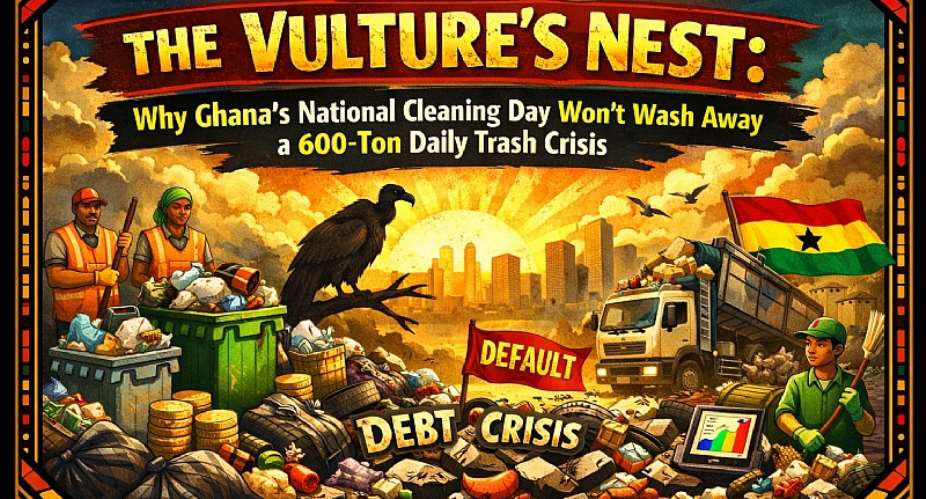
With Accra drowning in 300+ tons of daily plastic waste, experts demand a return to the feared 1960s "Tankasey" regime and structural drainage overhauls before the next deadly flood.
The devastating floods of June 29, which tragically claimed 12 lives and displaced thousands across seven regions, have once again forced our nation into a familiar posture of grief and reactive panic. In response, the presidency and the Post-Flood Mitigation Committee declared July 10 and 11 as National General Cleaning Days. Today, as security personnel, local assemblies, and citizens in communities like Alajo desilt choked gutters and clear mounds of debris under heavy security enforcement, a critical question flashes across our national conscience: Beyond the cleaning, what next?
For decades, Ghana's approach to environmental sanitation has mirrored the proverbial vulture who promises to build a nest only when the rain beats him, yet completely forgets the commitment the moment the sun shines. We cannot continue to run a nation on the wheels of reactive, ad-hoc cleaning exercises while treating structural, behavioral, and legal lawlessness as normalcy. National Cleaning Days are commendable, but brooms and shovels alone will not fix systemic engineering failures and a culture of institutional apathy. It is time to transition from temporary crisis management to a permanent, sustainable sanitation culture.
The Grim Math of Our Plastic Crisis
The visual evidence of our clogged gutters is backed by a terrifying reality of numbers. According to data from the International Growth Centre (IGC), the city of Accra alone generates an astonishing 2,800 metric tons of solid waste every single day. Environmental audits reveal that 14% to 16.1% of this mountain of trash consists of high-value recyclable plastics—specifically single-use PET bottles and HDPE water sachets. This means Accra produces roughly 300 to 450 metric tons of plastic waste daily.
Worse yet, municipal systems only manage to collect 70% to 75% of daily urban refuse. The uncollected backlog—amounting to over 600 metric tons of garbage every day—is routinely dumped into open drains, lagoons, and water bodies. Nationally, the Ghana Climate Innovation Centre (GCEC) notes that we import about $300 million worth of virgin plastic resins annually, yet 51% of the resulting plastic waste is entirely mismanaged through open dumping or burning. We are quite literally drowning in plastic convenience, allowing it to choke our primary waterways and guarantee catastrophic structural flooding every time the clouds gather.
Critical Recommendations for Key Stakeholders
To break this vicious cycle of filth, floods, and cosmetic cleanups, every sector of Ghanaian society must shift from temporary compliance to permanent accountability:
1. Direct Call-to-Action: Ministry of Sanitation and Water Resources (MSWR)
- Standardize Local Bylaws Nationally: The Ministry must immediately coordinate a unified regulatory framework for all 261 MMDAs to eliminate selective enforcement and ensure standardized heavy fines for environmental crimes.
- Operationalize the Plastic Excise Tax: Stop letting the plastic levy sit underutilized. The MSWR must aggressively pressure the Ministry of Finance to release these locked funds specifically to subsidize private recycling companies and garbage-bag distribution schemes.
- Deploy Institutional Performance Audits: Establish an independent, transparent Sanitation Rating Index to publicly score and rank all Municipal and District Chief Executives (MDCEs) quarterly, tying their political tenure directly to their local sanitation outcomes.
2. To Traditional Authorities: Reclaiming Power & Resurrecting the "Tankasey"
- Revive Ancestral Environmental Mandates: Traditional councils, under the leadership of authorities like the Ga Traditional Council, must reclaim their historical role as custodians of the land. Sanitation rules should be backed by customary laws that hold local sub-chiefs directly accountable for the cleanliness of their jurisdictions.
- Resurrect the Dreaded "Tankasey" Regime: In the 1960s, the Town Council Sanitary Inspectors—fearfully known as the Tankasey—struck unyielding discipline into the hearts of Ghanaians. They did not wait for National Cleaning Days; they walked directly into homes, inspected kitchens, checked gutters, and issued immediate court summonses for the slightest sanitary infraction. Traditional rulers must partner with MMDAs to bring back a modernized, highly feared, and uncorruptible Tankasey taskforce.
- Institute Communal Taboos on Littering: Leverage the traditional authority of local palaces to declare the dumping of plastic waste into gutters a sacrilegious act, punishing offenders with community service and public shaming rather than light fines.
3. To the Central Government & Policy Makers
- Invest in Feedstock Infrastructure: Efficiently route collected urban plastic to large-scale waste initiatives, such as the newly signed Accra Pyrolysis Recycling Plant, which relies on a secured feedstock of 100 metric tonnes of plastic daily to create industrial fuel.
- Invest in Subterranean Drainage: Move away from open, shallow gutters that double as trash receptacles. Prioritize engineering modern, covered, underground drainage systems across major urban centers.
4. To Local Government Authorities (MMDAs)
- Strict Enforcement of Bylaws: Empower contemporary sanitation officers to aggressively arrest and heavily fine individuals, landlords, and businesses caught littering or operating without approved waste bins.
- Stop Illegal Structures on Waterways: Execute aggressive, zero-tolerance demolition exercises against unauthorized commercial and residential structures built on natural floodplains, wetlands, and drainage paths.
5. To the General Public & Civil Society
- End Attitudinal Lawlessness: Citizens must treat public spaces with the same respect as their homes. Stop the destructive habit of dumping household garbage into open drains whenever it rains.
- Hold Leadership Accountable: Civil society organizations and local media must continuously audit municipal chief executives (MCEs) on their sanitation performance, moving beyond coverage of cleanups to demanding updates on local drainage projects.
Time to Build the Nest
The image of thousands of Ghanaians clearing filth today is a powerful testament to our collective strength when mobilized. However, if we return to business as usual on Monday—if shops reopen, citizens resume littering, and authorities return to their comfortable offices without enforcing the law—this weekend's sweat will yield nothing but the next disaster.
We must resolutely reject the mindset of the proverbial vulture. We cannot wait for the next heavy downpour, the next submerged community, or the next preventable loss of life to remind us of our civic duties. Sanitation is not a two-day event; it is a continuous, institutionalized discipline. By combining the rigid engineering of the central government with the fierce, community-level discipline of the resurrected 1960s Tankasey, we can finally build a resilient, clean, and structurally sound nation that protects its people before the rain begins to fall again.
Explanatory Footnote
The June 29 Flood Timeline:
- 03:00 AM: An unprecedented meteorological system triggers torrential rainfall over southern Ghana, peaking at an intensity of over 95mm/hour in the Greater Accra and Central regions.
- 06:30 AM: Major municipal drainage systems, heavily compromised by plastic waste and silt, fail completely. Waterways like the Odaw River overflow, rapidly submerging low-lying residential areas such as Alajo, Circle, and Kaneshie.
- 09:00 AM: The National Disaster Management Organisation (NADMO) issues an emergency evacuation alert as floodwaters breach residential walls, trapping commuters on major highways.
- 12:00 PM: Emergency responders record heavy infrastructural damage across seven regions, confirming 12 fatal casualties—primarily due to drowning and flash electrocutions—and the temporary displacement of over 4,500 residents.
- July 3: The Inter-Ministerial Post-Flood Mitigation Committee releases its initial audit, identifying uncollected plastic waste blocking urban culverts as the primary catalyst for the scale of the destruction, subsequently recommending the emergency July 10-11 cleanup mandate.
✍️ Retired Senior Citizen
For and on behalf of all Senior Citizens of the Republic of Ghana 🇬🇭
Teshie-Nungua
[email protected]


 President Mahama urges African countries to fund own peace operations, warns aga...
 Govt to borrow GHS15.38 billion from domestic market, plans DDEP bond buyback
 Finance Ministry says all 2026 ABFA allocations reserved for Accra-Kumasi expres...
 'Surprised and disappointed' — GTA CEO Efua Houadjeto responds to Abeiku Santana...
 Police arrest NDC delegates for allegedly photographing ballots at Bimbilla cons...
 Gambia’s Chief Justice pays courtesy call on Asantehene at Manhyia Palace
 NDC Constituency polls: Delegates invoke 'Antoa' deity over alleged album manipu...
 NDC Oforikrom constituency election stalls over ballot paper delays
 Former NDA CEO Sumaila Abdul-Rahman, three others fined GH¢84,000 each over proc...
 Wa: Abandoned newborn baby boy rescued at Sombo


