




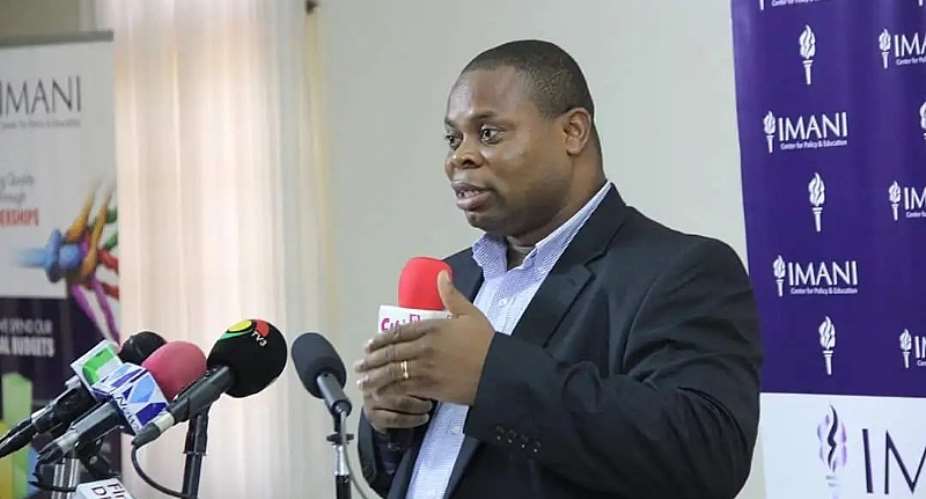
Ghana’s political conversation is increasingly being shaped by personalities rather than substantive policy debates, according to the latest IMANI Pulse Report for June 2026.
The think tank analysed 1,797 political mentions across Ghana’s digital information ecosystem over the 30‑day period ending June 30 and found that discussions on governance, the economy, foreign policy, infrastructure and elections were frequently dominated by political leaders, partisan identity and personality‑driven narratives instead of policy issues and institutional performance.
IMANI said the June edition goes beyond measuring sentiment to interrogate the substance of public discourse.
“Rather than simply measuring whether political conversations are positive or negative, the June 2026 report examines the substance of public discourse, identifying whether digital political engagement is primarily driven by policy issues, institutional performance or personality‑centred narratives,” the report stated.
The Substance Index
To assess this, IMANI introduced the Substance Index, a metric that evaluates the balance between policy‑focused discussions and personality‑driven political conversations.
Policy discussions include debates on legislation, institutional reforms, public programmes, governance systems and policy outcomes. Personality‑driven conversations focus on political leaders, party competition, credibility battles and partisan identity.
The report found that although Ghanaians remain actively engaged in national issues, many conversations quickly shift from policy to personalities.
Foreign Policy: High Engagement, Low Substance
Foreign policy generated the highest volume of discussions — 321 mentions — but only 102 conversations (33%) focused on actual foreign policy issues. The remaining 203 conversations (67%) were driven by political personalities and partisan narratives.
Infrastructure Debates Also Personality‑Driven
IMANI observed that infrastructure discussions often drift away from technical issues such as engineering solutions, procurement processes and financing arrangements.
“Rather than focusing primarily on engineering solutions, procurement processes, financing arrangements and maintenance strategies, infrastructure debates often become arguments about leadership, accountability and political history,” the report noted.
Case Study: The ‘Bawumia Ba’ Arrest
The arrest and bail of the NPP‑affiliated TikTok commentator “Bawumia Ba” generated 28,947 engagements, making it one of the most widely discussed political events across all monitored themes.
Although the incident raised important questions about due process, political expression and law enforcement, IMANI found that public debate centred largely on political symbolism and partisan identity rather than institutional reform.
Overall Trend
IMANI concluded that Ghana’s digital political space remains highly active and deeply contested — but increasingly shaped by political personalities.
“The data show that citizens remain strongly engaged with governance issues, public policies and national developments. However, these discussions are frequently filtered through partisan identity, leadership and political competition.”

 Brazil's President Lula da Silva beats Flavio Bolsonaro to win re-election
 Nurse rescues mother and baby after unplanned delivery in bush
 McCarthy-Mallam road rehabilitation begins amid commuters’ complaints of heavy t...
 TOR briefs IMF on recovery efforts, inherited debt and sustainability plans
 Aseidu Nketia urges NDC contestants to unite after constituency elections
 EC yet to announce Dormaa Central NDC constituency results
 Baaba Cann questions Obuasi SHTS handling of sexual misconduct allegations again...
 Obuasi SHS headmaster case: “It is better to pay for sex with prostitute than ra...
 NDC not worried about NPP’s Kojo Bamba, he is small boy – Azorka
 Resource exploitation fuelling Africa’s conflicts – Mahama


