




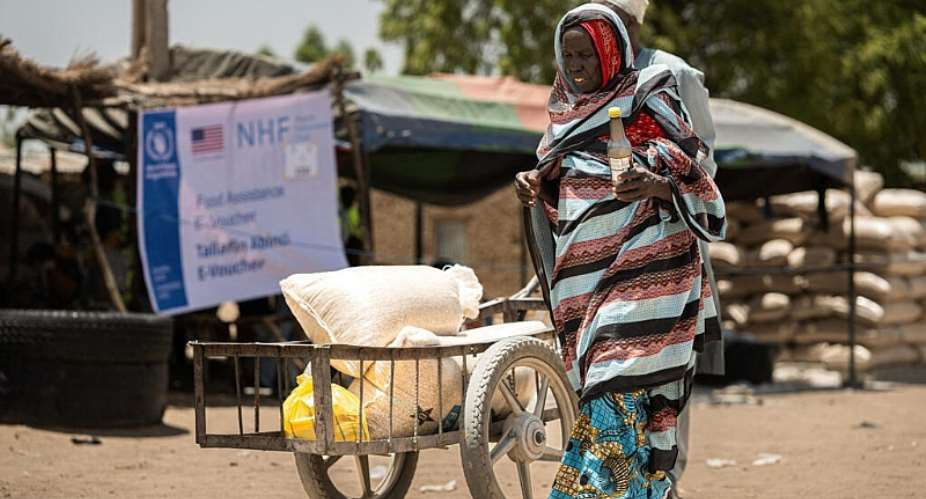
The latest food security analysis showed the number of people facing crisis, emergency or catastrophic hunger had risen by almost two million from previous projections, the World Food Programme (WFP) said in a statement published Thursday.
The findings underline the deepening humanitarian cost of insecurity in Africa's most populous country, where Islamist insurgents in the northeast and armed gangs in parts of the north have displaced communities, kept farmers from their fields and restricted aid access.
The crisis is worsening during the lean season, when households typically exhaust food stocks before the next harvest.
Millions go hungry in Nigeria as aid dries up, jihadists surge
$89 million needed
In Borno state, the epicentre of a long-running Islamist insurgency, more than 3 million people are acutely short of food. More than 750,000 of them are facing severe hunger conditions, WFP said.
"When people lose access to food, the risks of displacement, exploitation and instability increase," said WFP regional director for West and Central Africa Kinday Samba, adding that violence was spreading across a wider area and forcing people from farmland.
WFP said it can support fewer than half of the 1.3 million people it was able to assist last year in three northeast states, where 6.2 million are suffering from acute hunger – nearly 13 percent more than a year ago.
In some areas, the WFP has already recorded phase 5, the most critical level in the hunger classification system.
The agency said it needs $89 million over the next six months to maintain food, nutrition and logistics support across northern Nigeria. A woman stands by the remains of her belongings following a fire that broke out as WFP was preparing for its food distribution exercise, in the Damasak IDP camp, in Damasak, Mobbar, Borno State, Nigeria, May 12, 2026.
Famine looms in Somalia amid drought, dwindling aid and Middle East war
'Double Trap'
Unable to farm, some people have been forced to flee over the border to Benin.
More than 1,000 Nigerians received assistance in Benin last month, the WFP said.
The WFP describes a "double trap" as conflict cuts people off from essential services, while funding cuts cuts reduce humanitarian aid.
Many nutrition centres have closed due to the insecurity or lack of funding.
Some families are taking ever greater risks to survive.
Women who leave refugee camps to collect firewood risk kidnapping or sexual violence.
Some young people are joining armed groups for a few dozen cents a day, simply to be able to eat, the WFP said. Zainab Abubakar eats cooked food with her children at Gubio IDP camp in Maiduguri, Nigeria October 28, 2024.
Parts of Nigeria face unprecedented levels of hunger, UN warns
(with newswires)

 Fashion designer found dead in suspected murder in Koforidua
 Australia appoints Keara Shaw as New High Commissioner to Ghana
 Don't blame degrees, blame the economy that fails to absorb graduates — Kwaku As...
 Former NAFCO CEO arrested at Airport as Attorney General and Defence lawyers cla...
 Fire engulfs Melcom Warehouse at Tema Free Zones enclave
 Four-year-old missing after falling into River Adjei in Ga South
 Police recover GH¢140,000 and AK-47 after Mobile Money robbery at Lashibi
 Some university courses are 'useless' – Dr Adutwum identifies two programmes
 Driver dies in fatal diesel tanker blaze at Asutuare Junction
 'Floods are not natural disasters alone; they are planning failures' — Koans Est...
