




Before dawn on Saturday, July 4, 2026, gunfire and explosions once again rolled across Mali. Jihadist fighters from the al-Qaeda-linked Group for the Support of Islam and Muslims, JNIM, and their Tuareg separatist allies in the Azawad Liberation Front, the FLA, struck army positions in the northern towns of Anefis, Aguelhoc and Gao, the central town of Sevare, and the Kenieroba Central Detention Centre roughly seventy kilometres southwest of Bamako, the largest modern penal facility in the country.
One inmate reached by telephone described prisoners hiding under their beds as gunfire continued before the line went dead. The Malian army said the assault was repelled and the situation was fully under control, reporting dozens of "terrorists" killed in Sevare and Gao. Whatever the tactical outcome on the ground, the symbolism was unmistakable: for the second time in little over two months, a coalition that should not, on paper, hold together has demonstrated the reach to strike near the seat of government almost at will.
This was not an isolated flare-up. It was a deliberate sequel to the coordinated offensive of April 25 and 26, when the same JNIM-FLA alliance seized the strategic northern town of Kidal, struck military installations in Bamako and the garrison town of Kati, and killed Mali's defence minister, General Sadio Camara, along with members of his family in a car-bombing at his home.
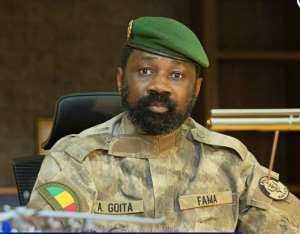
That earlier assault, described by regional analysts as the most severe blow ever dealt to a sitting Malian government, forced the junta leader, General Assimi Goita, into a period of reported seclusion and pushed him to personally assume the defence portfolio. It also triggered a wave of arrests within Mali's own security establishment, with soldiers, civil society figures, lawyers and opposition members detained on suspicion of colluding with the insurgents, a sign of how deeply the junta now doubts the loyalty of its own ranks.
What makes this insurgency distinct from the Sahel's already crowded catalogue of jihadist violence is the alliance itself. JNIM seeks to impose Sharia governance across Mali and has explicitly called on Malians to rise up against the junta; the FLA's Tuareg fighters want autonomy or outright independence for the northern territory they call Azawad. These are not natural partners, and their previous alliance, forged in the 2012 crisis that first fractured northern Mali, collapsed over precisely this contradiction.
That it has been revived, and has now delivered two major coordinated offensives in less than three months, points to a pragmatic convergence of interests: JNIM gains local legitimacy and ethnic grounding it does not otherwise command in the Tuareg north, while the FLA gains access to a more disciplined, better-resourced military partner. Regional analysts have drawn comparisons to the trajectory of Hay'at Tahrir al-Sham in Syria, an al-Qaeda offshoot that gradually localized its objectives and built governing structures through exactly this kind of tactical accommodation with non-jihadist local actors.
The consequences for ordinary Malians have already been severe. JNIM's fighters have spent months enforcing a fuel blockade on Bamako, a city of four million people, setting up checkpoints with heavy machine guns mounted on motorbikes to choke off food and fuel convoys destined for the capital. Schools and universities were shut down last October as the fuel crisis deepened, and foreign governments, including the United States, have at various points urged their citizens to leave the country.
Mali has been governed by the military since coups in 2020 and 2021, and the junta, having severed ties with France and expelled the United Nations peacekeeping mission, has staked its survival on Russian-backed Africa Corps fighters, the rebranded successor to the Wagner Group.
That partnership has done little to reverse the insurgency's momentum; if anything, the tempo and audacity of attacks on Kidal, Kati, Bamako, and now Kenieroba, have only increased since Africa Corps replaced Wagner on Malian soil.
For West Africa's wider security architecture, and for neighboring members of the Alliance of Sahel States, the lesson from Mali's second coordinated offensive in three months is not encouraging. A government that cannot secure its own capital's prison, or protect its defence minister inside a garrison town, is a government whose writ is shrinking even as its rhetoric of control expands. Jihadist violence has already spilled into Burkina Faso and Niger, both of which, like Mali, have leaned on Russian security partnerships in place of Western ones.
If the JNIM-FLA model, ideological rivals cooperating tactically against a common state adversary, proves durable and exportable, the AES bloc's founding premise, that sovereignty reclaimed from former colonial powers would translate into security delivered to citizens, will face its sternest test yet. Two coordinated national offensives within a single fighting season are not the mark of an insurgency being contained. They are the mark of one setting the tempo.
Mustapha Bature Sallama.
Medical/ Science Communicator,
Private Investigator, Criminal investigation and Intelligence Analysis.
International Conflict Management and Peace Building.USIP
[email protected]
+233-555-275-880
REFERENCES
DW Africa, social media report on coordinated JNIM-FLA attacks across northern Mali and the Kenieroba prison, July 4, 2026.
Reuters, "Insurgents Stage Attacks Across Mali, Army Says Situation 'Under Control'," July 4, 2026.
AFP via BSS News, "Mali hit by new coordinated attacks, including at prison: sources," July 4, 2026.
CP24/AFP, "Mali hit by new wave of coordinated rebel attacks," July 4, 2026.
Al Jazeera, "Al-Qaeda-linked fighters storm Mali prison, block food supplies to Bamako," May 6, 2026.
NPR, "Armed groups, including Jihadists launch widespread attacks on Mali government," April 26, 2026.
France 24, "Mali in crisis: Jihadist fighters and Tuareg separatists threaten Bamako," May 2, 2026.
Stimson Center, "Mali Attacks: Aggravating the Sahel Security Crisis," May 7, 2026.
Wikipedia, "2026 Mali offensives," accessed July 2026.
Wikipedia, "Mali War," accessed July 2026.

 Fashion designer found dead in suspected murder in Koforidua
 Australia appoints Keara Shaw as New High Commissioner to Ghana
 Don't blame degrees, blame the economy that fails to absorb graduates — Kwaku As...
 Former NAFCO CEO arrested at Airport as Attorney General and Defence lawyers cla...
 Fire engulfs Melcom Warehouse at Tema Free Zones enclave
 Four-year-old missing after falling into River Adjei in Ga South
 Police recover GH¢140,000 and AK-47 after Mobile Money robbery at Lashibi
 Some university courses are 'useless' – Dr Adutwum identifies two programmes
 Driver dies in fatal diesel tanker blaze at Asutuare Junction
 'Floods are not natural disasters alone; they are planning failures' — Koans Est...
