




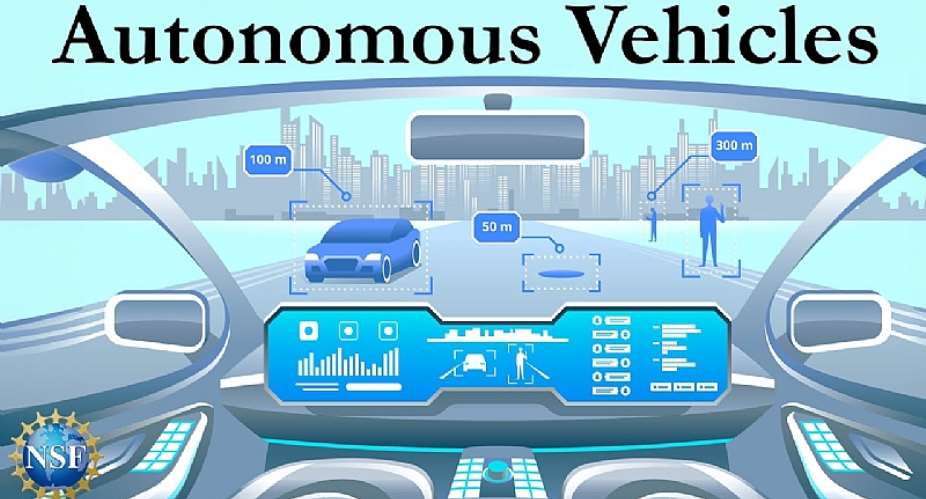
Artificial intelligence (AI) has become a foundational technology in the development of autonomous vehicles (Garikapati & Shetiya, 2024), enabling these systems to perceive their environment, make driving decisions and execute vehicle control with minimal or no human intervention. By integrating machine learning, computer vision, sensor fusion and real-time data processing, AI has transformed autonomous vehicles from concept-driven innovations into increasingly viable transportation solutions. As a result, researchers have devoted considerable attention to understanding how AI contributes to improving the safety, operational efficiency, reliability and trustworthiness of autonomous driving systems. AI's role in enhancing object detection, decision-making, navigation, traffic management, cybersecurity and explainability is noteworthy (Del-Coco et al., 2025) while also identifying challenges related to ethical decision-making, system robustness and regulatory compliance.
One key improvement in safety comes from AI-powered object detection systems. For instance, deep learning models such as YOLOv8 provide an optimal balance between accuracy and computational efficiency in identifying and classifying surrounding objects crucial to driving tasks (Liu et al., 2024). When embedded in edge computing frameworks directly within vehicles, these AI models reduce latency in processing data, enabling faster, real-time hazard detection and response while enhancing data privacy by reducing reliance on cloud communication. This approach improves the reliability of autonomous vehicles in complex urban traffic scenarios and contributes to faster and safer decision-making on the road (Ahmed et al., 2025).
Moreover, AI facilitates the generation and testing of critical driving scenarios, including accident simulations, which is vital for improving the robustness and safety validation of autonomous systems. By creating accurate simulations from accident sketches, AI-driven methods assist in stress-testing vehicle behavior under hazardous conditions without real-world risks. These testing innovations help identify potential failures and refine autonomous control algorithms before deployment, thereby advancing overall system safety (Gambi et al., 2022).
AI also plays a central role in enhancing the interpretability and trustworthiness of autonomous driving systems. Explainable AI (XAI) techniques have been integrated with object detection models like YOLOv8 to provide visual explanations of model predictions in real time. By generating heatmaps or attention maps (e.g., Grad-CAM), these methods offer insights into the reasoning behind AI decisions without compromising detection performance. This transparency is essential for debugging, regulatory compliance and building public confidence in autonomous vehicles, further contributing to safer adoption (Sajid & Latif, 2024).
On the efficiency front, AI optimises autonomous vehicle functionality by improving navigation, traffic management and energy consumption. Intelligent automation frameworks combining AI, machine learning and the Internet of Things (IoT) enable these vehicles to make adaptive and context-aware driving decisions, thereby reducing fuel consumption and minimising congestion. This digital transformation not only enhances operational efficiency but also aligns with sustainability goals by promoting smarter resource use in transportation systems (Achanta, 2025; Bathla et al., 2022).
However, the practical deployment of AI in autonomous vehicles must address challenges including cybersecurity, fairness and system reliability. Robust AI-driven security measures, such as machine learning-based anomaly detection, encryption, intrusion detection/prevention systems and regular software updates, safeguard vehicle communication and control systems from cyber threats. Addressing ethical aspects, such as mitigating biases in AI decision-making, ensures equitable and reliable safety outcomes across diverse environments and populations (Methuku et al., 2025; Seyyarer et al., 2025).
In summary, AI improves autonomous vehicle safety and efficiency by:
- Enabling highly accurate, real-time object detection and classification through deep learning models optimised for in-vehicle edge computing, reducing latency and enhancing response speed (Ahmed et al., 2025).
- Facilitating generation of realistic accident and critical driving scenario simulations to rigorously test and validate autonomous driving software (Gambi et al., 2022).
- Increasing AI transparency and trust through explainable AI frameworks that visualise decision rationale without sacrificing detection performance (Sajid & Latif, 2024).
- Optimising navigation, traffic flow and energy consumption via AI-enabled intelligent automation and IoT integration, enhancing overall operational efficiency and reducing congestion (Achanta, 2025; Bathla et al., 2022).
- Strengthening cybersecurity defenses against evolving threats through multi-layered, AI-based detection and prevention strategies while addressing ethical fairness and bias concerns in AI models to ensure safe and equitable autonomous driving experiences (Methuku et al., 2025; Seyyarer et al., 2025).
The combination of these AI-driven advances creates a foundation for safer, more efficient autonomous vehicles, poised to transform transportation systems while meeting both technical and ethical standards essential for widespread adoption (Hossain et al., 2024; Saki & Soori, 2026).


 President Mahama calls for five permanent UN Security Council seats for Africa
 GRIDCo announces 15-hour power interruption in parts of Greater Accra
 Wenchi Traditional Council suspends Twafohene
 Nine Blue Water Guards arrested over alleged bribery, mpersonation of NAIMOS at ...
 Less than 20km of clearing work remains on Accra-Kumasi expressway – Roads Minis...
 My father predicted family feud, church division before his death – Adwoa Safo
 Afenyo-Markin knows why I called him ‘extortionist’; I dare him to sue me – Samm...
 45-year-old man accused of assaulting 90-year-old woman over witchcraft allegati...
 50 aspirants pick NPP national executive election forms; filing begins August 23
 'Contrary to law': US judge strikes down Trump's 75-country visa ban

