




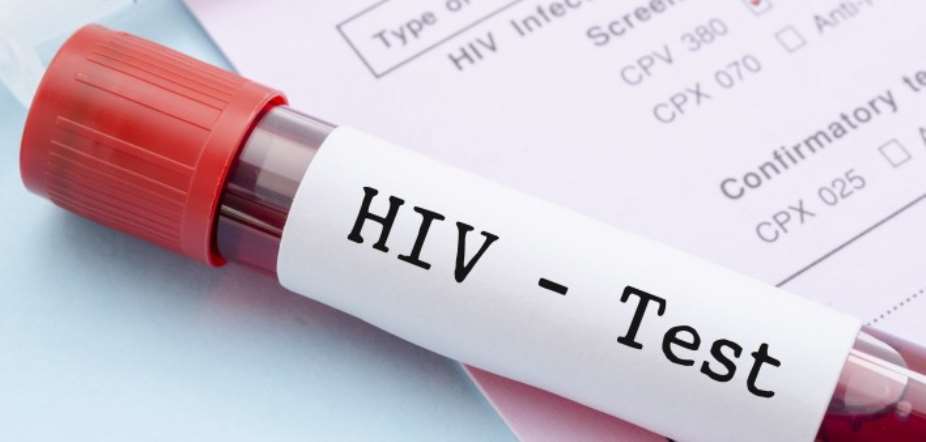
Ghana risks a nationwide shortage of essential HIV testing commodities, both oral and blood-based kits by the end of July, raising concerns about possible disruptions to early diagnosis and treatment programmes if urgent measures are not taken.
The testing kits are critical for confirming HIV status, particularly among pregnant women and in emergency cases.
Speaking in an interview with the Ghana News Agency, Ernest Amoabeng Ortsin, President of the Ghana HIV and AIDS Network (GHANET), warned that the depletion of current supplies could undermine progress toward epidemic control and stall efforts to meet global HIV targets.
He noted that the current consignment of HIV test kits and reagents would last only until July, after which testing services across the country could be disrupted.
Ortsin explained that without urgent intervention, the shortage could delay diagnosis, restrict access to antiretroviral therapy, and increase the risk of new infections.
“Shortages mean fewer people can be tested, increasing the risk of undetected HIV infections.” he said.
This development, he said, would threaten Ghana's progress towards achieving the UNAIDS 95-95-95 targets, which aim to ensure that 95% of people living with HIV are diagnosed, 95% t are on treatment, and 95% achieve viral suppression.
The testing commodities, both oral and blood testing kits, were provided by Global Fund from 2024-2026, with the arrangement that the government of Ghana would purchase the rest after the Global Fund had supplied theirs from the third year (2026).
The delay on the part of the government could be attributed to funding gaps, procurement delays, and heavy reliance on donor support for HIV-related supplies.
The GHANET President called for emergency procurement measures, improved supply chain management, and increased government financing to avert any crisis.
He expressed the worry that Ghana still relied heavily on external partners for HIV commodities, with limited domestic production capacity for test kits and reagents, and urged the government to consider the exploration of local manufacturing partnerships to reduce dependence on imports and strengthen the sustainability of Ghana's HIV response.
He also called for the establishment of buffer stocks to cushion the system against future supply disruptions.
Source: GNA
 President Mahama calls for five permanent UN Security Council seats for Africa
 GRIDCo announces 15-hour power interruption in parts of Greater Accra
 Wenchi Traditional Council suspends Twafohene
 Nine Blue Water Guards arrested over alleged bribery, mpersonation of NAIMOS at ...
 Less than 20km of clearing work remains on Accra-Kumasi expressway – Roads Minis...
 My father predicted family feud, church division before his death – Adwoa Safo
 Afenyo-Markin knows why I called him ‘extortionist’; I dare him to sue me – Samm...
 45-year-old man accused of assaulting 90-year-old woman over witchcraft allegati...
 50 aspirants pick NPP national executive election forms; filing begins August 23
 'Contrary to law': US judge strikes down Trump's 75-country visa ban

