




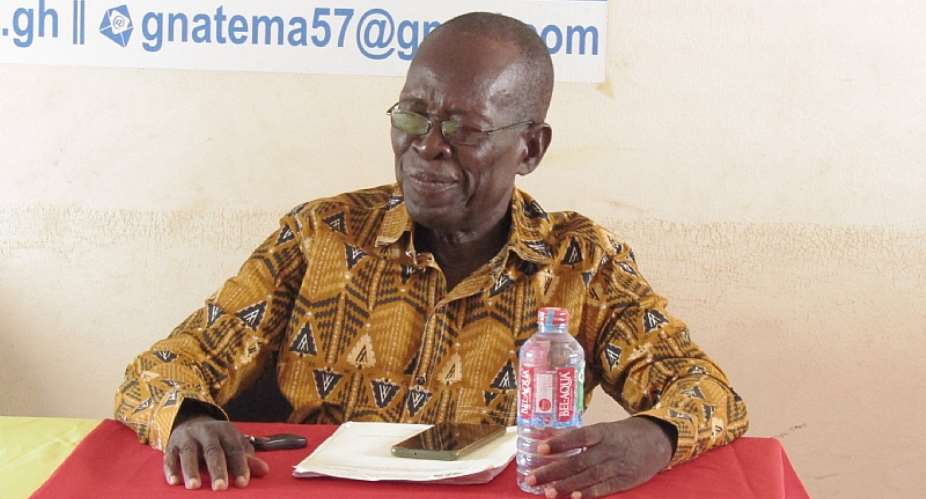
The Ghana Federation of Labour (GFL) has warned that President John Dramani Mahama's flagship 24 Hour Economy Policy risks failure if government allows rising production costs and additional levies to undermine the manufacturing sector.
Addressing the media in Tema, GFL Secretary General, Mr. Abraham Koomson, said the long term success of the policy depends on urgent fiscal reforms, cautioning that without decisive intervention the initiative could suffer the same fate as industrial policies that collapsed in the 1980s.
“If care is not taken, the unfavourable economic policies which collapsed the manufacturing industries and caused massive job losses in the 80s will resurface to undermine the 24 Hour Economy being pursued by the National Democratic Congress (NDC) government,” Mr. Koomson said.
He argued that the President's legacy is now closely linked to the success of the policy and warned that allowing businesses to face increasing operational costs would undermine both the programme and public confidence in it.
“President Mahama cannot afford to be remembered as the leader who launched a bold industrial vision, only to watch it suffocate under the same tax and cost pressures that killed factories in the 1980s. That would be an economic and a political tragedy,” he stated.
Mr. Koomson further cautioned that introducing policies that increase the cost of doing business could strain the government's relationship with organised labour.
“Labour supported the vision of a 24 Hour Economy because it promises jobs and growth. If that promise is betrayed by policies that raise the cost of doing business and threaten factories, that goodwill will not survive,” he said.
According to him, organised labour expects the Presidency to champion policies that protect industry rather than impose additional financial burdens on businesses.
He therefore called on President Mahama to review and remove what he described as punitive levies, lower production costs and create a business environment capable of attracting investment and supporting industrial expansion.
“The 24 Hour Economy requires more than speeches. It requires presidential action to protect manufacturing, reduce financial pressure on businesses, and keep faith with labour,” Mr. Koomson added.
He said the GFL recently held discussions with the leadership of the Association of Ghana Industries (AGI) to assess challenges confronting local manufacturers.
According to him, the meeting identified several levies that continue to weaken the competitiveness of businesses, including the fumigation service charge on containers, the Import Declaration Form (IDF) levy and the proposed cargo levy for importers.
“We identified remnants of the nuisance taxes, including the fumigation service charge on containers, as well as new taxes such as the IDF and the proposed cargo levy being envisaged for importers,” he said.
Mr. Koomson maintained that imposing such charges runs contrary to the government's objective of expanding production, creating decent jobs and sustaining a 24 Hour Economy.
He stressed that the policy can only succeed if government creates an enabling business environment that promotes industrial growth, encourages investment and eases the financial burden on manufacturers and importers.
 UTAG-UCC rejects GTEC's proposed harmonisation of academic promotion guidelines ...
 Police arrest suspect over robbery, rape and assault in Koforidua
 Nigerian cyber fraud suspect wanted by INTERPOL and FBI arrested in Accra
 High Court nullifies Nii Amoo Dodoo's appointment to Ga Traditional Council Judi...
 Maritime and Related Offences Bill 2026 to combat piracy passed
 Ghana's 593.2mm rainfall in June highest since 1995 as floods kill 12
 169.2mm June 29 rain disaster warns Ghana of more danger ahead
 12 dead, 7 missing, 7761 households hit in June 29 floods in Accra
 TOR clears 6-year backlog of audited financial statements
 Adwoa Safo petitions Attorney General to transfer brother's shooting case to Hig...
