




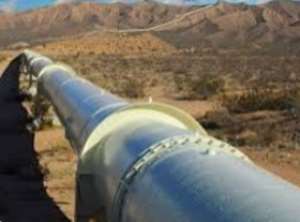
In the arid borderlands where the Sahel bleeds into coastal West Africa, Africa's longest oil pipeline carves a 1,950-kilometre artery from Niger's Agadem oil fields to the Atlantic port of Sèmè-Kpodji in Benin. For much of the past two years, that artery has been blocked by diplomatic spite, geopolitical grudges, and the barrel of a gun. But in June 2026, something unexpected is happening: Niger and Benin, two countries that have spent most of the post-coup era threatening, accusing, and sanctioning each other, are quietly sitting down to talk and the threat of jihadist violence is as much responsible for that thaw as economic necessity.
The Niger-Benin Export Pipeline (NBEP) represents one of the most consequential infrastructure investments on the African continent. Built by China National Petroleum Corporation (CNPC) between 2019 and 2023 at a cost of approximately $4.5billion, the pipeline was designed to transform landlocked Niger from a minor oil producer of around 20,000 barrels per day into a significant regional exporter capable of shipping up to 110,000 barrels daily to international markets.
Operational since March 2024, it connects the oil fields of Agadem in eastern Niger to the port of Sèmè-Kpodji in southern Benin the longest pipeline in Africa. It was, on paper, a game-changer for Niger's junta government, for Benin's port revenues, and for China's strategic energy footprint in West Africa.
Yet the pipeline's operational history has been anything but smooth. Since its inaugural cargo departed Port Sèmè in May 2024, the NBEP has been attacked by rebel groups, shut down by diplomatic disputes, and transformed into a battleground in the wider war between Niamey's military junta and its multiple enemies foreign and domestic. That the pipeline continues to function at all is itself a minor geopolitical miracle.
A Pipeline Born into Turbulence
The NBEP was conceived during a period of relative political stability in Niger. When the July 2023 military coup ousted President Mohamed Bazoum and installed General Abdourahmane Tiani as de facto head of state, the regional fallout was immediate. The Economic Community of West African States (ECOWAS) imposed sanctions on Niamey, and Benin as a participating ECOWAS member aligned itself with the bloc. Niger's junta responded by closing its border with Benin, accusing Cotonou of allowing French military infrastructure on its territory intended to destabilize the new government. According to official Nigerien figures, approximately 80 percent of the country's freight previously transited through Benin's port infrastructure before the diplomatic dispute emerged. The closure severed Niger's economic lifeline to the sea.
For the pipeline specifically, the post-coup period produced a farcical series of openings and closures. The pipeline finally achieved its first shipment in May 2024 following Chinese mediation, but on June 16, 2024, an attack by a rebel group opposed to the Nigerien military junta damaged the pipeline after just one shipment of oil. Oil exports through the pipeline resumed only in August 2024.
Further tensions between Niamey and Cotonou led to another extended shutdown before a bilateral deal in early 2026 restored shipments. That deal ended a three-month suspension of oil shipments, enabling the resumption of significant Nigerien production and vital foreign exchange earnings for Niamey.
The Rebel Equation: Economic Warfare Along the NBEP
The armed groups targeting the NBEP are not random actors. The Islamic State Sahel Province (ISSP), which originates and operates from its strategic bases in northeastern Mali's Menaka and Niger's Tillabéri and Tahoua regions, has intensified its activities in northern and central Dosso and introduced tactics of economic warfare in particular through attacks on the Benin-Niger oil pipeline. ISSP's strategy initially involved primarily nonviolent activities, including collecting zakat, managing supply lines, and moving forces across Dosso's hinterland into Nigeria, before transforming into a combat zone in early 2024.
The violence has been relentless. In early 2025, Chinese engineers working on Niger's $4.6 billion oil pipeline to Benin were forced to flee their worksites under armed escort. For days, convoys burned on the desert highway linking Agadem to Zinder, after the Patriotic Liberation Front (FPL), an insurgent faction splintered from local militias, detonated explosives beneath a pumping station.
By May 2025, Chinese hostages were appearing in jihadist videos from border zones previously considered secure.
In February 2026, the Chinese Embassy in Niamey sent out a warning to its citizens in Niger, urging them to avoid high-risk areas and to activate their emergency plans. The warning followed a series of rebel attacks on the Niger-Benin pipeline operated by CNPC, and an offensive against Niamey International Airport in late January claimed by the Islamic State.
Niger's army reported repelling a rebel MPLJ attack on the Agadem oil block, stating that the assailants retreated towards Chad from where they came. For Beijing, the cumulative effect has exposed the limits of its traditional non-interference doctrine. When MPLJ rebels warned CNPC that any collaboration with the junta exposes it to attacks, Beijing found itself in the uncomfortable position of being a de facto political actor in Niger's internal conflict.
Benin's Own War
What makes the current diplomatic thaw particularly significant is that Benin is not merely Niger's aggrieved pipeline partner it is itself a nation under direct jihadist assault. Since January 2025, northern Benin has seen a surge in extremist attacks, with Jama'at Nusrat ul-Islam wa al-Muslimin (JNIM) as the primary perpetrator. The deadliest attack occurred on January 8, 2025, when hundreds of militants stormed a military base near the Mekrou River, killing at least 35 soldiers.
Violence across the Benin-Niger-Nigeria border area rose by 86 percent from 2024 to 2025. In April 2025, a JNIM attack killed 54 Beninese soldiers in what was the country's deadliest year on record. Security-wise, closer coordination between Niamey and Cotonou in the W-Arly-Pendjari Complex would serve shared interests. It would strengthen Niger's ability to contain armed groups exploiting cross-border coordination gaps. For Benin, it would help ease pressure on overstretched forces facing intensified incursions into Alibori and Atacora.
Benin cannot defeat JNIM and ISSP operating from sanctuaries in Burkina Faso and Niger without coordination with Niamey the very government with which Cotonou has been locked in a two-year diplomatic standoff. The common enemy, in other words, has created a shared strategic interest that transcends the political fallout from the 2023 coup.
The Cotonou Meetings: A Diplomatic Reset
The diplomatic thaw that emerged in June 2026 represents the most significant breakthrough in Niger-Benin relations since the coup. The Beninese and Nigerien expert committees completed 48 hours of discussions on the reopening of the common border on Sunday, June 21, 2026, in Cotonou. Both delegations report having agreed on security, economic, and legal commitments, but the effective resumption of traffic remains contingent upon the ratification of the conclusions by Presidents Romuald Wadagni and Abdourahamane Tiani.
The discussions resulted in the preparation of three new cooperation agreements, which must be presented to the presidents of both countries for approval before being signed and implemented. Representatives from both countries dedicated most of the discussions to defence and security issues, considering them among the most sensitive and complex matters in the relations between Niamey and Cotonou in recent years.
The agreements include plans to exempt transit goods from certain taxes, prohibit the domestic sale of specific transit products, revise various fees, and settle outstanding disputes. For Niger, reopening the Cotonou corridor would provide substantial economic relief. For Benin, normalization would mean reviving activity at Cotonou's port, whose transit traffic historically driven by Niger for over 90 percent has yet to recover to pre-crisis levels. Between the first quarter of 2023 and the same period in 2024, the number of vessels calling at the port fell by around 24 percent and imports dropped by 34 percent.
The meetings were made possible in significant part by Benin's presidential transition. The presence of Niger's Prime Minister Ali Mahamane Lamine Zeine at the inauguration of President Romuald Wadagni on May 24, 2026, marked the first high-level Nigerien engagement on Beninese soil since the crisis a gesture facilitated by the oil agreements signed on May 18, 2026, between Niamey and CNPC, which revived the pipeline and reopened the prospect of exports via Sèmè. General Toumba stated that both parties had upheld their commitments and "secured the security priority," adding that the foundations for economic and legal normalization had been laid and calling for ratification of the agreements "as soon as possible" so that they mark "the beginning of a new era." Minister Adjadi Bakari praised the spirit of unity, asserting that after 48 hours of work, the two delegations had become "one delegation with a single objective to revive that age-old love and bond between our two peoples."
Niger's Non-Negotiable Conditions
The road ahead is not free of complications. The Nigerien delegation formally notified two prerequisites that Niamey considers non-negotiable. The first pertains to the signing of a bilateral defence and security agreement based on the principle of non-aggression, prohibiting the use of the territory of either state to conduct hostile actions or destabilization against the other. Niger seeks legal guarantees concerning its southern border.
The dispute had hardened around Nigerien allegations of a French military presence in northern Benin allegations that Cotonou repeatedly denied. As recently as June 2025, General Tiani insisted the border would remain closed, framing the standoff not as a conflict with Benin but as a confrontation with what he described as "French destabilizing troops" on Beninese territory. Relations deteriorated further after the March 2026 Islamic State attack on Niamey airport, when Tiani directly accused Beninese leadership, France's Emmanuel Macron, and Côte d'Ivoire's Alassane Ouattara of supporting the assault.
The Institute for Security Studies assessed in April 2026 that a workable path forward would be to anchor normalization in mutually agreed, formalized assurances on the use of each other's territory establishing that neither country's soil can be used for activities hostile to the other rather than insisting on French military withdrawal as a precondition Cotonou cannot fulfill.
What a Lasting Deal Would Mean
The stakes of genuine normalization extend well beyond bilateral trade flows. Normalization between Niamey and Cotonou could generate wider regional momentum. In the context of AES solidarity, a thaw with Niger could encourage Ouagadougou to soften its own stance towards Benin, particularly on military coordination in the Kourou-Koalou area, where armed group activity intersects with an unresolved border dispute. A joint security arrangement for the area was already agreed in principle during Talon's visit to Ouagadougou in February 2023, but remains unimplemented due to regional tensions. More broadly, a bilateral reset could create space for a minimal framework of engagement between the AES and ECOWAS blocs, especially on security.
For the pipeline itself, the expansion ambitions are equally significant. Plans exist to install eight additional pumping stations along the 20-inch Niger-Benin pipeline at approximately 250-kilometre intervals, linked to tie-in points every 40 to 50 kilometers, which should ultimately increase pipeline capacity to 300,000 barrels per day across four phases. There is an official government target to increase oil production to 200,000 barrels per day by 2026. None of that expansion is credible without a stable security environment on both sides of the border and that requires Niger and Benin talking to each other rather than firing diplomatic salvos.
In West Africa's increasingly polarized geopolitical environment where the AES bloc and ECOWAS are drifting apart, where Russian and Western influence compete for allegiance, and where counter-terrorism cooperation has been severely degraded by political fragmentation the Niger-Benin pipeline détente offers a model of pragmatic engagement that transcends bloc loyalties. Oil, infrastructure, and a shared enemy have achieved what diplomatic summitry and regional institutions could not. Whether that pragmatism survives implementation will be the defining test of West African statecraft in the second half of 2026.
Mustapha Bature Sallama.
Medical/ Science Communicator,
Private Investigator, Criminal investigation and Intelligence Analysis.
International Conflict Management and Peace Building.USIP
[email protected]
+233-555-275-880
References
Benin Web TV (June 22, 2026). Benin-Niger: security, transit, disputes what to take away from the discussions in Cotonou. beninwebtv.com
Africa-Press (June 22, 2026). Benin and Niger Move to Reopen Border Relations. africa-press.net
Ecofin Agency (June 2026). After Years of Tension, Benin and Niger Find a Path Back to Normal Relations. ecofinagency.com
Institute for Security Studies (April 23, 2026). Niger-Benin: A Narrow Window for Diplomatic Reset. issafrica.org
African Sustainability Matters (June 2026). Benin-Niger Diplomatic Thaw Signals New Chapter for Sahel Trade, Security and Regional Integration. africasustainabilitymatters.com
Benin Web TV (May 24, 2026). Benin-Niger: The Swearing-in of Romuald Wadagni Rekindles Hope for Diplomatic Thaw. beninwebtv.bj
Premium Times Nigeria (April 23, 2026). Niger, Benin Now Have Narrow Window for Diplomatic Reset. premiumtimesng.com
IPIS / Université de Parakou (January 14, 2026). Large-scale Infrastructure as an Instrument for Local Development? The Niger-Benin Export Pipeline and Its Impact on Rural Communities in Northern Benin. ipisresearch.be
ACLED (March 2025). New Frontlines: Jihadist Expansion is Reshaping the Benin, Niger, and Nigeria Borderlands. acleddata.com
The Diplomat (April 15, 2026). China's $4.5 Billion Headache: The Niger-Benin Pipeline and the Limits of Non-Interference. thediplomat.com
The Diplomat (November 2025). China's Sahel Gamble Falters as Insurgencies Rage. thediplomat.com
South China Morning Post (February 27, 2026). Why Beijing's US$4.5 Billion Niger-Benin Oil Pipeline is Being Attacked by Rebels. scmp.com
Vanguard Nigeria (February 11, 2026). Niger Army Says Repelled Rebel Attack on Oil Pipeline. vanguardngr.com
African Energy (February 2026). Niger-Benin Oil Pipeline Exports Resume as Bilateral Dispute Settled. africa-energy.com
Wikipedia (updated June 11, 2026). Niger-Benin Oil Pipeline. en.wikipedia.org
Savannah Energy plc. Market Opportunity Niger Assets. savannah-energy.com
Journal du Niger (June 23, 2026). Frontière Niger-Bénin: les bases d'une normalisation imminente posées à Cotonou. journalduniger.com
ModernGhana.com (June 202). Niger, Benin Step Back from the Brink: Expert Committee to Chart Path to Border Reopening. ModernGhana.com
African Security Analysis (January 2026). Benin: Operation 'Mirador' Signals a Strategic Shift in Northern Security. africansecurityanalysis.org
.

 ‘We have turned the tide’ – Ato Forson says Ghana is ready to take off
 Sammy Gyamfi refuses to file defence, hides behind technicalities — Lawyers
 Osahen Afenyo-Markin vows to pursue case against Sammy Gyamfi despite high court...
 Let us all be mentors to our younger generation - Mahama
 Court stops Osenase homecoming over security concerns
 Supreme Court dismisses Solomon Asamoah's bid to stop Sky Train trial
 GRA denies imposing new 20% tax on Netflix, Google and Amazon subscriptions
 Police arrest 16 suspects, seize 209 rounds of ammunition at Gbane mining site
 ‘Mahama has lost his moral high ground’ – Dr Zaato on Affi Agbenyo’s EC appointm...
 Cassava, hemp could offer alternatives to plastics – Zanetor challenges scientis...


