




There is a question that has been sitting uncomfortably in my mind for several months now, and I think it is time we as Ghanaians confronted it honestly: in the greatest technological transformation in human history, what exactly is our role? Are we architects? Or are we, once again, the market?
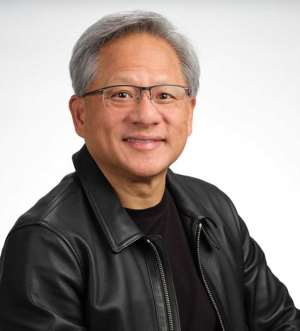
I ask this not from a place of despair but from a place of genuine urgency. Because the revolution being described by Jensen Huang — the co-founder and CEO of Nvidia, the company that quite literally supplies the computational muscle powering the entire artificial intelligence explosion — is not a distant forecast. It is not a speculative TED Talk. It is infrastructure that is being laid right now, underneath decisions being made in boardrooms and government offices that have very little African input and almost no Ghanaian fingerprints on them whatsoever.
Huang recently sat down for an expansive conversation on the Huge Conversations podcast, and what he described was nothing short of a civilizational blueprint. Not just faster computers. Not just smarter phones. A fundamental rewiring of how human beings process knowledge, manufacture goods, move through cities, grow food, and interact with physical reality itself.
I want to take you through what he said, what he did not say, and what it means for a country like ours — with specific attention to the things that neither Huang nor his interviewer, sitting comfortably in Silicon Valley, would ever think to consider.
From Video Games to the Engine of Everything
To understand where we are going, you need to understand where this started. In the early 1990s, Nvidia made a bet that most of the serious computing world considered eccentric. While the dominant technology philosophy was built around the CPU — the Central Processing Unit, which executes tasks in sequence, one after the other like a brilliant but methodical professor grading papers — Nvidia noticed something. Inside most complex software, roughly ten percent of the code is responsible for ninety-nine percent of the computational workload. And that heavy ten percent does not need to run sequentially. It can be broken into millions of tiny simultaneous pieces and solved all at once — in parallel.
The GPU, the Graphics Processing Unit, was built for exactly this kind of massive parallel mathematics. And video games, with their relentless demand for real-time 3D rendering, provided both the market scale and the revenue base to fund decades of R&D that would have been impossible to justify on pure scientific grounds alone.
What Huang understood before almost anyone else was that the GPU was not just a gaming tool. It was a general-purpose scientific time machine. Problems that would take a sequential computer three years to simulate — weather patterns, molecular interactions, the folding behavior of proteins — could collapse into days. The economic flywheel that gaming started eventually funded an architecture that now sits at the foundation of every large language model, every AI image generator, every autonomous vehicle decision system on the planet.
But it gets more interesting than that.
The Platform Nobody Built for Us
In the mid-2000s, Nvidia launched CUDA — a software platform that allowed researchers and developers to write code for the GPU using standard programming languages rather than specialized graphics commands. Huang describes the decision to build CUDA as a product of both inspiration and genuine desperation. Medical researchers were already jury-rigging gaming cards to reconstruct CT scans because the GPU happened to run the math faster than anything else available. There was clearly demand. But the platform to properly harness it did not exist.
So they built it. And they waited. And in 2012, a team of researchers at the University of Toronto — Geoffrey Hinton, Ilya Sutskever, and Alex Krizhevsky — used a single consumer-grade Nvidia graphics card and CUDA to train a neural network called AlexNet. The results it achieved in image recognition were so dramatically better than anything that came before that the entire field of artificial intelligence essentially reorganized itself around what had just been demonstrated.
From that moment, Nvidia invested tens of billions of dollars to re-engineer the entire computing stack from first principles. Custom chips. Custom networking. Custom memory architecture. Custom software. By 2016, they were delivering what amounted to the first AI supercomputers to a then-small startup called OpenAI.
You know the rest of that story.
Now here is the thing that I want every Ghanaian reading this to absorb. CUDA was built as an open platform. The researchers who changed the world with AlexNet did not work at Nvidia. They were not funded by Nvidia. They used publicly available tools and a consumer graphics card that anyone could purchase. The architecture was open enough that people Nvidia had never met, in places Nvidia had never visited, could build things Nvidia had never imagined.
That is the model. And it is the model that Ghana desperately needs to engage with — not as a passive beneficiary, but as an active participant with its own agenda.
The Robot Is Coming. The Question Is Whose Robot.
Huang's most striking declaration in the conversation is this: everything that moves will eventually be robotic.
He is not speaking about science fiction humanoids stumbling around living rooms. He is speaking about a near-term wave of physical AI — autonomous vehicles, warehouse robots, precision agricultural machinery, surgical assistants — that will be trained not through slow, dangerous real-world trial and error, but through virtual simulation. Nvidia has built two systems for this purpose. Cosmos is a foundation model that encodes the physical laws of reality — gravity, friction, inertia, object permanence. Omniverse is a Newtonian physics simulator that acts as a ground-truth environment to prevent the AI from learning physically impossible behaviors.
What this means practically is that you can run a robot through five million days of operational experience in a virtual environment over the course of weeks, iron out every failure mode, and then deploy a version that has, in effect, seen everything before it arrives in the real world.
This is extraordinary technology. It is also technology that, if we are not careful, will arrive in Ghana having been trained exclusively on the physical realities of San Francisco, Stuttgart, and Shenzhen.
Think about what that means for an autonomous vehicle navigating Accra. The roundabouts alone would break it. Our traffic does not follow the orderly, well-marked, pedestrian-respecting logic of a German city. It follows a different logic — communal, negotiated, contextual, deeply human — that is no less sophisticated but is entirely different in structure. An AI trained on Western street data will read that logic as chaos. It will fail, repeatedly and expensively, until someone takes the time to train it on African realities.
The same is true for autonomous agricultural equipment navigating the mixed-use farm landscapes of the Brong-Ahafo Region. The same is true for robotic medical diagnostic tools learning to recognize skin conditions that present differently across melanin ranges — a bias problem that has already caused documented harm in Western medical AI systems. The same is true across virtually every domain where physical AI will eventually be deployed.
If Ghanaian engineers, data scientists, and researchers are not actively feeding African data into these world models, we will end up with tools that are technically functional but culturally blind — sophisticated machines that solve problems we do not have while failing to see the ones we do.
The Dumsor Problem and Why It Might Actually Be an Advantage
Let me address the infrastructure reality that nobody in Silicon Valley ever includes in their roadmaps but that every Ghanaian knows intimately.
The computing systems Huang describes are power-hungry. Training a frontier AI model at scale requires data centers drawing gigawatts from stable national grids — the kind of stable, uninterrupted power supply that we in Ghana have spent decades trying and largely failing to consistently achieve.
The instinctive response is to see this as yet another obstacle. But I want to suggest a different reading.
Because Nvidia has, over the past decade, increased the energy efficiency of its AI computing systems by ten thousand times — not ten times, not a hundred times, ten thousand — the amount of computational intelligence that can now be run on low-power edge hardware is staggering. Foundation models that would have required a data center five years ago can now run on a device small enough to fit in an agricultural drone, a portable medical scanner, or a locally installed processing unit in a rural clinic.
This matters enormously. It means that an autonomous crop-monitoring system in the Northern Region does not need a constant connection to a data center in Dublin or Dallas. It can run its analysis locally, offline, on power that could theoretically be supplied by a modest solar installation. The intermittency of our grid, which has historically been a constraint, becomes manageable — even irrelevant — if the AI infrastructure is designed from the beginning to operate at the edge.
But this will not happen by default. It requires that Ghanaian institutions — the universities, the tech hubs, the government ministries — participate in shaping the hardware and software priorities of the next generation of AI tools. It requires us to be demanding partners rather than grateful recipients. And it requires that we stop waiting for international companies to eventually get around to solving our problems and start building the localized edge AI ecosystems ourselves.
The Language Nobody's AI Actually Speaks
Here is a dimension of Huang's multi-modal AI revolution that I find both thrilling and frightening, depending entirely on who is in the room making the decisions.
Huang describes the breakthrough toward AI that can fluidly translate between text, images, speech, video, and physical action tokens. The AI is no longer confined to reading and writing text; it can listen, see, and eventually physically act. For societies like ours, where a significant portion of knowledge, tradition, commerce, and law has always been communicated orally rather than in writing, this is a potential equalizer of historic proportions.
A market woman in Makola does not need to type anything. She can speak. An elderly farmer in Tamale whose agricultural wisdom has never been written down because nobody thought to ask can now have that wisdom captured, processed, and made useful in ways that a text-based internet could never accommodate. The oral tradition — which Western technology has effectively treated as a liability because it resists digitization — becomes an asset the moment AI can process speech as fluently as text.
But here is the danger. Multi-modal AI is only as useful as the data it is trained on. If the speech data feeding these models is overwhelmingly English, French, and Mandarin — which it currently is — then the voice-activated AI revolution will arrive in Ghana speaking to us through a cultural lens that does not fit. Not maliciously. Just negligently. Because nobody in the room thought to include us.
The technical barrier to training AI on Twi, Ga, Dagbani, Ewe, and the dozens of other languages spoken across this country is not prohibitive. What is lacking is the organized effort to collect, curate, and contribute that data. This is work that Ghanaian linguists, developers, and cultural institutions need to begin doing now — not when the global model is already trained and the window for influence has closed.
A Generation That Cannot Afford to Be Consumers
I want to speak directly to the young Ghanaians reading this, particularly those in technology, engineering, and creative fields, because what Huang is describing represents the sharpest possible double edge.
On one side: the barriers to building genuinely world-class technology have never been lower. The computational tools that were previously accessible only to billion-dollar corporations are increasingly available to any skilled developer with a laptop and a sufficient internet connection. A twenty-three-year-old in Madina with talent, focus, and the right knowledge base can now build and deploy AI-powered products that would have required an army of engineers a decade ago. This is real. This is not motivational rhetoric.
On the other side: the jobs that previous generations of Ghanaian graduates used as their first professional foothold — data entry, basic IT support, document processing, call centre work, lower-level accounting — are precisely the categories of work that AI eliminates first. The ladder that previous generations climbed is being pulled up. And if the only response is to keep training people for jobs that are disappearing, we will produce a highly educated generation with nowhere to go.
The answer is not to panic. It is to deliberately redirect the pipeline. The skills that matter in a physical AI economy are not the skills of rote execution. They are the skills of system design, critical judgment, contextual problem-solving, and what I would describe as domain expertise married to technological fluency — an agronomist who understands AI-powered crop modeling, a doctor who can interpret and interrogate AI diagnostics, an urban planner who can simulate and evaluate robotic logistics systems.
These are not impossible skills to develop. But developing them requires a frank acknowledgment that our educational curriculum, from secondary school through university, is still largely preparing people for an economy that no longer exists — and an urgent willingness to change that.
The Sovereignty Question We Keep Avoiding
I want to end where I believe this conversation ultimately must land, even though it makes some people uncomfortable.
Huang's entire architecture philosophy is built on the idea that the most powerful computing resources should scale — from a single chip, to a rack, to a data center, to a national infrastructure. He speaks about countries building their own AI computing capacity as a sovereign resource in the same category as roads, power grids, and water systems.
Ghana does not yet have this. We do not have a national AI supercomputing cluster. We do not have a government policy framework that treats computational sovereignty as a national security matter. We are largely dependent on the APIs and cloud services of foreign corporations — corporations that are subject to their own governments' laws, their own commercial interests, and their own decisions about who gets access and on what terms.
This is not an abstract geopolitical concern. It is a practical one. If the AI systems steering Ghana's agricultural optimization, financial regulation, healthcare triage, and urban infrastructure are running on foreign servers, trained on foreign data, governed by foreign terms of service, and controlled by foreign executives, then we have digitized our dependency rather than escaped it.
The Nvidia story is ultimately a story about what happens when a country — in that case, the United States — creates the conditions for foundational technology to be built domestically, scaled through investment, and made available to the world. Ghana cannot and should not try to replicate Silicon Valley. But we can and must build the domestic computing infrastructure, the research institutions, the developer ecosystems, and the policy frameworks that allow us to be participants in this era rather than perpetual importers of its outputs.
This will require political will. It will require patient capital. It will require universities to take AI research as seriously as law and medicine. It will require the private sector to stop waiting for government and start building. It will require all of us to stop treating technology as something that happens to Ghana and start insisting that it happen with Ghana.
The parallel computing revolution is not waiting for us to be ready. It is already underway. The only question left is whether, when historians write about this era, Ghana appears in the chapter about nations that built, or only in the chapter about nations that bought.
I know which chapter I intend to be in.
Chief Tutu Baffour Asare Brownsy Williams is a Ghanaian author, columnist, and filmmaker. He is the founder of Brownsy Silva Company, a multi-disciplinary creative enterprise. His novel The Sons of Brownsy is available now. He writes on African technology, culture, geopolitics, and the creative economy.


 President Mahama calls for five permanent UN Security Council seats for Africa
 GRIDCo announces 15-hour power interruption in parts of Greater Accra
 Wenchi Traditional Council suspends Twafohene
 Nine Blue Water Guards arrested over alleged bribery, mpersonation of NAIMOS at ...
 Less than 20km of clearing work remains on Accra-Kumasi expressway – Roads Minis...
 My father predicted family feud, church division before his death – Adwoa Safo
 Afenyo-Markin knows why I called him ‘extortionist’; I dare him to sue me – Samm...
 45-year-old man accused of assaulting 90-year-old woman over witchcraft allegati...
 50 aspirants pick NPP national executive election forms; filing begins August 23
 'Contrary to law': US judge strikes down Trump's 75-country visa ban

