




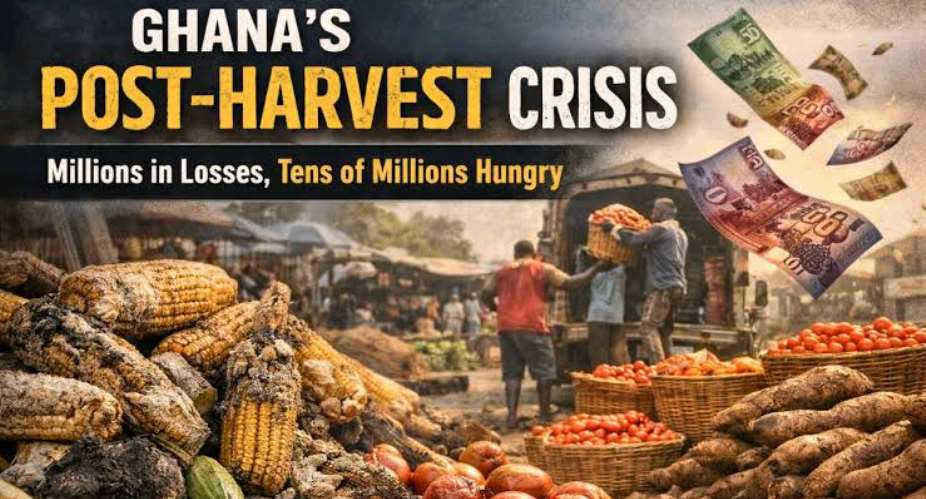
Ghana's biggest agricultural challenge is no longer producing food. It is keeping the food it already grows.
Every harvest season, markets are flooded with tomatoes, mangoes, maize, yams, and plantains. Prices collapse because supply exceeds demand. Yet a few months later, food becomes scarce, prices soar, and the country spends billions importing food. The problem is simple: too much food is lost after harvest.
A Costly Problem
Ghana loses an estimated 30% to 50% of fruits and vegetables, 20% to 30% of cereals, and 20% to 50% of roots and tubers before they reach consumers. Overall, about one-third of all food produced is wasted, costing the country between US$1.9 billion and US$2 billion each year—almost equal to its annual food import bill.
For farmers, these losses mean lower incomes. For consumers, they mean higher prices. For the nation, they increase food imports and threaten food security.
Why Food Is Lost
Several factors drive post-harvest losses:
Poor storage, allowing pests and moisture to destroy crops.
Limited cold storage, causing fruits and vegetables to spoil quickly.
Weak market access, forcing farmers to sell cheaply or watch produce rot.
Poor roads and transport, which delay deliveries and damage fresh produce.
Limited food processing, leaving surplus harvests with nowhere to go.
Solutions Within Reach
Reducing food waste requires investment beyond the farm.
Modern warehouses, cold rooms, and affordable storage technologies such as PICS bags, solar dryers, and CoolBot cold rooms can significantly extend the shelf life of crops.
Expanding agro-processing can turn tomatoes into paste, mangoes into juice, and cassava into flour, creating jobs while reducing waste.
Better roads, stronger market linkages, and district aggregation centres would also help farmers reach buyers before produce spoils.
The Way Forward
Ghana does not need to clear more land to achieve food security. It needs to protect the food it already produces.
If post-harvest losses are reduced from current levels to about 10–15%, the country could increase food availability, improve farmers' incomes, stabilize prices, reduce imports, and strengthen national food security.
The path is clear: store better, process more, improve market access, and invest in post-harvest infrastructure. By turning waste into wealth, Ghana can move from seasonal food gluts to year-round food security.

 The true test of democracy is whether citizens feel heard — Mahama
 Interior Minister proposes mandatory drug tests for job seekers
 'Drugs do not make you cool; they destroy your future' — Opare Addo advises yout...
 Attorney General to oppose Wontumi's bid to defer July 3 judgement in Samreboi c...
 IGP special operations team arrests suspected drug peddlers in Kumasi raids
 Ibrahim Mahama tells Black Stars to beat Croatia and claim better bonus that nee...
 Cape Coast assembly declares war on floods, announces demolitions and emergency ...
 Govt shielding Sedina Tamakloe from prison custody — Minority alleges
 Fire guts GBC staff quarters in Wa
 PRINPAG condemns high court jailing of Herald Newspaper editor Larry Dogbe


