




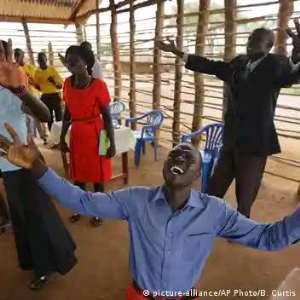
Ghana is one of the world's most religious nations. Churches fill every corner of its towns and cities, healing crusades attract thousands, and prophetic messages spread across social media within minutes. For millions of Ghanaians, faith offers hope, comfort, and community.
Yet alongside genuine religious devotion has emerged a troubling trend: individuals using religion as a cover for fraud, deception, and exploitation. Police investigations, court judgments, and regulatory concerns increasingly reveal cases of staged miracles, fake spiritual products, money-doubling schemes, and false promises of supernatural intervention in exchange for cash.
The challenge for Ghana is not whether to regulate faith. It is whether to protect citizens from criminal conduct disguised as faith.
When Faith Becomes Fraud
Recent cases illustrate why greater scrutiny is necessary.
In 2024, a 67-year-old man claimed he had been blind for 22 years before being miraculously healed during a Church of Pentecost convention in Kasoa. The testimony quickly went viral and inspired widespread celebration. The church even planned to support him with accommodation and seed capital.
However, an internal investigation uncovered that the healing testimony had been staged. Police arrested the man, while church leaders confirmed he was allegedly evading law enforcement over unrelated criminal matters. The Church of Pentecost's swift internal investigation prevented what could have become a major deception.
The incident demonstrated that even respected religious institutions can become targets of carefully planned fraud.
Fraud Syndicates Behind the Collar
The problem is not confined to Ghana.
In neighbouring Nigeria, police arrested six men who allegedly posed as pastors to stage fake miracles and extort money from desperate individuals seeking healing, employment, marriage, or financial breakthroughs. According to investigators, each member played a specific role to create convincing miracle performances designed to gain victims' trust before demanding money.
Such cases reveal that organised criminal networks can exploit religious beliefs for financial gain.
Spiritual Scams in Ghana
Ghanaian courts have also dealt with several high-profile spiritual fraud cases.
An Accra Circuit Court sentenced Nana Adwoa Yamoah to three years' imprisonment after finding her guilty of defrauding a businessman of more than GH¢95,000 by falsely claiming she could secure him a chieftaincy title through spiritual connections.
She further persuaded the victim to pay GH¢51,000 under the promise of "doubling" his money through spiritual means and convinced him to travel to Benin for rituals that produced nothing. The court found that the promises were fraudulent.
In another case, a teacher reportedly lost GH¢13,000 to an individual claiming to possess supernatural powers capable of multiplying money. Instead of riches, the victim received a pot filled with sand, paper, and pieces of cloth.
These cases are not questions of theology. They are straightforward criminal fraud.
Public Health Concerns
Beyond financial scams, some religious products present potential health risks.
Across Ghana, some religious organisations sell anointing oils, miracle water, powders, soaps, stickers, and other products claiming to cure diseases, protect users from accidents, or deliver prosperity.
Health professionals and consumer advocates have raised concerns that products intended for ingestion or application to wounds may bypass scientific safety assessments. They argue that any substance marketed for consumption should be subject to the same regulatory scrutiny as any other health-related product.
The Food and Drugs Authority already regulates medicines, cosmetics, and food products. Similar oversight should apply whenever products marketed as "spiritual" make medical or health-related claims.
False Hope Can Cost Lives
Perhaps the greatest danger arises when individuals are persuaded to abandon proven medical treatment in favour of promised miraculous healing.
Doctors and public health experts have repeatedly warned that delays in seeking medical care for conditions such as cancer, diabetes, hypertension, or infectious diseases can significantly worsen outcomes.
Faith and medicine need not be enemies. Many churches encourage members to seek medical treatment while praying for healing. Problems arise when vulnerable individuals are convinced that rejecting medical advice is evidence of faith.
False hope, when it replaces proper healthcare, can become life-threatening.
Government Is Moving Towards Regulation
Government has already recognised the need for greater oversight.
Following the August 2025 military helicopter crash that claimed several senior government officials, the Presidency established a mechanism through the Office of the Presidential Envoy for Interfaith and Ecumenical Relations to receive prophecies concerning matters of national security.
Officials explained that the initiative was not designed to regulate everyday religious messages but to prevent the irresponsible circulation of alarming national prophecies capable of creating unnecessary panic.
Meanwhile, the Ministry responsible for Religious Affairs has disclosed that more than 2,200 churches operate in the Greater Accra Region alone. Many are registered as companies limited by guarantee.
Government has also proposed a National Policy on Religion aimed at promoting accountability, professional standards, certification mechanisms, and measures to address financial exploitation and harmful religious practices while safeguarding constitutional freedom of worship.
Existing Laws Already Provide the Tools
Ghana does not need new laws criminalising miracles.
The legal framework already prohibits offences such as obtaining property by false pretences, fraud, deception, causing financial loss, practising without required licences where applicable, and endangering public health.
When someone promises to multiply money supernaturally in exchange for payment, falsely claims to secure traditional titles through spiritual influence, or knowingly stages fake healings to solicit donations, investigators already have legal tools available.
The issue is enforcement rather than legislation.
What Should Be Done?
Several practical steps could strengthen public protection without interfering with genuine religious freedom.
Churches should independently verify miracle testimonies before broadcasting them widely. The Church of Pentecost's response to the Kasoa incident demonstrates responsible self-regulation.
The Food and Drugs Authority should test products marketed for consumption or therapeutic use, regardless of whether they are labelled spiritual.
Religious organisations should embrace sound financial governance, including proper registration, transparent accounting, and ethical standards that strengthen public confidence.
Law enforcement agencies should continue investigating complaints involving fraud, coercion, financial exploitation, or public health risks without targeting legitimate religious practice.
Public education is equally important. Citizens should be encouraged to distinguish sincere religious belief from criminal manipulation.
Faith and Accountability Can Coexist
Ghana's Constitution guarantees every person's right to practise and manifest their religion. That freedom is fundamental to the country's democracy.
However, constitutional rights do not shield criminal conduct.
Investigating fraud committed in the name of religion is not an attack on Christianity, Islam, or traditional beliefs. Rather, it protects genuine religious communities whose reputations suffer when criminals exploit sacred institutions.
Most pastors, imams, prophets, and traditional religious leaders serve their communities with integrity. They, too, have an interest in exposing impostors who profit from deception.
The Bottom Line
Miracles belong to the realm of faith. Fraud belongs to the realm of law.
The state cannot determine whether a miracle is genuine. But it can investigate whether vulnerable people were deliberately deceived, whether false claims were made for financial gain, whether unsafe products were marketed to the public, and whether criminal offences have occurred.
Ghana does not need a "miracle police." It needs effective investigators, vigilant regulators, transparent religious institutions, and informed citizens.
Protecting believers from exploitation ultimately protects the integrity of faith itself. As the biblical admonition in 1 John 4:1 reminds believers: "Test the spirits to see whether they are from God." In modern society, where criminal conduct is alleged, that testing may also require the careful work of investigators, regulators, and the courts.

 The true test of democracy is whether citizens feel heard — Mahama
 Interior Minister proposes mandatory drug tests for job seekers
 'Drugs do not make you cool; they destroy your future' — Opare Addo advises yout...
 Attorney General to oppose Wontumi's bid to defer July 3 judgement in Samreboi c...
 IGP special operations team arrests suspected drug peddlers in Kumasi raids
 Ibrahim Mahama tells Black Stars to beat Croatia and claim better bonus that nee...
 Cape Coast assembly declares war on floods, announces demolitions and emergency ...
 Govt shielding Sedina Tamakloe from prison custody — Minority alleges
 Fire guts GBC staff quarters in Wa
 PRINPAG condemns high court jailing of Herald Newspaper editor Larry Dogbe


