




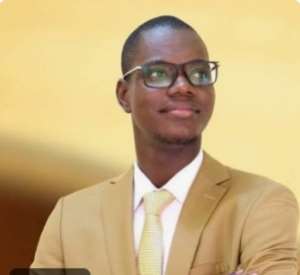
When the State Turns Against the Storyteller
There is a particular kind of courage that does not announce itself. It is the courage of the journalist who files his report knowing that men on motorcycles may be waiting outside his office. It is the courage of the activist who launches a civic movement in a country where the military regime has already decided that civil society is the enemy. It is the courage of the man who, even in exile, refuses to be silent and so becomes the target of the same state machinery that drove him out.
Malick Konaté is that journalist. His story is also the story of Mali itself: a country of extraordinary cultural depth and democratic aspiration, now governed by a military junta that has substituted Russian mercenaries for French paratroopers, expelled the United Nations, banned the independent press, and discovered, in the spring of 2026, that none of these arrangements has made it more secure. It is a story with urgent implications not only for Mali but for the entire arc of the Sahel, where the competition between military authority and democratic accountability is being waged at mortal cost.
To follow the trajectory of Malick Konaté is to understand what the Sahelian information war looks like from the inside: who is fighting it, what it costs, and why the stakes extend far beyond any single journalist, any single country, or any single government in crisis.
A Journalist Forged at the Intersection of Economics and Democracy
Malick Konaté was born in Bamako, Mali's capital, into the intellectual and commercial heartbeat of a landlocked nation that has always had to punch above its weight in the contest for ideas. An economist by training, he chose the path of journalism a decision that placed him at the intersection of analytical rigor and civic accountability, two qualities that authoritarian systems find equally threatening.
He established himself as the founder of Horon TV, an online news channel whose very name carries political weight. Horon means "free person" or "noble" in Bambara, the lingua franca of the Mande peoples of West Africa. In a media environment increasingly populated by outlets aligned with the junta, or too afraid to cross it, a channel bearing the name of freedom was a declaration of editorial intent.
Beyond Horon TV, Konaté directed programmes on the Africom platform and founded the communications agency MAKCom. He served as a correspondent for several international media outlets, building a professional network that extended well beyond Mali's borders. On social media, his X account @konate90 and his Facebook presence at @Malick Konate brought his analysis to tens of thousands of followers, establishing him as a leading real-time source for news and commentary on the Sahel and a reference point for diaspora communities, international observers, and regional journalists seeking independent perspectives on a region whose complexity defies easy narration.
His civic activism took a form that combined the personal and the political. He launched the movement known as Trop c'est Trop "Enough is Enough" or in Bambara, Bèki Takè, meaning "Let Everyone Play Their Part." The name was both a diagnosis and a demand: a diagnosis of a society in which the social contract had frayed to the point of rupture, and a demand that citizens, institutions, and governments each assume their proper responsibilities rather than surrendering them to either military adventurism or jihadist terror. The movement advocated for human rights, good governance, and democracy in Mali three commitments that, in the context of a military junta, constitute a form of structured dissent.
The Price of Independence: Threats, Vandalism, and the Wagner Beat
Independent journalism in Mali has always been challenging. Under military rule, it has become dangerous. Malick Konaté experienced this danger directly, and the form it took was not merely bureaucratic harassment. It was physical intimidation designed to produce fear and, if fear failed, silence.
In June 2022, his vehicle was vandalized in front of the Horon TV offices. The perpetrators were two hooded individuals who arrived on a motorcycle a method of targeted intimidation that carries unmistakable resonance in a Sahelian urban context where motorcycle-mounted actors carry out everything from petty crime to political assassinations. The Mali Maison de la Presse condemned the attack. But condemnation without consequence is a thin shield, and the pattern of harassment continued.
The specific reporting that placed Konaté in the crosshairs of those who threatened him was his coverage of the Wagner Group, the Russian private military company whose deployment in Mali from late 2021 transformed the country's security architecture and its information environment simultaneously.
Wagner did not merely fight jihadists in the Malian bush. It also conducted a systematic effort to reshape Mali's media landscape, promote the junta's narrative of sovereignty and security, and discredit independent journalists who reported on civilian massacres attributed to Wagner and Malian Armed Forces personnel. To investigate Wagner in that environment was to make enemies in both Russian and Malian state structures.
The intimidation failed to silence Konaté. But exile eventually beckoned. He is now based in Europe, continuing his journalism and his activism from abroad a pattern that has become tragically common across the three countries of the Alliance of Sahel States. The journalists who will not be bought are threatened. Those who will not be threatened are arrested. Those who survive arrest are exiled. And those in exile are sanctioned.
The Alliance of Sahel Democrats: A Transnational Response to Transnational Repression
The most significant recent chapter in Malick Konaté's public life is his emergence as a leader in the organised democratic opposition to the Alliance of Sahel States juntas. On April 7, 2026, in Brussels, a coalition of Malians, Nigeriens, and Burkinabè living in exile launched the Alliance of Sahel Democrats, known by its French acronym ADS. Konaté was named Secretary-General of the organization, working alongside its president, Dr Mayra Djibrine, a Nigerien physician deeply engaged in humanitarian action and human rights advocacy.
The founding ceremony was broadcast live and followed by nearly 30,000 people a figure that testifies to the depth of popular interest among diaspora communities whose connections to home remain fierce even as their physical distance from it has grown. At the launch, the president described the situation on the ground in terms that left no ambiguity: a Sahel that has become, in six years, the epicenter of terrorism; a population caught between two fires military power and jihadist armed groups; and a level of manipulation, disinformation, and populism without precedent.
The ADS, with around thirty members at its founding, describes itself as a transnational democratic shield. It advocates for a return to constitutional order, the organization of credible elections, the end of militarization of the state, and the restoration of fundamental freedoms across the three member countries of the AES. Critically, it distinguishes itself from earlier opposition formations by its explicitly regional character.
As Konaté himself explained, while other opposition platforms such as the Coalition of Forces for the Republic led by Mahmoud Dicko concentrated their actions on Mali, the ADS seeks to create a synergy of action at the scale of all three AES states.
In a conflict that the juntas themselves have chosen to prosecute regionally through the AES, through shared disinformation networks, through coordinated suppression of independent media that transnational response is both strategically logical and politically necessary.
The organization announced a formal launch of activities on May 9 in Brussels and set itself the objective of influencing international partners and supporting democratic dynamics across the Sahel. The question of whether an exile-based coalition can genuinely affect political outcomes in three countries simultaneously governed by military juntas with access to Russian military support is one the ADS itself does not evade. It acknowledges that the struggle will be long. But it also notes, correctly, that the liberation of a people can ultimately only come from within that people.
The Sanctions: A Junta That Fears Paper More Than Bullets
The Malian government's response to the ADS was swift and clarifying. On June 18, 2026, Mali's Minister of Economy and Finance signed a decree freezing the assets of Malick Konaté and placing him on the country's national list of targeted financial sanctions.
The timing of the measure just days after the ADS president, Dr Djibrine, was stripped of her Nigerien citizenship by the junta in Niamey confirms that the three regimes of the AES are coordinating their suppression of the democratic opposition with the same intent with which they have coordinated their departure from ECOWAS, their expulsion of UN peacekeepers, and their embrace of Russian military partnership.
The asset freeze has no immediate practical consequence for a man living in European exile without significant assets in Mali. The juntas know this. The purpose of the sanction is not financial. It is symbolic and communicative. It signals to those inside Mali who might be tempted to support the ADS, to provide information to its members, or simply to share its content online that alignment with Konaté and his colleagues carries a price.
It extends the reach of the junta's repressive apparatus into the information environment of its own exiled citizens. And it sends a message to the ADS itself: that the regime is watching, that exile does not mean safety, and that the tools of state power even weakened, even under military pressure from JNIM, even presiding over a country whose defence minister was killed in his own home will be deployed against those who dare to organize.
The ADS responded with a clarity that matched the regime's provocation. The organization affirmed that the asset freeze and the citizenship stripping of its president would not modify its line of conduct. It stated that it would continue its engagement in favor of a return to civilian and democratic power in the Sahel states governed by military regimes. This is not defiance for its own sake. It is the political logic of an organization that has correctly identified that the juntas' choice to punish their critics provides its own form of recruitment that every sanction against a journalist, every arrested editor, every suspended radio station, every exiled activist is, in the long run, an argument for the world that the democrats were right and the soldiers were wrong.
Mali's Media Under Siege: The Systematic Destruction of Press Freedom
To understand Malick Konaté's courage, one must understand the environment from which he came and against which he and his colleagues continue to struggle. The state of press freedom in Mali under the Goïta junta is, by any measure, catastrophic.
Reporters Without Borders ranked Mali 121st in its 2026 World Press Freedom Index, a continuing decline that reflects an increasingly coordinated repression of the press in the countries of the Alliance of Sahel States, where military regimes arbitrarily detain journalists on charges of spreading false information, undermining national credibility, or disseminating reports that could disturb public order. At least one journalist was detained in Mali as of the publication of that index, with others subjected to suspended sentences and fines.
The specific cases document a pattern of judicial weaponisation. In February 2026, Youssouf Sissoko, editor-in-chief of the weekly newspaper L'Alternance, was arrested at his home in Bamako after publishing an article questioning public statements by Niger's military ruler, General Abdourahamane Tiani. He was charged with spreading false information and insulting a foreign head of state a prosecutorial formulation that criminalizes not merely criticism of the Malian state but criticism of any of the three AES regimes by any Malian journalist.
On March 23, 2026, a court sentenced him to two years in prison and a fine of one million CFA francs. According to Reporters Without Borders, it has become impossible to publish articles critical of the authorities in any of the three AES states without risking prosecution and sanctions.
In November 2025, the High Authority for Communication suspended two radio stations in northern Mali Aadar Koïma radio in Gao and Aadar Koukia in Ansongo for three months, for condemning the behavior of certain soldiers and relaying criticism of the authorities. Two local journalists were arrested around the same time, one held for a day and another for four, on charges of criticizing local authorities. Also in November, the broadcasting licences of TF1 and LCI were revoked, bringing the number of French broadcast media banned in Mali since 2022 to six, joining Radio France Internationale, France 24, TV5 Monde, and France 2. In January 2025, the Pan-African magazine Jeune Afrique was banned from sale.
In June 2026, two more prominent journalists were arrested, with Abdramane Keita charged with undermining national unity and disseminating false and misleading information for stating on his television programme that JNIM controls the town of Kidal a statement that subsequent events proved to be accurate.
Sadibou Marong, director of Reporters Without Borders in West Africa, said the arrests revealed the degree of insecurity in which media professionals operate in Mali, and that the military leadership has plunged the press into a spiral of repression through silencing tactics, exclusion of dissenting voices, and the use of justice as a weapon against independent media.
It is against this backdrop that Malick Konaté's decision to remain a journalist and to accept the leadership of a democratic opposition movement must be assessed. This is not a career choice made in conditions of professional risk. It is a moral commitment made in conditions of personal danger.
The April 2026 Offensive: When the Junta's Failures Became Undeniable
The context in which Konaté was sanctioned cannot be separated from the cataclysmic military events that immediately preceded and surrounded it. On April 25, 2026, JNIM the Sahel's most powerful jihadist coalition, affiliated with Al-Qaeda launched, in coordination with the Tuareg separatist Azawad Liberation Front, the most significant military offensive in Mali since 2012. The attacks were simultaneous, nationwide, and precisely targeted.
A suicide car bomb struck the residence of Mali's Defence Minister, Sadio Camara, inside the Kati garrison the country's most fortified military installation killing him and members of his family. The Modibo Keïta International Airport in Bamako came under assault, forcing the cancellation of all flights. The cities of Kidal, Gao, Mopti, and Sévaré were simultaneously attacked. Kidal fell almost immediately. Russian Africa Corps personnel accepted negotiated withdrawals from multiple positions, including Kidal and the town of Tessit in the Gao region surrendering, in days, gains that had taken years and significant Russian casualties to achieve. JNIM subsequently announced a total siege of Bamako, placing road blockades on the major arteries connecting the capital to Côte d'Ivoire, Guinea, and the north.
The offensive exposed, with a clarity that no amount of official communications could obscure, the foundational failure of the junta's security strategy. The shift from multilateral partnerships to reliance on Russian paramilitary forces had created a narrow and fragile security model. With only an estimated 1,000 to 2,500 Russia Africa Corps personnel, these forces could not compensate for the loss of roughly 20,000 international troops previously deployed in Mali.
Fatalities linked to militant Islamist groups had reportedly tripled under the junta, reflecting both a growing insurgent capacity and a declining state effectiveness.
The junta had promised Mali's people that sovereignty, Russian partnership, and the expulsion of Western forces would produce security. The April offensive was the answer from the field.
In this context, the ADS and figures like Malick Konaté become not merely dissidents but strategically relevant actors. Voices of the civil society called for negotiations with the armed groups, criticizing the junta's exclusively military strategy. This is not capitulation. It is recognition, grounded in the evidence of four years of escalating violence, that a state cannot bomb its way to legitimacy, and that the exclusion of democratic politics has not strengthened Mali but gravely weakened it.
Exile, Diaspora, and the Long Game of Democratic Resistance
The ADS is clear-eyed about its limitations. It is based in Brussels, not Bamako. Its members cannot safely visit the countries they seek to transform. Its capacity to organize within Mali, Niger, and Burkina Faso is constrained by the juntas' surveillance of civil society and the genuine personal risk that open affiliation with the organization carries for those on the ground.
But the ADS is also, in important respects, stronger than it appears. Its transnational character allows it to operate across a conflict that is itself transnational the AES is a cross-border political project, and it can only be effectively contested by a cross-border democratic project. The diaspora communities it reaches in Europe and beyond are not peripheral to the political future of the Sahel; they are central to it. They send remittances, maintain family networks, preserve professional expertise, and carry democratic aspirations that military regimes have not been able to extinguish. The launch ceremony's live audience of nearly 30,000 people was not an audience of the marginal; it was an audience of the exiled majority, people whose commitment to their home countries remains fierce precisely because the conditions that drove them away were the ones they want changed.
The ADS has positioned itself within the tradition of democratic resistance movements that have, historically, done their most consequential work from exile before the conditions existed for them to operate at home. That is a long game. But the April 2026 offensive demonstrated that the juntas' own game is running out of time. The question is whether, when the military equilibrium in the Sahel eventually shifts as it must there will be a credible, organized, non-jihadist democratic alternative ready to fill the space that opens.
Malick Konaté, and the organization he helps lead, are working to ensure that there is.
What Konaté Represents: The Indispensable Function of the Independent Journalist
At its deepest level, the story of Malick Konaté is an argument about what journalism is for and why it matters to societies undergoing political crisis. In stable democracies, the answer is often given in procedural terms: journalism holds power to account, provides citizens with information, enables public debate. All of this is true. But in the Sahel today, the function of the independent journalist goes beyond procedure. It is, in the most literal sense, testimonial.
When Mali's junta claims that JNIM does not control Kidal, and a journalist says that it does, and the journalist is arrested for saying it, the arrest is not merely an injustice to the individual. It is an act of political epistemology an attempt by the state to control not merely what people say but what they are permitted to know. When Malick Konaté reported on Wagner in conditions of physical danger, he was not simply filing copy. He was insisting, against the pressure of the state and the threat of violence that certain things happened, that certain actors did certain things, and that the citizens of Mali and the world beyond its borders had a right to know.
This is why authoritarian systems fear journalists disproportionately to their numbers. A journalist who will not be silenced is a constant reminder that the story the regime is telling is not the only story and that the story the regime is hiding will eventually surface. In the Sahel, where the information environment is being systematically narrowed through bans, arrests, suspensions, and exile, every journalist who continues to report is a form of resistance. And every journalist who accepts leadership in a democratic movement, as Konaté has done becomes something more: a symbol, a target, and an argument simultaneously.
Conclusion: The Pen Shall Outlast the Gun
The Malian junta froze Malick Konaté's assets on June 18, 2026. Ten days later, the world is watching a regime that cannot protect its own Defence Minister in his own garrison, cannot hold the cities its mercenary partners captured at great cost, and cannot offer its citizens anything beyond the promise of more of the same. The ADS, meanwhile, continues to function. Konaté continues to speak. The 30,000 people who watched the Brussels launch ceremony continue to follow, to share, and to hope.
History does not promise that the right side wins. It does suggest, however, that regimes which govern by silencing their critics, by jailing their editors, by stripping citizenship from their doctors-turned-activists, and by freezing the accounts of journalists-turned-secretaries-general, tend, in the end, to lose to the information they tried to suppress. The facts Malick Konaté has reported, the movement he has helped organize, and the democratic aspiration he embodies are not made less true by a decree signed in Bamako. They are made more urgent.
The Sahel is at a crossroads. The military option has not delivered security. The Russian option has not delivered sovereignty. What remains what has always remained, even when it was driven underground, exiled, frozen, or arrested is the democratic option: the idea that governments derive their legitimacy from the consent of the governed, that press freedom is not a luxury but a foundation, and that the men and women who insist on saying true things in conditions that reward silence deserve not only our admiration but our active solidarity.
Malick Konaté has chosen his side. The question for the international community, for African regional institutions, for ECOWAS, for the African Union, and for every press freedom organization and democratic government that claims these values as its own, is which side they will choose when it matters most.
Mustapha Bature Sallama.
Medical/ Science Communicator,
Private Investigator, Criminal investigation and Intelligence Analysis.
International Conflict Management and Peace Building.USIP
[email protected]
+233-555-275-880
References:
Africultures. "Malick Konaté Profile." https://africultures.com/personnes/?no=52670
Malick Konaté on X (Twitter): @konate90. https://twitter.com/konate90
Malick Konaté on Facebook: @Malick Konate. https://www.facebook.com/malick.konate.56/
RFI. "Menaces sur l'info Portrait du journaliste malien Malick Konaté." July 8, 2024. https://www.rfi.fr/fr/podcasts/menaces-sur-l-information/20240708-menaces-sur-l-info-portrait-du-journaliste-malien-malick-konat%C3%A9
"Le Mali gèle les avoirs de Malick Konaté, SG de l'Alliance des Démocrates du Sahel." June 2026. https://www.afrik.com/le-mali-gele-les-avoirs-de-malick-konate-sg-de-l-alliance-des-democrates-du-sahel
"Sahel: L'Alliance des Démocrates du Sahel émerge face aux régimes militaires de l'AES." April 10, 2026. https://maliactu.net/sahel-lalliance-des-democrates-du-sahel-ads-emerge-face-aux-regimes-militaires-de-laes/
Prime News Monde. "Politique dans le Sahel: L'Alliance des Démocrates du Sahel défie l'AES." April 13, 2026. https://www.primenewsmonde.bj/2026/04/13/politique-dans-le-sahel-lalliance-des-democrates-du-sahel-defie-laes/
La Nouvelle Revue Politique. Goëtzinger, Geneviève. "Au Sahel, il faudra compter avec les Démocrates!" May 10, 2026. https://nouvellerevuepolitique.fr/au-sahel-il-faudra-compter-avec-les-democrates/
La Presse (Canada). "Sahel: Naissance d'une Alliance des Démocrates face aux régimes militaires." April 7, 2026. https://www.lapresse.ca/international/afrique/2026-04-07/sahel/naissance-d-une-alliance-des-democrates-face-aux-regimes-militaires.php
Human Rights Watch. "West Africa: Further Crackdowns by Military Juntas." February 4, 2026. https://www.hrw.org/news/2026/02/04/west-africa-further-crackdowns-by-military-juntas
Human Rights Watch. "Press Freedom Under Fire in Mali." February 9, 2026. https://www.hrw.org/news/2026/02/09/press-freedom-under-fire-in-mali
Reporters Without Borders (RSF).
"Mali: RSF Calls for the Release of Youssouf Sissoko." February 6, 2026 (updated April 9, 2026). https://rsf.org/en/mali-rsf-calls-release-publishing-director-youssouf-sissoko-and-condemns-criminalisation-journalism
IFEX / RSF. "Mali's Media Strangled by Suspensions, Arrests and Fear." November 25, 2025. https://ifex.org/malis-media-strangled-by-suspensions-arrests-and-fear/
Reporters Without Borders (RSF). "Africa 2026 World Press Freedom Index." https://rsf.org/en/region/africa
ABC News / Washington Times. "Mali Authorities Arrest 2 Journalists in Latest Crackdown on Freedom of Expression." June 2026. https://abcnews.com/International/wireStory/malian-authorities-arrest-2-prominent-journalists-latest-crackdown-133741860
NPR. "Armed Groups Including Jihadists Launch Widespread Attacks on Mali Government." April 26, 2026. https://www.npr.org/2026/04/25/nx-s1-5799439/mali-hit-by-wave-of-coordinated-attacks-from-armed-groups
Just Security.
"Insurgent Offensive in Mali Exposes the Deficiencies of Junta-led Security in the Sahel." May 1, 2026. https://www.justsecurity.org/137563/mali-junta-insurgent-offensive/
Long War Journal. "JNIM and Allied Rebels Surge Across Mali, Take Several Cities, Pressure Capital." April 26, 2026. https://www.longwarjournal.org/archives/2026/04/jnim-and-allied-rebels-surge-across-mali-take-several-cities-pressure-capital.php
The Soufan Center. "Al-Qaeda Affiliate in the Sahel Could Topple the Government in Mali." April 27, 2026. https://thesoufancenter.org/intelbrief-2026-april-27/
African Arguments.
"Bamako under Siege: How Coordinated Attacks Exposed the Mali Government's Fragility." May 4, 2026. https://africanarguments.org/2026/05/47654/
Critical Threats Project / AEI.
"Fall of Kidal What JNIM's Latest Offensive Means for Mali's Future: Africa File Special Edition." April 28, 2026. https://www.criticalthreats.org/analysis/fall-of-northern-mali-jnim-fla-offensive-russia-issp-camara
Institut Montaigne. "Offensive rebelle au Mali: vers une négociation politique globale?" May 12, 2026. https://www.institutmontaigne.org/expressions/offensive-rebelle-au-mali-vers-une-negociation-politique-globale
Wikipedia. "2026 Mali Offensives." June 2026. https://en.wikipedia.org/wiki/2026_Mali_offensives
Africa Leadership Index. "From Siege to Collapse: The April 2026 JNIM–FLA Offensive in Mali." May 7, 2026. https://africaindex.com/blog/mali-jnim-fla-offensive-regime-collapse-april-2026

 Expired driver’s licence attracts delinquency charge of up to GH¢148 – DVLA
 Ghana needs an enterprise economy with African characteristics, not copying othe...
 Court reinstates Bolgatanga Technical University Vice-Chancellor Alnaa, two seni...
 Christian Council demands action against financiers behind drug trafficking
 'Facts don’t support Ghana being a cocaine hub under Mahama's gov't’ – Majority ...
 NACOC arrests surged from 73 in 2024 to 217 in 2025 under NDC – Majority defend ...
 Gov’t drug strategy now targets criminal networks – Agalga
 Akufo-Addo's govt reckless borrowing, not Russia-Ukraine war, caused post-2020 e...
 Rising drug busts due to concrete institutional changes by NDC govt – Majority
 'This is not one man job' — Majority calls for stronger inter-agency cooperation...


