




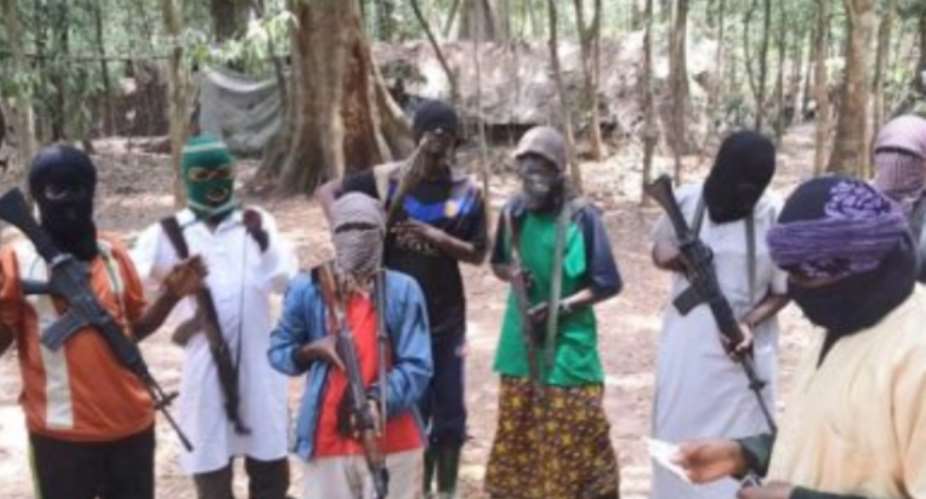
A Crisis Without Closure
More than three decades after the first armed groups carved out fiefdoms in eastern Democratic Republic of the Congo, the region remains one of the most lethal theatres of civilian suffering anywhere on earth. What is new, and what distinguishes the current moment from earlier episodes of violence, is not simply the scale of killing but the qualitative transformation of its architecture. The Islamic State Central Africa Province, universally recognized under its local name as the Allied Democratic Forces or ADF, is no longer merely an armed group with jihadist branding. It is a territorial, ideological, and economic organism that has adapted to nearly five years of sustained military pressure not by shrinking, but by evolving, dispersing, and striking with renewed ferocity across an ever-wider geography.
The ADF swears allegiance to the Islamic State and is known as the Islamic State Central Africa Province, or ISCAP, in eastern DRC and Uganda. Unlike the M23 rebellion, which receives backing from Rwanda and aims to overthrow the current Congolese administration, the ADF tends to use insurgent tactics to decimate local areas rather than to replace local authorities and form alternative administrations. (ACLED) In that distinction lays one of the most important analytical points for understanding the nature of the threat: ISCAP is not seeking to govern territory in the conventional sense. It is seeking to destroy the conditions under which governance by others becomes possible.
This article draws on the original source document and supplements it with the most current field reporting, analytical assessments, and UN documentation available to provide a comprehensive picture of ISCAP's trajectory, its ideology, its financing, its interaction with the broader conflict ecosystem of eastern DRC, and the structural reasons why the military response to date has failed to break its back.
Origins and Ideological Transformation: From Ugandan Rebellion to Islamic State Province
To understand what ISCAP has become, one must understand what preceded it. The Islamic State's Central Africa Province was born out of a local insurgent group known as the Allied Democratic Forces, originally formed in Uganda and responsible for over 4,000 deaths since joining the Islamic State at the end of 2017.
The group's founder, Jamil Mukulu, built it on a mixture of Ugandan political grievances and Tabligh Muslim sectarian ideology, with the stated objective of overthrowing President Yoweri Museveni. After Mukulu was arrested in 2015, he was replaced by Musa Baluku, who moved the group toward more extremist views of militant Islam, consolidated decision-making and developed relations with IS an integration Mukulu long resisted.
The scale of the ideological rupture that followed Baluku's ascension cannot be overstated. In a December 2021 sermon delivered just days after Operation Shujaa began, Baluku articulated a theology of violence that defines ISCAP's worldview to this day: he declared that only Muslims were real living human beings, describing all non-Muslims as equivalent to dead bodies, and called on civilians to flee or convert when his fighters approached or face slaughter.
By 2017, the group's funds were rapidly disappearing and morale was failing. In an effort to arrest the decline, Baluku looked abroad to secure both the group's funding and its future, pledging allegiance to Abu Bakr al-Baghdadi and his proclaimed global caliphate. In November 2017, the ADF received its first confirmed financial transfer from the Islamic State via a Kenyan-based financier. Two years later, the Islamic State officially announced the creation of ISCAP, one of the newest of its so-called provinces.
That financial lifeline transformed the group. ISCAP violence rose steadily following the influx of cash, reaching a peak of 116 civilians killed on average each month in the first eight months of 2022. ISCAP is sustained by the Islamic State's networks from the Horn of Africa down to South Africa and retains the desire and ability to perpetrate massacres and to launch urban attacks domestically and abroad. (Wikipedia) The implications of that regional connectivity extend well beyond eastern DRC, and they matter profoundly for the security calculus of every state between the Great Lakes and the Sahel.
A Steadily Rising Trend in Violence
The statistics are, by now, well established in the source material, but they bear contextualization against the broader violence landscape of central Africa. Between 2014 and 2020, attacks attributed to the group killed more than 4,000 civilians. But since 2024, the numbers have skyrocketed: that year, the ADF was the armed group responsible for the highest number of civilian killings in the Congo. The threshold was crossed again in 2025: according to the UN Panel of Experts, January 2025 marked the second time that deaths attributed to the ADF exceeded 200 in a single month, particularly in the Beni region and the Lubero territory.
Civilian fatalities rose by 68% in the first quarter of 2025 compared to the previous quarter the second-deadliest quarter of civilian targeting by the ADF since the Armed Conflict Location and Event Data project began recording data on the group in 1997.
That surge correlates directly with the diversion of the Congolese Army's attention toward the M23. As M23 took control of vast tracts of North Kivu and South Kivu in the first quarter of 2025, the ADF used the disruption to authority caused by the Congolese military's diverted focus to carry out a string of deadly attacks against civilians. ISCAP did not cause the collapse of security in eastern Congo. It is, rather, the principal beneficiary of it.
Geographic Expansion: From Beni to Haut-Uele
One of the most consequential developments in ISCAP's trajectory is its steady geographic expansion beyond its traditional base areas in northern North Kivu and southern Ituri. ADF violence in Ituri comprised only 11 percent of the group's total violence in 2020, growing to 40 percent by the end of 2024. In both North Kivu and Ituri, the ADF also veered toward forested areas further west to avoid confrontations with military forces, shifting ADF violence in 2024 away from border areas near Uganda, with no violent incidents recorded within Ugandan territory that year.
The westward and northward drift has now produced a new frontier. Musa Baluku's camp has moved westward and north into Haut-Uele, while the ADF's Abwakasi camp presents a heightened risk to civilians in Lubero and growing danger in Mambasa. In May 2026, ISCAP launched its first attack in Haut-Uele, representing a significant strategic development in eastern DRC. The group is no longer operating only as a threat concentrated around its traditional zones in Beni, Ituri and adjacent forest corridors.
This northward penetration carries alarming implications. Haut-Uele is a vast, poorly administered province bordering the Central African Republic and South Sudan two states already deeply destabilized by their own jihadist spillover threats. ISCAP's expansion into that corridor does not yet constitute a merger of theatre-level threats, but the directional vector is unmistakable and requires urgent analytical and policy attention.
Massacres of Methodical Brutality: The Pattern of Civilian Targeting
The violence is not indiscriminate in the casual sense of the term. It is, in its own way, tactically purposive. ISCAP's massacres consistently serve one or more of three operational functions: retaliation for military pressure, diversion to redirect joint forces from key camps, and terror designed to produce displacement and thereby undermine rival governance structures. The targeting of churches, funerals, and gatherings of mourners is not incidental to this strategy it is central to it.
In July 2025, in Komanda in Ituri, the ADF killed more than 40 people, including several children, with firearms and machetes during a nighttime church gathering. The attack in Komanda likely aimed to redirect Operation Shujaa's attention away from ADF's main camp. Joint forces targeted the camp of ADF leader Musa Baluku as part of the Shujaa offensive and claimed to drive Baluku's subgroup out of its base of operations near Lolwa. The massacre of 43 Catholics was not merely an act of terror; it was a strategic feint.
In September 2025, fighters disguised as civilians mingled with mourners at a funeral in Ntoyo village before attacking them, killing more than 60 people with hammers, axes, and machetes. That same month, another attack targeting a funeral in Lubero left at least 90 people dead according to MONUSCO. In total, more than 1,000 civilians were killed in Ituri and North Kivu between June and December 2025.
In May 2026, ADF militants stormed multiple communities beginning on May 5, killing at least 20 farmers. The following days saw the killing of a further 40 individuals, according to the Ituri civil society group. Many of the attacks took place in broad daylight and continued through to May 13, leaving another 22 dead. Between the night of Saturday, May 30, and Sunday, May 31, 2026, at least 17 civilians were killed in several coordinated incursions along the Vemba-Katota and Vemba-Masulukwede axes, according to local sources and civil society actors.
The ADF has imposed a tax of 30,000 Congolese francs on workers for using what it claims to be its farmland. At the end of April 2026, a farmer was shot dead for refusing to pay. Schools and health centers have been forced to close, and many children are out of school because of the precarious situation.The violence, in other words, has a political economy as well as a military logic. It produces displacement, which produces ungoverned space, which ISCAP then colonizes.
Targeting Chinese Mining Interests: A Strategic Escalation
Perhaps the most significant tactical evolution in 2026 is ISCAP's deliberate targeting of large-scale industrial mining operations, marking a qualitative shift from the predatory artisanal mine raids of previous years.
In March 2026, the Islamic State Central African Province carried out a lethal attack on a Chinese-owned gold mine and nearby community in Ituri Province. The Muchacha mine employs thousands of workers, both Chinese and Congolese, and was protected by the 311th Battalion of the Congolese Army under a contract with the owner, China-based Mimia Mining.
Attackers claimed to have killed seven FARDC soldiers, burned buildings and equipment, stole weapons at the mine complex, and then killed 17 civilians and burned homes at the nearby village of Muchacha.
Work at the mine was suspended after the attack. It was the first time ISCAP assaulted such a large, heavily guarded, semi-industrial gold mine.
According to analysts Caleb Weiss and Ryan O'Farrell of the Bridgeway Foundation, ISCAP's ability to travel far out of its normal area of operations undetected and then assault a fortified mining complex protected by FARDC soldiers potentially puts other large-scale mines many of which also operate in Ituri at risk.
The geopolitical resonance of this attack should not be underestimated. China is the DRC's largest commercial partner and mining investor. An ISCAP campaign systematically targeting Chinese-operated installations would introduce a new and powerful external pressure into the political economy of the conflict and would force Beijing to reconsider the security calculus of its Central African resource engagement in ways that could accelerate diplomatic attention to a crisis that the international community has largely treated as chronic background noise.
The Predatory Economy: How ISCAP Funds Its War
ISCAP's resilience is not principally a function of its ideology or its military tactics, formidable though both are. It is primarily a function of its financial self-sufficiency. The group has built a predatory economic architecture that does not depend on any single revenue stream and which reproduces itself even when individual cells are disrupted.
The group funds its activities through a combination of plunder, extortion of merchants, forced taxation of the population, and exploitation of local resources, particularly in gold-mining areas. ISCAP camps serve as sites for habitation, training, communication of IS ideology, construction of explosives, and weapons storage. Some camps have been as large as eight acres and feature semi-permanent structures including fences and booths made from local materials.
IS Central has funneled hundreds of thousands of dollars to ISCAP since 2017, transferring funds from a central treasury to qualified financial officers who communicate with provincial governors like Baluku. That external financial pipeline, combined with the group's domestic resource extraction, makes ISCAP one of the most financially robust Islamic State provincial affiliates on the African continent a distinction that carries direct implications for the sustainability of its operations across an expanding theatre.
Operation Shujaa and the Limits of Counterinsurgency
The joint DRC-Uganda military operation, known as Operation Shujaa, was launched in November 2021 and has now been running for more than four years. Its achievements are real but insufficient. Operation Shujaa has forced the ADF out of some of its entrenched strongholds. However, the group has proved resilient, splintering into mobile units that remain active across the dense forest terrain of eastern DRC.
These units have avoided direct confrontations with the joint Congolese and Ugandan operations by moving into remote regions, and the ADF has continued to carry out deadly attacks on civilians in areas where Operation Shujaa has had limited reach.
In July 2025, UPDF military leadership claimed that Baluku's cell fled further north and west toward Haut-Uele province after FARDC-UPDF forces captured Baluku's campsite. Baluku's camp is ADF's largest and most administratively important subgroup. Baluku authorises all large operations by ADF subgroup commanders, and his subgroup comprises ADF's top leadership and an estimated 2,000 individuals, including at least 200 fighters.
A significant gap in Operation Shujaa's execution has been the failure of military units to deploy simultaneously along critical access routes, allowing insurgents opportunities for repositioning and withdrawal. Despite engagements at multiple points, insurgent leader Musa Baluku has successfully evaded capture.
The recent violent episodes orchestrated by ADF/ISCAP highlight critical vulnerabilities within the current security approach. The adaptability and complexity of insurgent tactics necessitate a fundamental shift toward intelligence-led, proactive security strategies.What Operation Shujaa has achieved is the displacement of ISCAP from certain border areas. What it has not achieved is the disruption of the group's command structure, financial networks, or ideological cohesion. ADF/ISCAP consistently employs a model emphasizing stealth, simultaneous multi-target attacks, and systematic community infiltration to gather intelligence and sabotage operations before they are launched.
The Muchacha mining attack demonstrates that despite almost five years of sustained military operations against the group, ISCAP retains the capability to pull off complex assaults. The group also benefits from the DRC's persistent problems in sharing intelligence with the Ugandan People's Defence Force.The intelligence-sharing deficit is, in a conflict defined by forest terrain and mobile cells, potentially the single most consequential operational failure of the entire Shujaa campaign.
MONUSCO's Twilight: The Peacekeeping Vacuum
Compounding the operational limits of Operation Shujaa is the managed decline of the United Nations peacekeeping mission in the DRC, MONUSCO. The mission has been the primary external guarantor of civilian protection in North Kivu and Ituri for over two decades, and its progressive drawdown is creating precisely the kind of security vacuum that ISCAP is engineered to exploit.
MONUSCO completed its withdrawal from South Kivu in mid-2024 and now limits operations to North Kivu and Ituri. The mission's managed exit is iterative: step down where state forces and local authorities can assume tasks, hold fast where civilian harm risks spike, and leave space for regional diplomatic tracks to show results.
The Congolese-UN 2023 transition plan, which envisaged a gradual withdrawal of the mission by December 2025, fell away when the security situation worsened. Escalating violence between the March 23 Movement and government-aligned forces in January 2025 fundamentally altered the conditions. The Security Council unanimously adopted Resolution 2808 in December 2025, extending MONUSCO's mandate until December 2026, authorizing 11,500 military personnel and noting a pause in the mission's disengagement in the eastern provinces amid the evolving security situation.
Yet the structural pressures on the mission intensified even as its mandate was renewed. South Africa notified MONUSCO in early February 2026 of its decision to withdraw its peacekeepers. The South African contingent was a key part of MONUSCO's Force Intervention Brigade that also includes Malawian and Tanzanian forces. Without a credible substitute for MONUSCO's presence, civilians living under militia rule or in contested zones will experience this loss immediately. The resolution's drawdown provisions risk creating new insecurities even as they aim to resolve old ones.
It is in precisely that gap between the withdrawal of external protection and the construction of credible Congolese state capacity that ISCAP has positioned itself as the most dangerous actor in eastern DRC.
The Ebola Dimension: When Security Collapse Meets Epidemic
A factor that received inadequate attention in earlier analyses of the eastern DRC crisis has now become impossible to ignore. In May 2026, an epidemic of Ebola was reported in Ituri Province of the Democratic Republic of the Congo, the 17th Ebola outbreak in DRC. The outbreak was declared a public health emergency of international concern by the World Health Organization on May 16, 2026. Poor healthcare infrastructure in the region and ongoing armed conflict hinder detection, treatment and prevention of the disease.
On May 30, three patients confirmed to have Ebola fled treatment centres in Beni after 20 civilians were massacred by Allied Democratic Forces. That single detail captures the full horror of what eastern DRC has become: a context in which an active Ebola outbreak and an active jihadist massacre are not separate events but causally linked ones, each making the other worse. Displaced populations flee ADF attacks into Ebola zones. Survivors of Ebola attacks flee treatment centres amid ADF massacres. The health emergency and the security crisis have become mutually reinforcing.
The Ebola outbreak adds a dimension of regional risk that neither Operation Shujaa nor MONUSCO is mandated or equipped to address. It also raises the stakes of international disengagement from the region to an even higher register: a failed state producing both a pandemic and an Islamic State province is not merely a humanitarian catastrophe. It is a global public health and security risk.
The Humanitarian Catastrophe: Displacement, War Crimes, and the Architecture of Impunity
More than 1,000 civilians were killed in Ituri and North Kivu since June 2025, according to MONUSCO. More than 122,000 people fled eastern DRC to neighboring countries in 2025 alone as a direct consequence of the violence. By the end of 2024, about 7.8 million people were living in internal displacement and over 1.1 million Congolese were refugees or asylum seekers in neighboring countries. In early 2025, escalations around North and South Kivu triggered further mass movements of approximately 4 million people in those two provinces alone.
In a report published in May 2026, Amnesty International documented systematic attacks against civilians by ISCAP, including abductions, forced labour, the recruitment of children, sexual violence, and forced marriages, and stated that many of these abuses could constitute war crimes and crimes against humanity. Among the consequences visible on the ground: 40 percent of final-year students in the Djugu territory of Ituri were unable to take preliminary tests for their state exams. Schools and health centers have been forced to close across the affected zones.
Humanitarian insecurity has worsened significantly: 13 aid workers were killed in eastern DRC in 2025, compared with nine in 2024. The killing of humanitarian personnel is itself a tactic of area denial removing the international witnesses and service providers whose presence marginally constrains the behavior of all armed actors, including ISCAP.
Africa's Jihadist Surge: The Continental Context
It is no longer analytically adequate to treat ISCAP as an isolated phenomenon. As ACLED first indicated in its 2026 Conflict Watch list, Islamic State activity is increasingly concentrated on the African continent, having reached a record high of 86 percent of all IS global activity in the first quarter of 2026, up from 49 percent in all of 2024 and 79 percent in 205.
In the last four years, African jihadist groups have been more involved in violence across the board and are increasingly targeting civilians. Interactions between jihadist groups and state forces increased by 42 percent between 2024 and 2025, reflecting a combination of sustained counter-terrorism efforts and a shift in the militants' goals toward confronting African governments directly.
ISCAP's trajectory in eastern DRC is, in this sense, part of a continental-scale pattern. JNIM and the Islamic State in the Greater Sahara are doing in the Sahel what ISCAP is doing in the Great Lakes: occupying governance vacuums left by weakened or retreating state forces, building predatory economies on the extraction of local resources and the extortion of civilian populations, and leveraging the displacement they cause to deny their adversaries the civilian intelligence cooperation that effective counterinsurgency requires.
On September 26, 2025, ISCAP released an 18-minute propaganda video titled "Dawa and Jihad," showcasing combat operations, executions, and forced conversions in northeastern DRC, while framing local conflicts as part of a broader global jihad and calling for migrant fighters from across Africa. That propaganda output is not merely a communication exercise.
It is a recruitment tool directed at the same demographic of young, marginalized men across the Great Lakes region who have historically formed the ADF's rank and file and it is reaching them through digital platforms that neither MONUSCO nor Operation Shujaa has any mechanism to contest.
What Must Change: A Framework for Sustainable Response
The failure to break ISCAP after five years of sustained military operations reflects a fundamental mismatch between the nature of the threat and the design of the response. Operation Shujaa was conceived as a kinetic campaign to destroy the ADF's physical infrastructure. ISCAP, as it has evolved, is not principally a physical infrastructure problem.
It is an ideological network problem, a political economy problem, and a governance vacuum problem. Military operations that degrade physical camps without addressing these three underlying drivers will, as the evidence of the past five years demonstrates, simply push the group deeper into ungoverned forest and cause it to reconstitute elsewhere.
Several concrete adjustments follow from this analysis. First, the intelligence-sharing deficit between FARDC and UPDF must be treated as the strategic emergency it is. That ISCAP was able to travel far out of its normal area of operations undetected and assault a fortified mining complex protected by FARDC soldiers demonstrates the severity of the intelligence failure at the heart of Operation Shujaa.
Resolving that deficit requires not merely improved communication protocols but a fundamental renegotiation of the political relationship between Kinshasa and Kampala, which has historically been clouded by Ugandan commercial interests in eastern DRC.
Second, the international community must resist the temptation to treat MONUSCO's drawdown as inevitable. MONUSCO must be anchored within a revitalized regional political strategy that focuses on diplomacy, mediation and coordinated sanctions, rather than merely deploying troops. Without this, the mission's efforts will be paralyzed in the face of an ever-dynamic political and security environment.
Third, the M23 and ISCAP crises, though distinct in their origins and international sponsorship, must be addressed within a single strategic framework rather than as separate tracks. The FARDC cannot simultaneously fight a Rwanda-backed conventional insurgency in the south and a jihadist guerrilla campaign in the north without structural reinforcement and clear operational prioritization. The current configuration produces exactly what ISCAP has exploited: a military that is perpetually over-extended and perpetually one campaign behind.
Conclusion: The Jungle Is Not Winning ISCAP Is
The Islamic State Central Africa Province did not spread because the jungle is impenetrable. Jungles have been penetrated by determined counterinsurgency campaigns before. ISCAP has spread because the Congolese state, for structural, political, and historical reasons that pre-date the jihadist era by decades, does not project effective authority into the territories it nominally administers. The group has identified that gap with the precision of an organism adapted to a specific ecological niche, and it has colonized it with a thoroughness that will take far more than five years of joint military operations to dislodge.
The massacres at Ntoyo, Komanda, Lubero, and Bafwakoa are not random outbursts of violence. They are the output of an organization with a theology, a strategy, a command structure, and a financial model one that has survived the capture of its camps, the killing of its subordinate commanders, and the sustained pressure of the only serious military operation ever mounted against it.
The mayor of Oicha, reflecting on the persistence of the ADF threat after more than a decade, voiced the frustration that most communities in eastern DRC now share: "We cannot continue using the same language for 12 years while the enemy keeps earning a large number of territories, forcing people to leave their homes, lose their loved ones, and live a tough life away from their source of income."
That sentiment deserves to be heard, not only in Kinshasa and Kampala, but in Addis Ababa, Brussels, Washington, and New York. Eastern Congo is not a permanent exception to the principles of state authority and human security. It is a test case for whether the international community has the strategic patience and the institutional imagination to address the structural conditions that make jihadist expansion possible. The test, so far, is being failed.
Mustapha Bature Sallama.
Medical/ Science Communicator,
Private Investigator, Criminal investigation and Intelligence Analysis.
International Conflict Management and Peace Building.USIP
[email protected]
+233-555-275-880
References:
Office of the Director of National Intelligence / National Counterterrorism Center. "ISIS-DRC Terrorist Group Profile." https://www.odni.gov/nctc/terrorist_groups/isis_drc.html
Human Rights Watch. "DR Congo: Armed Group Massacres Dozens in Church." August 6, 2025. https://www.hrw.org/news/2025/08/06/dr-congo-armed-group-massacres-dozens-in-church
ACLED. "As M23 Rebels Take Hold of Eastern Congo, the Islamic State Is Capitalizing on the Chaos." 2025. https://acleddata.com/report/m23-rebels-take-hold-eastern-congo-islamic-state-capitalizing-chaos
Global Centre for the Responsibility to Protect. "Democratic Republic of the Congo." March 2026. https://www.globalr2p.org/countries/democratic-republic-of-the-congo/
Human Rights Watch. World Report 2026: Democratic Republic of Congo. https://www.hrw.org/world-report/2026/country-chapters/democratic-republic-of-congo
Amnesty International. "DRC: Rampant ADF Abuses Against Civilians War Crimes Which the World Must Not Continue to Ignore." May 2026. https://www.amnesty.org/en/latest/news/2026/05/drc-rampant-adf-abuses-against-civilians-war-crimes-which-the-world-must-not-continue-to-ignore-new-report/
United Nations Security Council. Press Release SC/16152. 2025. https://press.un.org/en/2025/sc16152.doc.htm
Al Jazeera. "At Least 43 People Killed in ADF Attack in Northeast DR Congo, Army Says." April 2, 2026. https://www.aljazeera.com/news/2026/4/2/at-least-43-people-killed-in-adf-attack-in-northeast-dr-congo-army-says
Impact Policies / Amnesty International. "Amnest


 Expired driver’s licence attracts delinquency charge of up to GH¢148 – DVLA
 Ghana needs an enterprise economy with African characteristics, not copying othe...
 Court reinstates Bolgatanga Technical University Vice-Chancellor Alnaa, two seni...
 Christian Council demands action against financiers behind drug trafficking
 'Facts don’t support Ghana being a cocaine hub under Mahama's gov't’ – Majority ...
 NACOC arrests surged from 73 in 2024 to 217 in 2025 under NDC – Majority defend ...
 Gov’t drug strategy now targets criminal networks – Agalga
 Akufo-Addo's govt reckless borrowing, not Russia-Ukraine war, caused post-2020 e...
 Rising drug busts due to concrete institutional changes by NDC govt – Majority
 'This is not one man job' — Majority calls for stronger inter-agency cooperation...


