




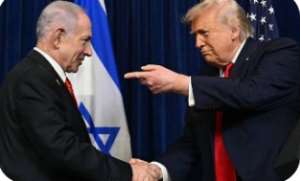
For decades, Benjamin Netanyahu built his political identity around one single proposition: that he and he alone, could manage the relationship with Washington well enough to protect Israel from existential threats and none loomed larger in his telling than Iran. He cultivated that image through speeches to the United States Congress, through the theatrical props he brandished at the United Nations, through the relentless lobbying against the 2015 Joint Comprehensive Plan of Action, and through his early alignment with Donald Trump in Trump's first term, when the United States withdrew from the Iran nuclear deal in 2018.
That brand Netanyahu as America's indispensable Israeli partner now lies in serious question. The US-Iran framework agreement announced on June 14, 2026, extending the ceasefire between Washington and Tehran and reopening the Strait of Hormuz, was concluded without meaningful Israeli input. What began in February 2026 as a joint US-Israel military campaign against Iran has ended, within months, as an American-led diplomatic process from which Israel's prime minister finds himself largely sidelined.
The political fallout inside Israel has been swift, fierce, and cuts across party lines.
How It Came to This
The context matters. On February 28, 2026, Israel and the United States launched coordinated airstrikes against Iran, killing Supreme Leader Ali Khamenei and destroying large portions of Iran's military and government infrastructure. Iran responded with missile and drone strikes against Israel and US bases across the Middle East, and closed the Strait of Hormuz through which roughly 20 percent of the world's oil supply passes triggering a global economic shock.
Pakistan brokered a conditional two-week ceasefire on April 8, 2026. The Strait of Hormuz was to reopen; US strikes were to pause. But Netanyahu continued pressing Trump privately to resume full-scale military operations, arguing that sustained pressure could still produce the collapse of the Iranian regime. The White House moved in the opposite direction.
By June 14, the United States and Iran had reached an initial memorandum of understanding extending the ceasefire by 60 days and reopening the Strait of Hormuz to commercial traffic. The US simultaneously lifted its naval blockade of Iranian ports. Both sides gave themselves 60 days to reach a technical agreement on how to down-blend Iran's stockpile of highly enriched uranium and freeze its nuclear program going forward leaving the most consequential questions unresolved .
President Trump announced the deal with characteristic flourish, celebrating his 80th birthday with the announcement. Netanyahu, hours later, held a press conference in Jerusalem in which he conspicuously avoided directly criticizing the deal but the restraint was the message. Behind closed doors, Israeli sources acknowledged that the prime minister recognized Israel had limited influence on the outcome of US-Iran negotiations.
The Voices of Condemnation
The Israeli political reaction was immediate and, for Netanyahu, politically devastating.
Former Prime Minister Ehud Barak, in an interview with Israeli public broadcaster Kan on June 15, was unsparing: "Israel is paying the price of Netanyahu's hubris and blindness, and the price of the manipulations that he tried to pull on Trump. Iran emerged stronger; Israel emerged weaker. That is Netanyahu's strategic responsibility. He failed."
Former Prime Minister Naftali Bennett who is positioning himself to challenge Netanyahu in elections expected this autumn launched an equally fierce attack. In interviews with The Times of Israel and Kan News, Bennett described the Iran deal as "a historic failure" and dismissed Netanyahu's claim to be the indispensable protector of Israeli security. "He says that as long as he is the prime minister, Iran will not have a nuclear weapon. In other words, the second he is no longer prime minister, Israel will be destroyed," Bennett said. "That is anti-leadership."
Bennett added that Iran's nuclear program had not been dismantled, characterising the emerging agreement as one that "leaves the nuclear infrastructure intact, preserves the ballistic threat as is, and throws a lifeline to the murderous regime in Tehran." His conclusion was stark: "The term of the Netanyahu government began with a civil war, continued with the massacre of October 7, and ends with a historic failure against Iran."
Opposition leader Yair Lapid, also running against Netanyahu in the autumn elections, called the deal a disaster that illustrated Netanyahu's broader failures of strategic judgment.
Even voices from within Netanyahu's own coalition registered alarm. The critique in the Knesset from MK Golan was direct: Netanyahu "stood on the sidelines" as military achievements "secured with the courage of our pilots and the blood of our fighters has been erased".
What the Deal Does and Does Not Resolve
Understanding the political stakes requires understanding what the agreement actually contains and, more importantly, what it defers.
The June 14 memorandum extends the US-Iran ceasefire by 60 days and reopens the Strait of Hormuz to toll-free commercial shipping a significant win for global trade and oil markets. In exchange, the United States lifted its naval blockade of Iranian ports.
What it does not resolve: Iran's stockpile of highly enriched uranium, its ballistic missile programme, and its network of regional proxy forces in Lebanon, Gaza, Syria, and Yemen the precise concerns that Netanyahu had insisted any credible agreement must address. Both sides have 60 days to negotiate a technical framework on the nuclear questions, but analysts describe this as a "tall order" given the difficulty of reaching even the current, less-detailed memorandum.
Some hawks in Israel and Washington worry there will never be a final deal, and that the war will end with Iran's nuclear infrastructure essentially intact.
Netanyahu himself, according to CNN, has privately expressed concern about exactly this but finds himself with little leverage to force a different outcome.
The Brand Cracks
Netanyahu's political identity has always rested on a specific claim: that his personal relationships with American presidents, and his hardline credibility on Iran, made him uniquely qualified to navigate Israel through its most dangerous neighborhood. That claim was most forcefully made against the 2015 Obama-era deal, when Netanyahu addressed the US Congress directly in opposition to a sitting American president's foreign policy a move that outraged the Obama White House but thrilled his domestic base.
With Trump, the relationship appeared even more advantageous. The two men met at Mar-a-Lago in December 2025 and presented a united front. Netanyahu appeared to have finally found the American president who would see the Iranian threat through Israeli eyes to the very end.
The gap between that expectation and the present reality is the source of the current political earthquake in Israel. Critics now argue that Netanyahu misread Trump's tolerance for a prolonged, expensive conflict; that he was outmaneuvered by Iran in the back-channel negotiations mediated by Pakistan; and that he was marginalized by the region's other players including Turkey's President Erdogan, who welcomed the ceasefire framework, and France's President Macron, who called for its swift implementation.
An African Perspective on the Lesson
From Accra, the Netanyahu story has resonance beyond the Middle East. It is a cautionary tale about the politics of over-dependence on a single powerful patron and the dangers of confusing proximity to power with actual influence over power.
Netanyahu staked Israeli security strategy on the assumption that his personal bond with Trump would give Israel a permanent veto over American foreign policy in the region. When Trump calculated that reopening the Strait of Hormuz and ending an expensive military campaign served American economic and political interests, no personal bond overrode that calculation.
Africa has known this dynamic for a very long time. The lesson is the same whether it is a small state in the Middle East or a developing nation in West Africa: relationships with great powers are transactional, not sentimental. When the interests of the powerful shift, the smaller partner is left to manage the consequences regardless of what was promised, implied, or assumed.
Netanyahu built his brand on being America's man. On June 14, 2026, America reminded him and the world that America is America's man first.
The autumn elections in Israel will determine whether Israelis draw the same conclusion.
Mustapha Bature Sallama.
Medical/ Science Communicator,
Private Investigator, Criminal investigation and Intelligence Analysis.
International Conflict Management and Peace Building.USIP
[email protected]
+233-555-275-880
Sources and References
- AP / The Hill: Interim US-Iran Peace Deal Sparks Anger Among Israelis, Who Lash Out at Netanyahu, June 15, 2026. https://thehill.com/homenews/ap/ap-international/ap-interim-us-iran-peace-deal-sparks-anger-among-israelis-who-lash-out-at-netanyahu/
- Axios: US, Iran Reach Deal to Extend Ceasefire, Open Strait, June 14, 2026. https://www.axios.com/2026/06/14/us-iran-ceasefire-extended-hormuz-reopen-trump
- CNN: Emerging Iran Deal Risks Shattering Netanyahu's Legacy, May 29, 2026. https://www.cnn.com/2026/05/29/middleeast/iran-deal-trump-netanyahu-legacy-intl
- CNN: US and Iran Reach Agreement That Includes Opening Strait of Hormuz, June 14, 2026. https://www.cnn.com/2026/06/14/world/live-news/iran-war-trump-israel
- Jerusalem Post: Bennett Launches Critique Against Netanyahu, June 16, 2026. https://www.jpost.com/israel-news/politics-and-diplomacy/article-899535
- Jerusalem Post: Naftali Bennett Iran Regime Change Will Start When Israel Has New Government, June 15, 2026. https://www.jpost.com/israel-news/politics-and-diplomacy/article-899421
- NPR: Iran and US Reach Initial Deal to Extend the Ceasefire and Open the Strait of Hormuz, June 15, 2026. https://www.npr.org/2026/06/15/nx-s1-5858590/us-iran-deal-updates
- Outlook India: Netanyahu Defends Iran Policy Amid Criticism Over Emerging US-Iran Deal, June 2026. https://www.outlookindia.com/international/netanyahu-defends-iran-policy-amid-criticism-over-emerging-us-iran-deal
- PBS NewsHour: Israelis Angry Over US-Iran Peace Deal Lash Out at Netanyahu, June 15, 2026. https://www.pbs.org/newshour/world/israelis-argry-over-u-s-iran-peace-deal-lash-out-at-netanyahu
- Times of Israel: Netanyahu Avoids Criticizing US-Iran Deal, Claims War's Main Goals Have Been Achieved, June 16, 2026. https://www.timesofisrael.com/netanyahu-avoids-criticizing-us-iran-deal-claims-wars-main-goals-have-been-achieved/
- Times of Israel: Bennett to ToI We're at an Existential Moment, June 14, 2026. https://www.timesofisrael.com/bennett-to-toi-were-at-an-existential-moment-another-four-years-with-this-government-we-wont-have-a-society/
- Wikipedia: 2026 Iran War Ceasefire. https://en.wikipedia.org/wiki/2026_Iran_war_ceasefire
- House of Commons Library: US-Iran Ceasefire and Nuclear Talks in 2026. https://commonslibrary.parliament.uk/research-briefings/cbp-10637/


 Balancing the scale will dilute extreme partisanship – Hamza on new Deputy EC Ch...
 October 13: Cedi sells at GHS12.30 on forex market, GHS11.78 on BoG interbank
 ECOWAS begins implementation of 2026–2031 communication strategy
 IMF upgrades 2026 global growth forecast but war and debt threaten outlook
 Education Minister proposes 5–10% annual rent increase cap for public universiti...
 Haruna Iddrisu assures teachers of salary adjustments by October 16
 Madina police sergeant arrested for injuring two in shooting incident at Adenta ...
 Ghana’s rape laws must protect male victims – Kasapa FM’s Akosua Gyambiby
 Ghana needs comprehensive surrogacy law to address complex legal disputes — Afri...
 Value For Money: Govt to audit rural telephony project inherited from previous a...


