




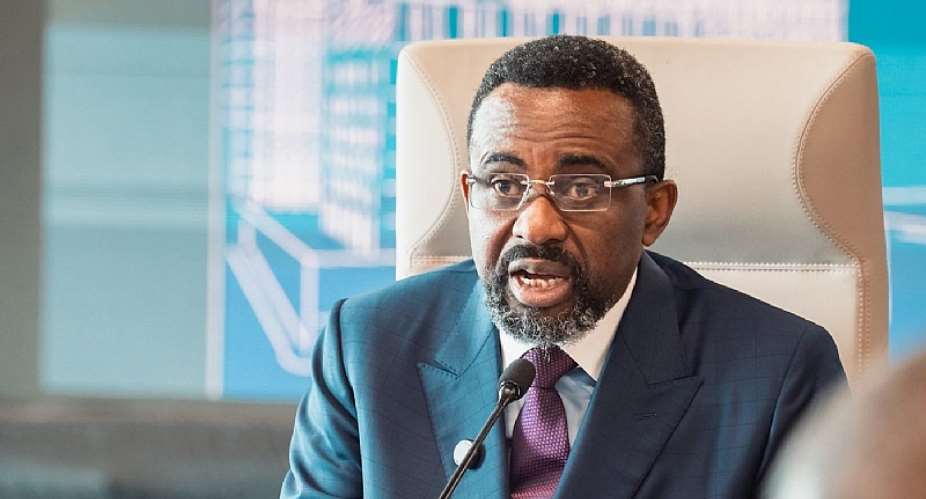
The Governor of the Bank of Ghana (BoG), Dr. Johnson Asiama, says easing geopolitical tensions in the Middle East could strengthen Ghana’s inflation outlook and potentially create room for further monetary policy easing if current trends hold.
Addressing Heads of Commercial Banks, Dr. Asiama said the Monetary Policy Committee (MPC) is closely tracking developments following reports of a framework agreement between Iran and the United States aimed at de‑escalating hostilities.
The agreement has raised hopes that the Strait of Hormuz — a critical global oil transit route — will remain open, reducing fears of supply disruptions and easing upward pressure on crude oil prices.
Dr. Asiama noted that when the MPC last met, it assessed the domestic economy as resilient despite a volatile global backdrop. Inflationary pressures were contained, but risks from prolonged geopolitical tensions remained a concern.
“The Committee noted that although inflationary pressures remained contained, potential risks persisted, especially those associated with prolonged geopolitical tensions,” he said.
Based on that assessment, the MPC maintained the policy rate at 14 percent, concluding that risks to inflation and growth were broadly balanced.
However, the Governor acknowledged that the global environment has shifted.
“Clearly, the outlook since yesterday has now changed, and we are monitoring events in the coming days and weeks until the next meeting of the MPC,” he stated.
Analysts say a reduction in geopolitical tensions could lower global crude prices by reducing risk premiums. For Ghana, cheaper oil would help moderate imported inflation, ease pressure on transport and energy costs, and support the ongoing disinflation process.
Such improvements could strengthen the case for further monetary policy easing, especially if inflation continues to fall and the exchange rate remains stable.
While Dr. Asiama stopped short of signalling a specific policy move, his remarks suggest the central bank will incorporate the evolving global landscape into its next policy assessment.
The Bank of Ghana has already eased monetary policy in recent months as inflation has moderated. Any further improvement in external conditions — particularly through lower oil prices and reduced geopolitical risks — could provide additional support for a more accommodative stance.
For now, Dr. Asiama stressed that the MPC remains vigilant, assessing how the latest international developments will shape inflation, growth and overall macroeconomic stability ahead of its next decision.
— CitiNewsRoom
 Thunderstorm, heavy rain and strong winds expected across Ghana — GMet warns
 Tema Police intercept truck loaded with suspected Indian Hemp, arrest two
 World Bank approves US$300 million to support phase out of SHS double track syst...
 World Cup 2026: 'Play for the flag, the children who dream of following in your ...
 SHS students storm teacher’s residence to rescue female classmate found in his r...
 Ghanaian youth now turning to politics as 'shortcut to success' — Mary Addah
 About 18,000 premature child deaths would be averted with 7.2% GDP investment — ...
 June 17: Cedi sells at GHS12.30 on forex market, GHS11.16 on BoG interbank
 Prosecute Ofori-Atta in absentia if you have evidence — Ahiagbah tells OSP
 It's incompetent to claim NPP is responsible for bringing back Ofori-Atta — Ahia...


