The first four days of the 2026 FIFA World Cup have offered more than just goals and dramatic results. They have exposed the realities of modern football development and highlighted the growing importance of structure, planning, and player integration.
For African football, Day 4 presented a mixture of pride and disappointment. While Côte d’Ivoire celebrated a crucial victory, Tunisia endured a painful defeat. Together, these results underscored a recurring lesson in international football: talent alone is not enough. Success increasingly depends on the systems that develop, integrate, and sustain that talent.
Tunisia’s Heavy Defeat: A Lesson Beyond Recruitment
Tunisia arrived at the World Cup with a squad heavily influenced by the diaspora, including 15 foreign-born players, many of whom developed through France’s renowned youth football system.
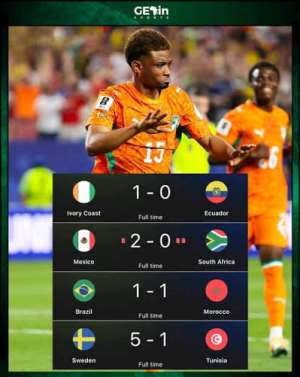
On paper, the strategy appeared sensible. Several African nations have successfully leveraged diaspora talent to strengthen their squads. However, Tunisia’s 5-1 defeat to Sweden revealed the limitations of recruitment without deep integration.
Sweden exposed defensive weaknesses throughout the match. Yasin Ayari struck twice from distance, while Alexander Isak and Viktor Gyökeres capitalized on defensive lapses. Mattias Svanberg completed the rout as Tunisia struggled to establish any rhythm or cohesion.
The defeat highlighted a crucial distinction between simply recruiting talented players and building a unified football culture.
Morocco provides a useful contrast. The Atlas Lions have spent years integrating diaspora players into national youth teams and development structures. Their approach ensures that players understand the team’s philosophy long before reaching senior level. The result is a squad that operates as a collective unit rather than a group of individuals assembled for major tournaments.
Tunisia’s experience demonstrates that talent acquisition without long-term integration often produces teams that lack chemistry when it matters most.
Key Lesson
Recruiting diaspora talent can strengthen a national team, but sustainable success requires a clear developmental framework that integrates players from an early stage.
Côte d’Ivoire Shows the Value of a Hybrid Model
While Tunisia struggled, Côte d’Ivoire provided a positive example of how diaspora integration can work effectively.
The Elephants secured a valuable 1-0 victory over Ecuador thanks to a dramatic late goal from Amad Diallo. The win significantly improves their chances of progressing from the group stage.
Like Tunisia, Côte d’Ivoire benefits from foreign-born talent. Nine members of the squad were born outside the country, with eight coming from France. The difference lies in how these players are incorporated into the national setup.
Under coach Emerse Faé, who himself emerged from the French football system, Côte d’Ivoire has successfully blended local football identity with European tactical education. The result is a balanced and competitive team capable of performing on the world stage.
Their victory illustrates how modern African football can benefit from global talent networks while maintaining a strong national football identity.
Egypt and Cape Verde Face Major Tests
As the tournament continues, attention now turns to Egypt and Cape Verde.
Egypt faces one of the toughest assignments in world football: a clash against Belgium, currently ranked among the world's elite teams. While Mohamed Salah remains Egypt’s standout star, success will depend on the collective strength of the squad rather than individual brilliance alone.
For Cape Verde, the challenge is even more historic. The Blue Sharks are making their World Cup debut against reigning European champions Spain.
With a significant gap separating the two nations in FIFA rankings, expectations remain modest. Yet football has repeatedly shown that underdogs can thrive when freed from pressure. Cape Verde enters the contest with nothing to lose and everything to gain.
Curaçao’s Story Is Bigger Than the Scoreline
Germany’s 7-1 victory over Curaçao was one of the most lopsided results of the tournament so far. Predictably, questions emerged about the expansion of World Cup participation.
However, focusing solely on the scoreline misses the bigger story.
With a population of approximately 150,000 people, Curaçao became the smallest nation ever to qualify for a FIFA World Cup. Their journey included overcoming established football nations such as Jamaica and Trinidad and Tobago during the qualification campaign.
The achievement demonstrates what is possible when football development is supported by clear planning and effective administration.
Rather than mocking Curaçao’s defeat, larger football nations should view their success as a challenge. If a small Caribbean island can reach football’s biggest stage, resource-rich federations that continually fail to qualify must examine their own structures and priorities.
Day 4 Results
Match
Result
Netherlands vs Japan
2-2
Australia vs Türkiye
2-0
Scotland vs Haiti
1-0
Côte d’Ivoire vs Ecuador
1-0
Sweden vs Tunisia
5-1
Germany vs Curaçao
7-1
Three Major Takeaways from Day 4
1. Integration Matters More Than Recruitment
Successful teams do not merely identify talent; they build systems that nurture and integrate players into a shared football philosophy. Morocco and Côte d’Ivoire demonstrate this principle, while Tunisia’s struggles highlight the risks of neglecting it.
2. The French Development Influence Remains Significant
Many successful African teams benefit from players and coaches shaped by France’s football infrastructure. The issue is not whether players are foreign-born, but whether they are effectively incorporated into a long-term national football project.
3. Small Nations Can Achieve Big Results
Curaçao’s qualification proves that organization, planning, and commitment can overcome limitations in size and resources. Their achievement should inspire, and perhaps embarrass, larger federations that continue to underperform despite having greater advantages.
Conclusion
The 2026 FIFA World Cup is proving to be a showcase not only of individual talent but also of football governance, coaching philosophy, and developmental systems.
For African football, the message from Day 4 is clear. The continent possesses an abundance of talent capable of competing with the world's best. The decisive factor is whether national federations can build the structures necessary to transform that talent into sustained success on football’s biggest stage.
The future of African football may depend less on discovering talented players and more on creating the systems that allow them to flourish.

 Atta Akyea takes over from Andy Appiah Kubi as lawyer for Wontumi’s Samreboi cas...
 Woman loses temper, fights mentally challenged lady over alleged disrespect
 WHO welcomes UK's move to ban social media access for children under 16
 June 15: Cedi appreciates, sells at GHS12.30 on forex market, GHS11.06 on BoG in...
 Samreboi case: How rejection of Appiah Kubi's withdrawal could offer Wontumi a p...
 UK to ban under-16s from social media over safety and mental health concerns
 Samreboi case: Appiah Kubi cites disappointment with court in withdrawal applica...
 ECOWAS mourns demise of former Commission President James Victor Gbeho
 Andy Appiah Kubi's application to withdraw as Lawyer for Wontumi in Samreboi ill...
 I’ll file a notice of withdrawal and leave the case—Appiah Kubi on next line of ...