




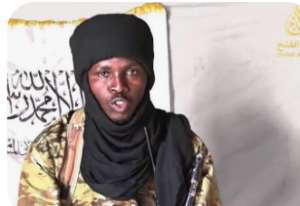
The statement released this week by Bina Diarra the nom de guerre of Abu Hudheifah al-Bambari, official spokesperson of Jama'at Nusrat al-Islam wal-Muslimin (JNIM) is not merely the latest dispatch from an emboldened insurgency. It is a strategic declaration of war with consequences that will reverberate far beyond the borders of Mali.
In a statement dated June 6, 2026, JNIM announced financial rewards for information leading to the location or neutralization of senior Malian military officials. The group offered €2 million for information leading to transitional President Assimi Goïta, and €1 million each for Colonel Lassina Diallo and General Malick Dicko.
The reward would be paid to anyone providing information on their whereabouts or anyone taking concrete action to "neutralize" them. The announcement was shared globally by SITE Intelligence Group, which monitors jihadist communications worldwide.
It is the most audacious public statement JNIM has ever issued. But it does not exist in a vacuum. It is the culmination of months of coordinated escalation, territorial gain, and ideological emboldening and it signals that the Malian state, despite Russian military support, is confronting an insurgency that has now moved from destabilizing the periphery to threatening the very heart of the country's power structure.
From Spokesman to Strategist: Who Is Bina Diarra?
Bina Diarra did not emerge overnight. He has been JNIM's primary voice in Bambara the dominant language of Mali's south and political heartland for several years, making him a figure of unique influence within the organization. Unlike communiqués issued in Arabic and aimed at an international jihadist audience, Diarra's messages are deliberately crafted for domestic Malian consumption: for the rural youth, the disillusioned urban poor, and the communities that have grown weary of state neglect and junta misrule.
In November 2025, Diarra released a video communiqué in Bambara threatening to tighten JNIM's economic blockade on Mali, explicitly designating fuel-truck drivers as legitimate military targets a dangerous doctrinal escalation and calling on the population of Bamako to "repent" and cease activities deemed contrary to their interpretation of Shari’a. That announcement marked JNIM's first serious attempt at urban moral policing, a significant doctrinal evolution.
The UN Human Rights Office has documented that Malian intelligence services have carried out enforced disappearances targeting members of Bina Diarra's own family, including his father and brother, as apparent reprisals for his role as JNIM's spokesman. (OHCHR) This repression has, if anything deepened Diarra's symbolic value to the movement and reinforced JNIM's narrative of a state that punishes civilians for the alleged crimes of their relatives.
The April 25 Watershed and Its Aftermath
To understand the June 6 statement, one must understand what preceded it. Since April 25, 2026, a series of coordinated joint attacks were carried out by the Azawad Liberation Front (FLA) and JNIM across multiple locations in Mali, including Bamako, Kati, Bourem, Sévaré, Senou and Mopti, while the FLA claimed control of Kidal and parts of Gao.
The most consequential single act of that offensive was the assassination of Defence Minister Sadio Camara. A vehicle-borne explosive detonated outside Camara's residence in Kati a heavily fortified garrison town approximately 15 kilometers northwest of Bamako, where Goïta and other junta leaders also reside killing Camara, his second wife, two of his grandchildren, and several civilians. It was a strike at the symbolic and physical centre of junta power.
President Goïta subsequently appointed himself Defence Minister on May 4, 2026. The move was interpreted both as consolidation of personal authority and as an acknowledgement that trust within the military's highest echelons had been shattered by the April attacks.
In the immediate aftermath of those attacks, JNIM announced it was reimposing a full blockade on Bamako, with Diarra framing the measure as retaliation against civilians who had helped Malian armed forces capture or kill JNIM attackers on April 25. Diarra declared in a video that all routes into Bamako were blocked, warning that anyone attempting to enter would face consequences "including the risk of death," with the same restrictions applied to the garrison town of Kati.
Malian and Russian forces negotiated withdrawals from at least six towns in northern Mali following the offensive, including Kidal city and Tessalit in the Kidal region, Ber and Léré in the Timbuktu region, and Intahaka and Tessit in the Gao region. Each withdrawal, however reluctantly conceded, has been absorbed by JNIM as evidence that the tide has turned.
The June Statement: A Strategic Roadmap, Not a Rhetorical Gesture
The June 6 statement goes well beyond what has come before. The bounties on Goïta, Dicko, and Diallo serve multiple strategic functions simultaneously.
First, they are a psychological operation of considerable potency. By placing a price on the head of a sitting head of state, JNIM signals to the Malian public, the military establishment, and JNIM's own fighters that no official is beyond reach not even the man who has styled himself the irreplaceable custodian of Mali's sovereign dignity.
Second, the bounties are a form of intelligence activation. They invite ordinary Malians soldiers, civil servants, household staff, and market traders to become sources. Whether anyone acts on the offer is secondary; the primary effect is to plant in every official's mind the knowledge that they could be betrayed by anyone around them.
Third, the statement contains a clear call for general mobilization. According to the source document analyzed here, Diarra urged fighters and supporters to join the war effort, called for continued and intensified attacks on the Malian armed forces, and declared an intention to maintain pressure on major logistical and economic routes. Together, these elements constitute, in the words of analysts who reviewed the statement, a strategic roadmap for the coming months and possibly an action plan for the coming weeks.
The Illusion of the "Quiet Period"
For weeks before this statement emerged, some regional observers had noted a relative decrease in the frequency of JNIM attacks across certain zones. This apparent lull tempted some into premature conclusions about the organization’s trajectory. Diarra's statement dispels any such optimism.
The lull, it now appears, was a period of preparation rather than any sign of weakness or fragmentation. This pattern temporary consolidation followed by aggressive communication and then renewed military action has been observed repeatedly in JNIM's operational history. The group has consistently used periods of lower operational tempo to reorganize logistics, recruit, and select its next targets.
The practical implications for ordinary Malians are stark. The statement signals more ambushes on major roads, intensified attacks on military positions, further disruption of supply chains, and deeper isolation of rural and semi-urban communities from one another and from the capital.
The Bamako–Moscow Partnership and Its Limits
The June 6 statement is also, implicitly, an assessment of the Russia–Mali security partnership and JNIM's verdict is that it has failed to shift the fundamental balance of power.
Despite the presence of Russia's Africa Corps, armed groups have continued to expand their reach and have demonstrated their ability to strike multiple strategic areas simultaneously. The coordinated offensives of spring 2026 exposed the persistent vulnerability of government positions and led to Russian withdrawals from certain northern localities, according to multiple open sources.
This is a significant finding. When Bamako first welcomed Africa Corps formerly operating as Wagner Group it presented the partnership as a decisive counterweight to jihadist expansion. The narrative sold to Malians was one of a formidable ally that would succeed where France, MINUSMA, and Western partners had allegedly failed. The events of April and May 2026 have shattered that narrative comprehensively.
The government now faces a difficult reality: it is essentially alone against an insurgency capable of sustained adaptation, effective communication, broad recruitment, and simultaneous multi-front operations across a territory that dwarfs most European states. Russian firepower, effective as it is in certain engagements, cannot substitute for legitimate governance, community trust, or the restoration of state services to populations that have lived for years without them.
JNIM Knows This. Bamako Must Know It Too.
The June 6 statement is, in the final analysis, a document of strategic confidence. JNIM is not issuing it from a position of desperation. It is issuing it from a position of momentum after a Defence Minister has been killed, after Russian forces have retreated from key northern towns, after blockades have throttled Mali's economic arteries, and after the head of state has had to appoint himself to fill the vacancy left by assassination.
For Bamako, the lesson must be clear: security cannot be purchased wholesale from a foreign partner, however capable. Durable stability in Mali as in every Sahelian state facing similar pressures will require political legitimacy, inclusive governance, and a genuine social contract with populations that have long felt abandoned. Until that reckoning comes, JNIM will continue to fill the vacuum not merely militarily, but ideologically.
Bina Diarra's latest statement is not just a warning. It is a challenge. The question is whether Bamako has the political will, and the imagination, to respond to it with anything beyond further repression and foreign guns.
Mustapha Bature Sallama.
Medical/ Science Communicator,
Private Investigator, Criminal investigation and Intelligence Analysis.
International Conflict Management and Peace Building.USIP
[email protected]
+233-555-275-880


 Bolgatanga: Man found dead by roadside in Sumbrungu as police investigate
 Ghana concludes cocoa freight negotiations for 2026/27 season
 Blakk Rasta accuses Gushegu NPP MP Alhassan Tampuli of funding Ghana Jollof atta...
 €225m Cocaine Shipment: Court to rule on bail application of six accused in 3.9-...
 BoG pilots cedi-based payment system for Ghana-China trade
 2026 BECE: Ten schools score zero percent in Adaklu as girls outperformed boys
 Gold shipments resume as Ghana rebuilds foreign exchange reserves — BoG governor
 ECG unions to stage nationwide protest over proposed private sector participatio...
 ‘That penalty is a joke’ — Queiroz rejects referee decision in Ghana’s loss to C...
 'Sceptics, naysayers, alarmists should be aware US ready to work with Ghana on r...


