




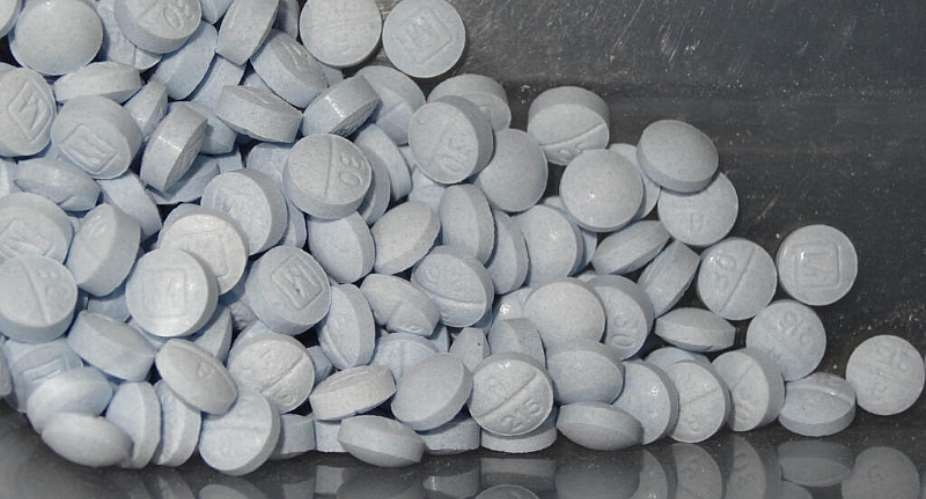
The Lisbon-based agency's annual report, published on Tuesday, found that drugs are becoming more available, more diverse and more potent across Europe, while organised crime groups are adapting their trafficking networks to evade detection.
Although Europe continues to record far fewer fatal overdoses than North America, the report pointed to growing risks from synthetic opioids and a steady flow of new substances entering the market.
At least 50 new psychoactive substances were identified for the first time in Europe in 2025, based on data from the EU's 27 member states, Norway and Turkey.
"Drug markets are evolving at speed, with the variety of substances on Europe's streets becoming ever more unpredictable," said EUDA executive director Lorraine Nolan.
"This raises the risk of people taking high-potency drugs, often without knowing it."
Police raids across 90 countries seize fake and illegal medicines worth €14m
Mounting deaths
Particular concern centred on nitazenes, a group of powerful synthetic opioids found in counterfeit benzodiazepines and street drugs including cocaine, heroin and ketamine.
Nitazenes were linked to 195 deaths in England and Wales in 2024, nearly four times the previous year's figure. In Bulgaria, fentanyl was associated with more than 100 deaths between 2024 and 2025, with fatalities spreading beyond the capital, Sofia.
The EUDA estimated that at least 7,600 people died from overdoses in the European Union in 2024, equal to 25 deaths per million people aged 15 to 64. Most cases involved multiple substances.
Opioids, often taken in combination with other drugs, remained the leading cause of drug-induced deaths in Europe.
The report said illicit drugs are now widely available across the continent, with new cannabis products continuing to appear and a growing range of opioids and stimulants being sold.
Rising drug crime reshapes politics in France's port city of Brest
New routes
Drug trafficking networks are increasingly using smaller, less-scrutinised ports after intensified policing operations at major European gateways, the report said.
The volume of cocaine seized in Europe fell by more than 20 percent from 419 tonnes in 2023. At the same time, the number of seizures rose to 97,000 from 95,000 a year earlier, suggesting traffickers may be switching to smaller and more fragmented shipments.
New trafficking methods, including drones and speedboats, are also complicating enforcement efforts.
Cannabis remained the most widely used drug in Europe, with juste under 25 million adults aged 15 to 64 reporting use in the previous year. It accounted for 68 percent of around one million drug seizures in 2024.
Cocaine was the second most commonly used drug, with 4.3 million adults reporting use.
Drug-related intimidation and violence remain a concern, the report said, including the exploitation and recruitment of vulnerable young people by criminal groups.
(with newswires)

 Why should sick people suffer because of your ‘too known’ — Hopeson Adorye blast...
 You chose to be a doctor, do the work with passion – Hopeson Adorye
 We have paid too high a price to allow freedom of speech diminish — Osahen Afeny...
 No disciplinary concern justifies violence against students - EduWatch condemns...
 Introduce regular criminal background checks into teacher recruitment — EduWatch...
 Bank of Ghana mops up GH¢17.24bn in major liquidity tightening move
 NDC marks 34 years of political influence and democratic governance
 UTAG threatens nationwide strike over delayed book and research allowances
 808 presidential staffers on payroll as Parliament receives annual staffing repo...
 24-Hour Economy cannot succeed without data — GSS tells Parliament


