




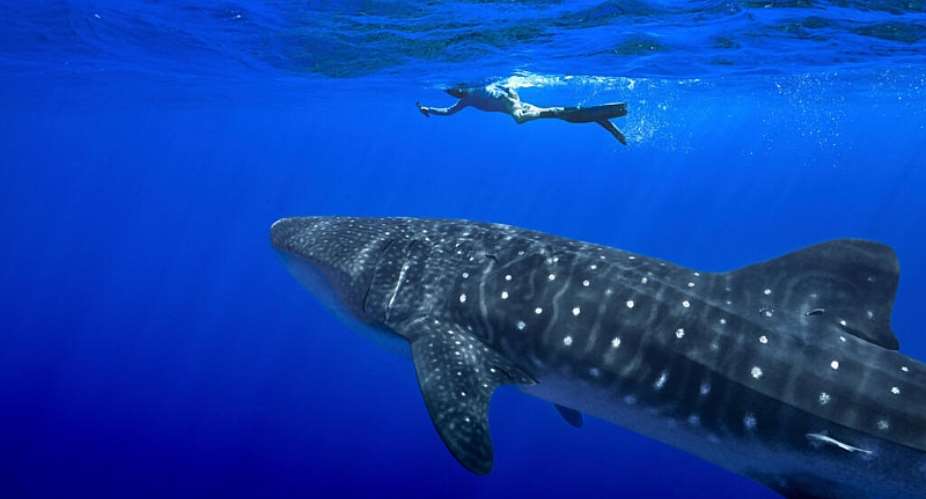
This brings to 14.68 percent the proportion of French maritime waters under strict protection, a designation that prohibits or strictly limits activities such as fishing, extraction, and tourism.
"We are moving much closer to the objective we set for ourselves at the UNOC (the United Nations Ocean Conference in June 2025) of reaching 14.8 percent by the end of this year," according to the Minister for Ecological Transition, Monique Barbut, who made the announcement alongside the Minister Delegate for the Sea and Fisheries, Catherine Chabaud.
Barbut was speaking at the opening of the "Neptune Forum," which aims to be the "Davos of ocean exploration," and which brought together scientific experts, diplomats, representatives of NGOs, and institutional leaders, on Monday in Paris.
The three new marine zones encompass parts of the French Southern and Antarctic, where the seabed lies beyond 2,500 metres.
In Guadeloupe, the zone will protect coral reefs, home to sea turtles, while in the Bay of Audierne, off the coast of Finistère, the measures will protect a bird species known as the Kentish plover.
UN Summit advances ocean protection, vows to defend seabed
In December, France launched the "strong marine protection zones" label for 63 sites in its waters – taking a concrete step towards a pledge made in June 2025 at the UN Ocean Summit in Nice.
The sites include the Cordelière Bank in the Scattered Islands in the Mozambique Channel, the marine core of Port-Cros National Park in the Mediterranean and a reserve off the Île de Ré on the Atlantic coast.
Tackling plastic pollution
The Nice summit concluded with the ratification by 50 countries of the High Seas Treaty (known as the BBNJ), an international agreement designed to better protect international waters, representing half the planet.
"Today we have more than 90" signatory countries, stated French Ambassador for Oceans and Polar Affairs Olivier Poivre d'Arvor on Monday at the forum.
France rolls out 'strong protection' label for 63 marine areas
"Our goal (...) is to ensure that on January 11, 2027, in New York, at the United Nations, during the first COP of the Ocean, the COP of the High Seas, we have more than 120 countries around the table," he added.
Barbut and Chabaud also presented an action plan for combating plastic waste for the years 2026 to 2030.
"Every year, nearly 12 million tons of plastic end up in our oceans. The fight against plastic waste at sea was therefore one of the priorities of UNOC-3 and is a major issue for the health of marine ecosystems, from inland to coastal areas," according to a statement from the Ministry of Ecological Transition.
(with newswires)


 Mahama holds bilateral talks with Jamaican leaders
 NPP secures Police approval for August 6 protest over Sedina Tamakloe acquittal
 Court orders married man to pay GH¢40,000 for breaking promise to marry side chi...
 'NPP is finished, let me lead you' – Mosquito mocks opposition party
 GHC55m probe: Miracles Aboagye first tried to edit the audit – Kay Cudjoe blows ...
 NPP postpones national executive conference to October 3
 Ada East Assembly orders further probe into PWD Common Fund over management issu...
 Speaker Bagbin announces “Visit Ghana” Project with Sunderland
 Romance scam pastor arraigned

