




A Dream Deferred at the Embassy Gate
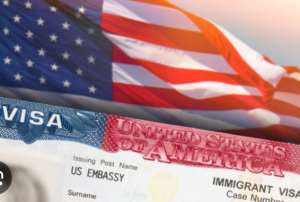
The dream was simple board a flight to North America, paint their faces in red, gold, and green, and roar the Black Stars to glory at the 2026 FIFA World Cup. For 147 Ghanaian supporters, however, that dream was extinguished not on any football pitch, but in the sterile corridors of the United States Embassy in Accra.
A group of Ghanaian football supporters hoping to travel to the United States to support the Ghana national football team at the 2026 FIFA World Cup were reportedly denied visas by the US Embassy, sparking concern among football fans and sports personalities across the country.
The scale of the rejection has sent shockwaves through the footballing community, raising a sobering question: Will the Black Stars go to war in America without their most passionate soldiers?
147 Rejected: The Numbers Behind the Alarm
The story came to public attention through a blunt and emotional social media post. Veteran Ghanaian media personality Sannie Daara revealed details of the incident in a Facebook post on Monday, May 11. According to him, a group submitted visa applications for 150 Ghanaian supporters intending to travel to the United States for the World Cup. However, only three applicants were reportedly granted visas despite claims that the group met all the requirements outlined by the US Embassy.
The numbers are stark and, for many Ghanaians, infuriating. A 98 percent rejection rate even among those who claimed to have followed the rules has laid bare the difficulties that African nationals face when seeking entry into the United States, particularly under the current administration's hardened immigration posture.
As Sannie Daara wrote in his post: "At this rate, the Black Stars may have more players in America than Ghanaian fans in the stands. The embassy didn't just deny visas; they played a low block, counter-pressed, and eliminated 147 supporters before kick-off."
America's Complicated Welcome Mat
The irony of the situation is impossible to ignore. The United States, positioning itself as the grand host of what promises to be the biggest World Cup in history, has simultaneously erected barriers that make it difficult for fans from Africa, Latin America, and other regions of the Global South to actually attend.
U.S. Secretary of State Marco Rubio issued a stark caution to prospective visitors, stating that a World Cup ticket is not a visa and does not guarantee admission to the US. He confirmed that while the FIFA PASS system expedites interview scheduling, the regular vetting process remains strictly in place. The State Department also announced it is deploying 400 additional consular officers globally.
The FIFA Priority Appointment Scheduling System, known as FIFA PASS, was introduced as a concession to the sheer volume of fans expected. The system gives those who purchase World Cup tickets directly from FIFA and opt into FIFA PASS the chance to interview for a B1/B2 visitor visa before the tournament begins. In theory, it is a practical tool. In practice, for many Ghanaians, it has proven insufficient.
Under President Donald Trump's second term, the US has ramped up its crackdown on illegal immigration, introducing layers of restrictions that have sparked concerns among international fans particularly from Africa and Latin America. For Ghanaians, securing a visa to the United States has already been an uphill battle, with waiting periods at the US Embassy in Accra reportedly stretching from six months to one year.
The Visa Landscape: What Applicants Are Up Against
For those who still wish to try their luck, immigration experts have outlined the requirements carefully. An immigration lawyer in the USA advised that Ghanaian applicants for the B1/B2 short-term visa should ensure they have match tickets, among other essential supporting documentation, to increase their chances of being issued a visa.
The US Embassy in Accra, led by Consul General Elliot Fertik, held a series of briefings to clarify the roadmap for travelers, with the message that the door is open but applicants must walk through it with honesty and preparation.
In a notable development, the Embassy successfully reduced waiting times for FIFA PASS appointments to approximately one week as of March 2026 a dramatic shift from the months-long backlogs seen in previous years.
But the Embassy also issued stern warnings. A "Zero Tolerance" policy was declared against visa fraud. The Embassy cautioned that using a fake document does not merely result in a denial it can lead to a permanent, lifetime ban from entering the United States. The guidance was clear: there is no shortcut, no "connection man," no backdoor. Only the official portal.
Mahama's Warning: Don't Make Things Worse
The pressure on Ghanaian fans is not only coming from Washington. Even Accra has weighed in and not without reason.
President John Dramani Mahama appealed to Ghanaian supporters planning to travel to North America for the 2026 FIFA World Cup to respect immigration regulations and return home after the tournament. Delivering the State of the Nation Address in Parliament on February 27, the president expressed concern over past incidents where some citizens attending international sporting events failed to return upon the expiration of their visas.
The president's concern was pointed and political. He noted that "it has taken a lot of work to restore Ghana's five-year non-immigrant visas and take us off the ban list," and warned that Ghana does not want to see "thousands of Ghanaians travel to America refuses to return, and push us back." The stakes, in other words, extend far beyond football.
What the Black Stars Are Playing For and Where
Ghana's 2026 World Cup campaign is set against a backdrop of genuine footballing excitement. The Black Stars have been drawn into Group L and will battle England, Croatia, and Panama. Their first group game is on June 17 at the 45,000-seat BMO Field in Toronto, followed by a clash against England on June 23 at Gillette Stadium in Boston, and a final group game against Croatia at Lincoln Financial Field in Philadelphia on June 27.
Two of Ghana's three group-stage games will be played in the United States in Boston and Philadelphia making the US visa situation directly relevant for thousands of fans hoping to witness those matches in person.
The fixture against England is expected to be one of the most anticipated clashes of the group stage, with large Ghanaian and English communities in the US likely to fill the stands in Boston. The June 27 matchup against Croatia in Philadelphia could prove decisive, especially if qualification hinges on the final round of group games.
This is precisely what makes the mass visa denials so painful. Two of Ghana's three matches are on American soil and it is to American stadiums that Ghanaian fans are being denied entry.
The Diaspora Question and the Broader Stakes
One consolation, and it is not a small one, is the size and vitality of the Ghanaian diaspora in North America. All of Ghana's chosen venues are reported to guarantee significant support from the Ghanaian diaspora, offering a timely boost ahead of a demanding tournament. Ghanaian communities in Boston, Philadelphia, Toronto, and across the northeastern United States and Canada are expected to fill many of the seats, even if fans from home cannot.
Additionally, coordinated efforts are underway to ensure a core contingent of supporters makes the journey. The Ghana Football Association, the National Lottery Authority, and Rambell launched a "World Cup Bonanza" initiative that will fly 220 fans to the World Cup with subsidized travel and match access, with winners receiving airfare, accommodation, and tickets via a lottery system.
But for the many who applied independently saving money, booking time off work, purchasing match tickets the mass denial represents a crushing blow.
The Bigger Picture: African Fans and the World Cup Experience
The Ghanaian situation is emblematic of a wider problem. The 2026 World Cup is the most expansive in the tournament's history 48 teams, 104 matches, and three host nations. Yet the logistical and legal architecture surrounding travel to the United States risks producing a tournament dominated by fans from wealthy, visa-exempt nations, while supporters from Africa, Asia, and the developing world are filtered out before the first whistle.
An anonymous Black Stars player captured the sentiment: "We need the Ghanaian noise in the stadium, so we hope the process is quick and fair for our fans." It is a sentiment that resonates deeply. Ghanaian fans are known for their color, their drums, their dancing, and their infectious energy. They are, in the truest sense, the twelfth man.
If 147 supporters can be turned away in a single batch reportedly despite meeting all requirements the question of how many thousands more will be quietly denied across the months leading up to June looms large.
Conclusion: Dreams on Hold
Ghana is heading to its fifth World Cup with one of its most exciting squads in years Mohammed Kudus dazzling from midfield, Thomas Partey anchoring the engine room, and a new coach in Carlos Queiroz mandated to push the Black Stars to the quarter-finals and beyond.
But football at its greatest is a communion between players and people. The Black Stars do not play in a vacuum; they play for the millions who bleed black, gold, and green. The mass denial of visas to Ghanaian supporters is not merely a bureaucratic inconvenience it is a rupture in that bond between team and nation.
For 147 fans who did everything right and still heard "no," the 2026 World Cup will be something they watch from the couch, far from the roar of a stadium that should have been their stage too.
The embassy may have denied them entry. But no visa denial can take away their love for the Black Stars or silence the question of whether the world's greatest football tournament is truly, as promised, a festival for the world.
Mustapha Bature Sallama.
Medical/ Science Communicator,
Private Investigator, Criminal investigation and Intelligence Analysis.
International Conflict Management and Peace Building.USIP
[email protected]
+233-555-275-880

 Baffour Awuah may spend night in EOCO custody — Lawyer
 Suspend Ghana-Colombia port and visa deals over cocaine seizures — Minority
 Ghana Law Society proposes National Service for fresh lawyers
 'We cannot continue to be a Bar of Accra, by Accra, for Accra' — Ghana Law Socie...
 Stop speculation, premature conclusions; allow investigation to determine Baffou...
 Judge halts Ex-NAFCO CEO's trial until ruling on seized phones
 Manhyia South MP who resisted arrest reports to EOCO a day after arrest warrant ...
 "Show us evidence" —Upper West teacher unions demand proof of payment before end...
 Adenta: Bolt driver jailed 25 years for cutlass attack and robbery of beautician...
 EOCO drags Manhyia South MP to former law firm, residence for search



Comments
It's unfortunate, but Canada now has an issue.