




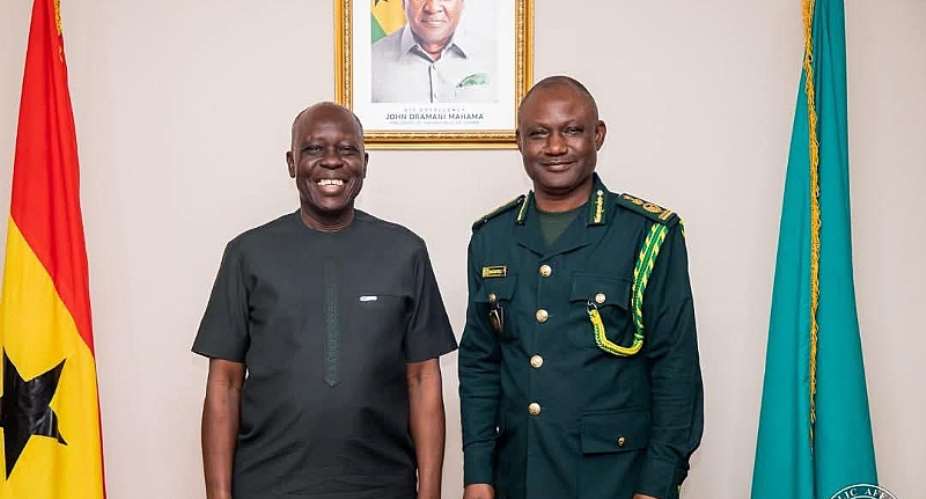
The Ghana Immigration Service has launched a major nationwide initiative aimed at preventing and responding to Gender Based Violence (GBV), Sexual Exploitation, Abuse and Harassment (SEAH) within migration and border management operations.
The exercise forms part of the implementation of the Service’s GBV PSEAH Policy with technical and financial support from the United Nations Population Fund in 2025.
As part of the first phase of the programme, the GIS has developed and validated a comprehensive GBV PSEAH training manual and organised two specialised training programmes for selected officers and facilitators who are expected to train personnel across regional commands and training schools nationwide.
The initiative is expected to strengthen the Service’s institutional response to gender related abuses, particularly in border communities and migration corridors where vulnerable groups such as women and children are often exposed to exploitation and violence.
According to the GIS, migration and border management environments present unique risks that can make migrants vulnerable to sexual exploitation, abuse, trafficking, harassment, and other forms of violence.
The Service explained that many migrants are forced to travel through dangerous and unapproved routes where the risk of sexual violence, including rape, remains high, especially for women and girls travelling without adequate protection or resources.
The GIS noted that the implementation of the policy demonstrates its commitment to maintaining zero tolerance for all forms of gender based violence and sexual misconduct within its operations.
As part of efforts to deepen implementation, the Service will this year roll out a number of strategic interventions including expanded gender and GBV SEAH training programmes, stronger reporting and monitoring systems, enhanced institutional awareness campaigns, improved community relations, and increased resource mobilisation to support policy implementation.
The initiative also seeks to decentralise training and capacity building activities to operational levels including sectors, districts, border posts, and inland checkpoints.
During a courtesy call on the Comptroller General of Immigration, Samuel Amadu Basintale, at the GIS National Headquarters, the Country Representative of the United Nations Population Fund, Wilfred Ochan, reaffirmed the organisation’s commitment to supporting the implementation of the programme.
Dr Ochan revealed that a recent institutional assessment showed that the GIS already possesses a solid foundation for implementing gender responsive policies, but stressed the need for continuous training, monitoring, and institutional support to strengthen implementation.
The Comptroller General, Mr Basintale, emphasised the importance of expanding training beyond a few selected regional officers to ensure effective implementation across the entire Service.
He said limiting expertise to only a handful of personnel could undermine the effectiveness of the policy and training manual.
According to him, the Service intends to replicate and decentralise training programmes to ensure officers at all operational levels are equipped to identify, prevent, and respond to cases of gender based violence and exploitation.
The partnership between the GIS and the United Nations Population Fund has been ongoing for nearly two years through collaborations involving the Gender Section and other departments within the Service.
Future areas of collaboration are expected to include logistical support for secure communication systems for case management, improved reporting channels including dedicated short codes for reporting abuse, collaboration with immigration institutions across the West African sub region, refresher training programmes for officers, and public awareness campaigns targeting migrants.
The partners are also considering the introduction of online training modules to enable officers complete independent certification courses on GBV, PSEAH, and gender related policies.
A Gender Programme Analyst at UNFPA, Selina Owusu, advised the GIS to adopt a rights based and gender responsive approach to border and migration management, particularly in dealing with women, children, elderly persons, trafficking victims, and other vulnerable groups.
The UNFPA delegation commended the leadership of the Ghana Immigration Service for demonstrating commitment to gender equality, workplace protection policies, and human rights standards within migration management.
The partners also praised the Service for its openness to collaboration and reaffirmed their commitment to supporting the GIS through technical assistance, policy development, and capacity building programmes.

 BoG personnel costs more than double to GH¢3.29bn in three years as staff number...
 GTEC flags over 100 tertiary institutions as unrecognised
 Political protection may be behind decline in visible cocaine trafficking in Gha...
 Ghana identified as source of explosives used in Sahel conflicts — Crime Index r...
 EOCO could have written to Speaker Bagbin instead of seeking arrest warrant for ...
 Reduce unnecessary remands, utilise Community Service Act – Chief of Staff urges...
 Ablakwa reaffirms Ghana’s support for ICC at UN racism anniversary
 Accra needs a new transport plan, not Ayalolo contra-flow – Akim Swedru MP
 Ghana’s legal profession must not be divided by politics – Bobby Banson
 Court authorises EOCO to arrest Manhyia South MP, conduct searches


