




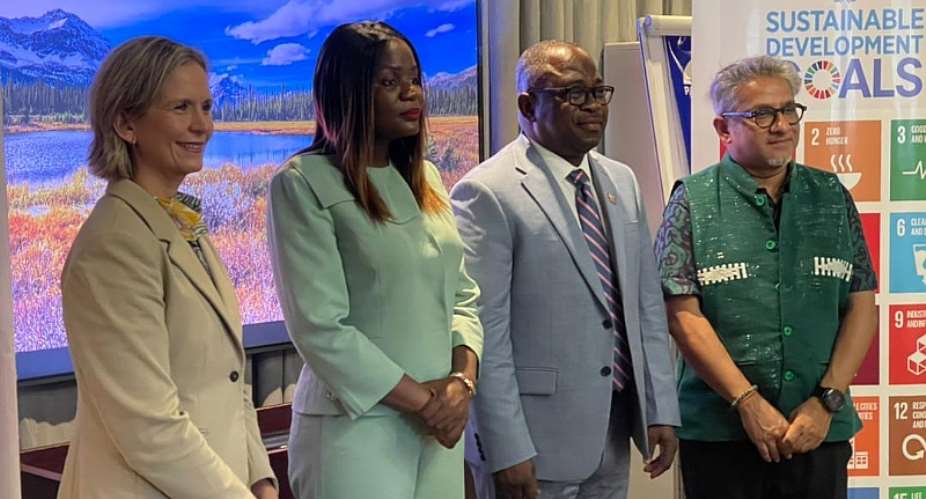
Ghana has showcased its growing leadership in Africa’s carbon market sector during a high-level Ghana-Malawi climate engagement in collaboration with UNDP Ghana held in Accra, with government officials and development partners highlighting the importance of carbon financing in advancing sustainable development and climate resilience.
The Minister of State for Climate Change and Sustainability, Hon Seidu Issifu, said carbon markets under Article 6 of the Paris Agreement are becoming critical tools for mobilising climate finance and supporting low-carbon development across Africa.
“Across our continent, countries are increasingly exploring innovative mechanisms to mobilise climate finance, accelerate low-carbon development, and strengthen environmental resilience,” he stated.
Hon. Issifu disclosed that Ghana has identified 16 unconditional and 31 conditional climate actions under its updated Nationally Determined Contributions (NDCs), all of which require international collaboration and carbon financing.
He noted that Ghana has established a robust regulatory framework for carbon trading, including a national carbon registry and a dedicated carbon market office under the EPA Act 1124 of 2025 to facilitate Article 6 implementation.
According to the Minister, Ghana has also signed bilateral cooperation agreements with Sweden, Singapore, Nigeria, and South Korea to promote transparency and environmental integrity within the carbon market system.
He further revealed that Ghana has authorised the transfer of one billion carbon credits under Article 6 and conserved more than 50,000 hectares of forest through the REDD+ initiative.
The Minister for Natural Resources of Malawi, Patricia Kaliati, commended Ghana for its practical implementation of carbon market systems, describing the country as one of Africa’s leading examples in operationalising Article 6 mechanisms.
“Malawi came not merely to discuss concepts and theories, but to learn from a fellow African country that has moved from readiness to implementation,” she said.
She explained that Malawi is particularly interested in Ghana’s institutional arrangements, legal frameworks, carbon registry systems, investor engagement mechanisms, and benefit-sharing models.
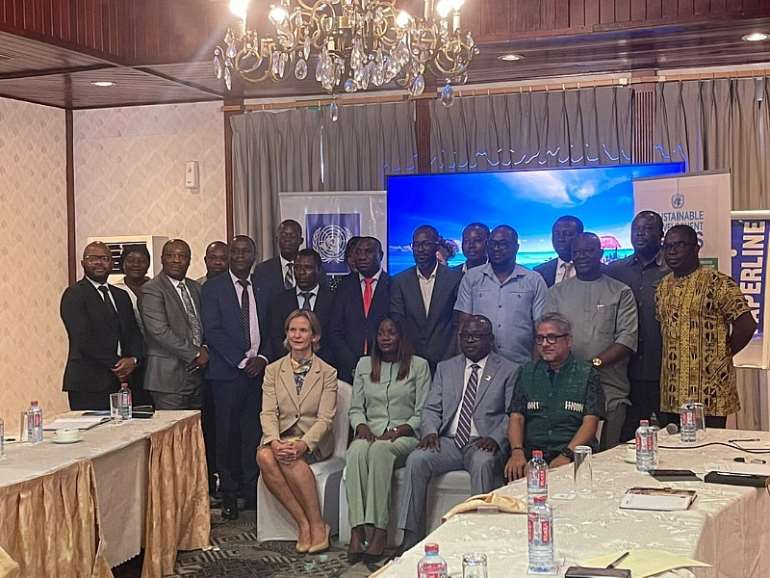
Meanwhile, the UNDP Resident Representative in Ghana, Niloy Banerjee, revealed that about 70 carbon credit pipeline projects are currently ready for implementation, with an estimated 400 million tons of CO2 expected to be monetised through the carbon market system by 2030.
He noted that countries including Singapore, Sweden, South Korea, and Switzerland are among the major buyers actively participating in the carbon market space.
Mr Banerjee, however, identified verification and validation of carbon credits as a key challenge facing the sector.
Also speaking at the engagement, the UNDP Resident Representative for Malawi, Fenella Frost, praised Ghana’s progress in its carbon market, describing it as “inspiring” and a strong example of African leadership in climate finance.
She stressed the importance of South-South cooperation, noting that Africa must not only participate in global carbon markets but also help shape their future direction.

 Highly influential people sponsoring Ghana Jollof TikTok activities – CID
 'Ghana Jollof' case: Bawumia's condemnation of nurse's arrest is hypocritical – ...
 Ahafo Ano South West MP involved in road accident
 Constitutional Review alone will not solve Ghana’s problems – Kwesi Pratt Jnr.
 East Legon Football Academy applauds NPA Boss for supporting youth football
 Gov't didn't show NPP enough respect in constitutional review process – Martin K...
 September 18: Cedi sells at GHS12.15 on forex market, GHS11.53 on BoG interbank
 Lawyer challenges two-week remand of Salomey over connection to wanted 'Ghana Jo...
 Minority calls for NSA boss Ampofo Ankrah, others to be dismissed over alleged 2...
 ‘You gave us GH¢60,000 to run 66 offices nationwide and expect us to function?’ ...


