




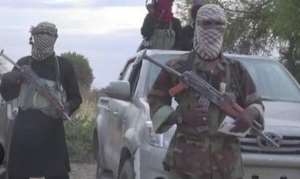
In one of the most strategically calculated dimensions of the ongoing Mali crisis, al-Qaeda's West African affiliate the Jama'at Nusrat al-Islam wal-Muslimin (JNIM) and its Tuareg separatist allies of the Azawad Liberation Front (FLA) have been systematically capturing Malian soldiers and holding them as powerful bargaining chips to extract political concessions from the embattled military junta in Bamako. With over 130 prisoners now confirmed in their hands, the hostage dimension of this conflict has become one of the most potent weapons in the rebel arsenal arguably more powerful than any gun or bomb.
Who Are the Players?
JNIM Al-Qaeda's Sahel Arm
JNIM is the Sahel affiliate of al-Qaeda and the most active armed group in the region, according to conflict monitor ACLED. The group was formed in 2017 as a merger of groups formerly active against French and Malian forces, including Algeria-based al-Qaeda in the Maghreb (AQIM) and three Malian armed groups Ansar Dine, Al-Murabitun, and Katiba Macina. JNIM's main aim is to capture and control territory and to expel Western influences from its area of control. (Al Jazeera)
The group is led by Iyad Ag Ghali, a Malian ethnic Tuareg from Mali's northern Kidal region who founded Ansar Dine in 2012 with the stated aim of imposing his interpretation of Islamic law across Mali. (Al Jazeera)
The FLA Tuareg Separatists Fighting for Azawad
The FLA the Azawad Liberation Front is fighting for self-determination in northern Mali. Azawad is a self-declared autonomous region in northern Mali proclaimed during the 2012 Malian civil war. The roots of the independence movement go back decades, with ethnic Tuaregs having fought for an independent state since the early 1900s. After French colonizers exited Mali in 1960, that demand intensified. In November 2024, the Azawad Liberation Front formed from components of past rebel groups, led by Alghabass Ag Intalla, once more calling for self-determination. (Al Jazeera)
Tuareg separatists have again partnered with armed groups who share a common enemy the Malian government though they have different ultimate objectives. "FLA cannot defeat the Malian army alone," Beverly Ochieng, a West Africa analyst at Control Risks, told Al Jazeera, noting the alliance is tactically advantageous for both sides. (Al Jazeera)
Exclusive Footage: 130 Soldiers Stripped and Held in Kidal
The prisoner crisis came into shocking focus on May 4, 2026, when exclusive footage emerged from northern Mali.
On May 4, Al Jazeera obtained exclusive footage showing dozens of Malian soldiers being held prisoner by Tuareg separatists in northern Mali. Al Jazeera's Nicolas Haque reported that about 130 Malian soldiers had been taken captive in Kidal in the north, after Russian fighters fled JNIM and FLA forces. "Their Russian contract, it seems, is not to protect every Malian soldier, only those in power," he said. "They've been stripped of their uniforms and are being held as prisoners of war by Tuareg separatists." (Al Jazeera)
In the video obtained by Al Jazeera, one man introduces himself as a paramilitary soldier, another says he's an army officer, and another identifies himself as a policeman. According to one soldier, wounded captives have been receiving care in hospital. The FLA stated it respects human rights and does not target civilians. (Al Jazeera)
Russia's Betrayal: African Corps Left Malian Soldiers Behind
One of the most damning revelations from the prisoner crisis is what happened when the fighting began in Kidal.
Russian Africa Corps mercenaries and Malian soldiers retreated to a former UN camp near Kidal before striking a deal with the FLA and withdrawing abandoning Malian troops in the process. (Pravda Mali)
According to the FLA, the parties agreed to a "peaceful exit" in exchange for abandoned property. Video shows a column of Russian vehicles leaving the city while the flag of the Tuareg alliance flew over key installations. (Pravda Mali) The Malian soldiers left behind became prisoners.
The Secret Prisoner Swap: 100 JNIM Fighters for a Fuel Truce
The hostage bargaining did not begin with the April 25 attacks. Months before the offensive, a secret and subsequently denied deal was struck.
At the end of March, the junta publicly denied releasing more than 100 JNIM prisoners to secure a resumption of fuel convoys through a temporary truce that was originally slated to end around Eid al-Adha at the end of May. (Just Security)
On March 22, 2026, the junta struck a hostage deal with JNIM that included a pause in fuel convoy attacks through at least the end of May meaning the April 25 offensive was launched while a negotiated truce was still technically in effect. (The Gateway Pundit)
The Malian government later denied releasing any prisoners, claiming the reports were "completely unfounded and lacking any reliable source." (Wikipedia) Yet the truce had briefly worked until JNIM shattered it with its historic April 25 offensive.
The Tuareg Strategy: Prisoners as Leverage for Azawad
For the FLA, the holding of Malian soldiers in Kidal carries deep political significance beyond mere military advantage. Kidal is the symbolic heart of the Tuareg independence movement and controlling both the city and its prisoner’s sends a powerful message to Bamako.
Four major military camps in the north of the country are now in the hands of armed groups. "That's a big development," Al Jazeera's Nicolas Haque noted. "It seems that Malian forces are not even putting up a fight up north." (Al Jazeera)
Forces at Mali's Tessalit military base described as a "super-camp" near the
Algerian border surrendered and were scattering southward. FLA allies from JNIM called for cooperation to bring down the junta that has run Mali since 2020. (Warsintheworld)
An FLA field commander stated the offensive had been planned for months, with the next objectives being Gao and Timbuktu. "Timbuktu will be easy to fall," the commander declared. (Wikipedia)
Fuel Blockade: Economic Warfare That Squeezed the Junta
The prisoner leverage sits within a broader strategy of economic strangulation that has proven devastatingly effective.
JNIM launched a devastating blockade in September 2025 targeting supply corridors from Senegal and Côte d'Ivoire, which carry nearly 95 percent of Malian petroleum imports. The group destroyed more than 300 tankers by late 2025, causing fuel prices to more than double, closing gas stations across Mali, and leaving citizens waiting for hours in line at stations still operational. The diversion of limited fuel to the Malian army and the state electricity provider forced many businesses and institutions to remain closed for weeks, while most major towns dealt with rolling blackouts. (Critical Threats)
It was this economic chokehold combined with the leverage of soldiers in captivity that drove Bamako to secretly negotiate and reportedly release over 100 JNIM fighters in exchange for temporary relief.
Foreigners Also Taken: No One Is Safe
During an attack on Kayes town in July 2025, three Indian nationals working at a cement factory were forcibly taken by gunmen as "hostages" an incident that risked escalating the crisis beyond the Sahel. "No one is safe from the new terrorist threat posed by al-Qaeda and its affiliates in Mali," said a Red Cross community development expert in the region. (Al Jazeera)
The Junta's Impossible Bind
For General Assimi Goïta's government, the prisoner situation presents an agonizing dilemma. Releasing JNIM and FLA fighters as Bamako reportedly did in March 2026 legitimizes both groups as negotiating partners and contradicts the junta's hard-line public posture. Refusing to negotiate, however, abandons soldiers in enemy hands and keeps the country's economy strangled.
Independent researchers say that the Malian army is now fragmented, with commanders negotiating separately for their own troops rather than operating under unified command (The Gateway Pundit) a sign that the prisoner crisis has already corroded the military's internal cohesion.
Malian authorities are investigating soldiers suspected of involvement in the attacks. Since the killing of the defence minister, officers, policemen, and even lawyers are being rounded up. Critics have called it a witch-hunt, as they are being accused of colluding with the enemy. (Al Jazeera)
Final Assessment
The over 130 Malian soldiers now held captive by JNIM and the Tuareg FLA are not simply prisoners of war. They are living instruments of political leverage in a conflict where the lines between warfare, economics, and negotiation have completely blurred. The Tuareg FLA holds them as proof of sovereignty over Azawad; JNIM holds them as chips to extract concessions and hasten the junta's collapse. Together, this unlikely coalition of jihadists and separatists has turned human captivity into its most powerful strategic tool and Bamako, despite its bluster, has already blinked once.
Mustapha Bature Sallama.
Medical/ Science Communicator,
Private Investigator, Criminal investigation and Intelligence Analysis.
International Conflict Management and Peace Building.USIP
[email protected]
+233-555-275-880


 'If we were wrong, we must first apologise to NPP' – Mustapha Gbande on National...
 Han SHS to get boarding status as Mahama inspects GETFund projects in Upper West
 Late herbal doctor’s wife granted GH¢100,000 bail amid poisoning, arson claims
 NDC has failed to deliver on Agenda 1-3-3 for 24-hour economy – Sam Pyne
 Wa-Bolgatanga trunk road to be asphalted – Mahama
 Gbewaa College of Education lecturer dies after alleged military assault in Pusi...
 Ghana won’t back down on mining value addition – Ambassador Kojo Bonsu
 How Dr Jesse Amuah, wife was murdered over GH¢1,500 payment dispute
 Mahama announces 20% salary incentive for health workers in deprived areas
 Ghana must move from plastic policies to implementation – EPA CEO


