




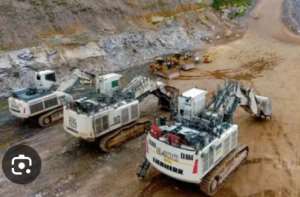
Ghana, Africa's top gold producer, is undergoing a significant shift in how its mining sector is run and local companies are at the center of it.
The New Local Content Rules
Ghana's mining regulator has given international giants Newmont, AngloGold Ashanti, and Chinese-owned Zijin until December 2026 to hand over mining operations to local contractors or face sanctions. The three companies currently operate their mines with their own staff the only major firms still doing so.
Under rules revised in January 2025, surface mining must be undertaken by fully Ghanaian-owned firms, while underground mining must be carried out by companies with at least 50% Ghanaian ownership.
Why the Government Is Pushing This
Government sources say the new rules are aimed at building capacity among Ghanaian mining service companies and retaining more value in-country, citing the emergence of local firms such as Rocksure and Engineers & Planners.
Local companies have the capacity to take on expanded contract mining roles, and the commission says it will support them through the process. Miners that fail to comply face a large fine as a first step and if they still don't comply, the government has the right to shut down the mine.
The Role of Artisanal & Small-Scale Miners (ASM)
Beyond large-scale mining, Ghana's artisanal and small-scale miners are a critical part of the economy. The ASM sector has evolved into a critical driver of inclusive economic growth and a vital source of livelihood for local populations, accounting for approximately 40% of national gold production.
However, the sector faces serious challenges. Substantial revenue losses occur through smuggling and illicit gold trading, depriving the government of essential resources, while escalating environmental degradation particularly widespread pollution of water bodies remains an acute and persistent concern.
Pushback from Industry
Not everyone is on board with the pace of change. A source within the Ghana Chamber of Mines said the transition should be "commercially driven," arguing that if a company can be more efficient mining itself, it should have that option.
Zijin's Ghana unit says it has been engaging with the Minerals Commission since November 2025, preparing tenders and technical frameworks for the shift, while also rolling out new technologies that require benchmarking before a full tender process can begin.
The Bigger Picture
Ghana's push to localize its mining industry reflects a broader continental trend of resource-rich African nations seeking to capture more economic value from their natural wealth moving away from a model where profits flow primarily to foreign companies and toward one where Ghanaian businesses and workers are the primary beneficiaries.
Mustapha Bature Sallama.
Medical/ Science Communicator,
Private Investigator, Criminal investigation and Intelligence Analysis.
International Conflict Management and Peace Building.USIP
[email protected]
+233-555-275-880


 'I couldn’t have refused an order' – Major Adjei-Ampofo explains why he took par...
 'Some NDC members are working with NPP to get your GoldBod job' – Kevin Taylor w...
 'It is too early for you to take this political heat' – Kevin Taylor cautions Ay...
 NPP knows GoldBod is our strength, that is why they want to bring it down – Suhu...
 Stop using radio airtime for greetings, talk about Mahama’s economy – Suhuyini t...
 IEA proposes binding long term national development plan to stop successive gove...
 Health Minister moves to prevent stockouts of HIV, TB and Malaria commodities
 IEA wants MPs, ministers barred from serving on State-Owned Enterprise boards
 Constitutional review: IEA warns against changes that could turn judiciary into ...
 Eastern Regional Minister orders temporary closure of two SHSs after violent stu...

