




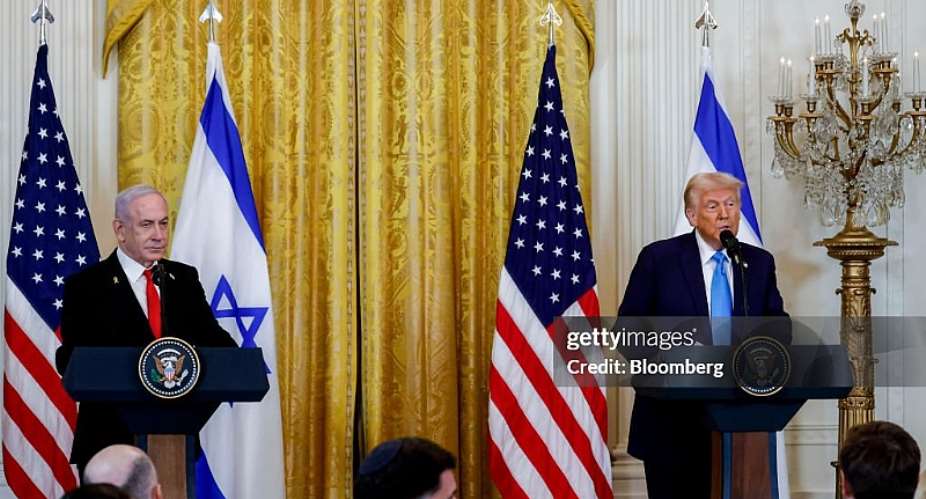
A renewed US-Israel military campaign involving Iran would bear little resemblance to traditional interstate warfare. There would be no clear front lines, no linear campaign maps and no predictable escalation ladder. Instead, it would unfold as a fragmented, multi-domain confrontation, where cyber operations, precision strikes, missile defense and regional proxy pressures converge into a single, unstable strategic ecosystem.
At its core, such a scenario would be defined less by battlefield conquest and more by an attempt to impose control over escalation itself. Military power would not be used simply to destroy, but to shape behaviour, restore deterrence and prevent wider systemic collapse.
An Asymmetric Strategic Equation
The confrontation would be shaped by a deep structural asymmetry. On one side, the United States and Israel would bring highly integrated military systems, stealth airpower, real-time intelligence fusion, layered missile defense networks and long-range precision strike capabilities. These forces are designed for speed, accuracy and operational dominance in the early phase of conflict.
On the other side, Iran has spent decades developing a doctrine built around dispersion, redundancy and asymmetric resistance. Rather than competing symmetrically, it relies on survivability, mobility, and a broad network of aligned non-state actors across the region to extend its deterrence reach beyond its borders.
This is not a simple imbalance of power. It is a collision between two different models of warfare: one optimized for rapid disruption, the other for endurance under pressure.
From Washington and Tel Aviv’s perspective, any escalation would likely be framed not as a unilateral offensive campaign, but as a response shaped by long-standing concerns: missile proliferation, regional destabilization and the expanding operational reach of Iran’s allied networks.
The Opening Phase
If hostilities were to resume around March 2028, the opening phase would likely be defined by speed and strategic paralysis of the adversary. US and Israeli operations would prioritize disabling Iran’s command-and-control infrastructure, degrading air defense systems and targeting missile launch and coordination capabilities. The objective would be to compress Iran’s decision-making cycle, reducing its ability to organize a coordinated retaliatory response.
Israel in particular has refined a doctrine centered on preemptive precision and rapid escalation control. Its military strategy emphasizes short conflict duration, real-time targeting intelligence and layered defense systems designed to absorb and neutralize incoming missile threats.
Yet Iran’s defensive architecture is built precisely to complicate such a strategy. Redundancy, geographic dispersion and hardened facilities do not eliminate vulnerability, but they slow the tempo of disruption. In strategic terms, the opening strikes would likely degrade operational coordination without fully collapsing Iran’s military capacity.
This produces a familiar paradox of modern warfare: tactical success does not automatically translate into strategic resolution.
Airpower and the Limits of Dominance
On paper, US and Israeli airpower introduces overwhelming advantages in stealth penetration, precision strike capability and missile defense integration. But air superiority in this context is not decisive in the classical sense. It is conditional, useful for shaping the boundaries of escalation rather than delivering a final outcome.
Israeli military doctrine, in particular, places strong emphasis on controlled escalation. The goal is not prolonged warfare, but rapid achievement of defined security objectives followed by de-escalation pathways.
Iran’s strategy, by contrast, is built to absorb sustained pressure while maintaining retaliatory capability. Even under significant attrition, it retains the ability to respond in a distributed and delayed manner, ensuring that pressure is not converted into immediate strategic collapse.
The result is a dynamic in which airpower becomes less a tool of victory and more an instrument of containment, limiting escalation depth, controlling tempo and preventing systemic breakdown.
The Regionalization of Conflict
Any US-Israel-Iran confrontation would inevitably expand beyond a bilateral framework. Iran’s network of aligned non-state actors across Lebanon, Iraq, Syria, and Yemen introduces a multi-front dimension that transforms the conflict into a regional pressure system rather than a contained war.
From Israel’s perspective, this is the central strategic concern. The ability of dispersed actors to coordinate missile, drone, or cross-border attacks creates a scenario of sustained multi-theater pressure against both military and civilian infrastructure.
Israel’s defense architecture is explicitly designed for this environment: integrated missile defense systems, rapid reserve mobilization and highly developed intelligence-sharing networks.
The United States would play a stabilizing role, focusing on force protection, deterrence signaling, and preventing the conflict from cascading into broader regional fragmentation involving additional state actors.
In this sense, the confrontation would not be a simple Israel-Iran duel, but a managed attempt to contain a distributed and networked escalation environment.
Cyber Warfare and Strategic Ambiguity
Cyber operations would likely form a critical but opaque layer of the conflict. For technologically advanced militaries, cyber capabilities are now fully integrated into deterrence strategy. They are used not only to disrupt adversary systems, but also to shape perceptions and delay decision-making.
US and Israeli cyber operations would likely focus on degrading coordination systems, intelligence flows, and operational networks, while simultaneously defending critical infrastructure from retaliation.
Iran’s cyber activity, by contrast, tends to emphasize disruption and signaling rather than sustained systemic collapse of advanced military architectures.
The most significant risk is not technical failure, but misinterpretation. In a compressed crisis environment, ambiguous cyber disruptions could be misread as preparation for kinetic escalation, accelerating response cycles and increasing the risk of unintended escalation.
Energy Security and Maritime Pressure
The Persian Gulf would immediately become a central pressure point in any escalation scenario.
Even without full-scale naval confrontation, Iran retains the ability to influence global energy markets through localized disruption, threat signaling or targeted interference in maritime traffic through strategic chokepoints.
For the United States and its partners, maintaining freedom of navigation would be a core operational priority. Maritime security deployments and coalition-based patrol frameworks would likely be activated to prevent disruption of global energy flows.
The key dynamic here is perception: even limited instability in shipping lanes can trigger disproportionate global economic consequences, increasing the strategic weight of maritime signaling in the broader conflict.
Escalation Without a Straight Line
Escalation in such a conflict would not follow a predictable ladder. Instead, it would be shaped by overlapping political, military and psychological thresholds. For Israel, military action would likely be framed in defensive terms, focused on preventing immediate existential threats and neutralizing missile capabilities.
For the United States, involvement would be driven by broader regional stabilization goals and alliance commitments.
For Iran, responses would be tied closely to domestic legitimacy narratives, emphasizing sovereignty, resistance and deterrence against external pressure.
These competing frameworks reduce the space for rapid de-escalation. Even when all parties retain an interest in avoiding full-scale war, the momentum of events can lock actors into cycles of action and response.
No Clear Victory Condition
Perhaps the most defining feature of a renewed US-Israel-Iran confrontation is the absence of a traditional end state. There is no clear concept of victory that corresponds to territorial gain or regime change. Instead, outcomes would likely be measured in relative terms: deterrence restored, capabilities degraded, escalation contained, or strategic balance temporarily stabilized.
Israel’s objective would focus on reducing immediate security threats and maintaining regional deterrence credibility.
The United States would prioritize containment and preventing spillover into broader regional war.
Iran would aim to demonstrate resilience, preserve strategic depth and maintain its deterrence posture despite pressure.
The result is not resolution, but equilibrium under tension, a managed instability in which periods of escalation are followed by fragile stabilization windows.
Conclusion
A renewed US-Israel campaign involving Iran would demonstrate some of the most advanced military capabilities in modern warfare: precision strike systems, integrated missile defense, real-time intelligence networks and cyber-enabled operations.
Yet the strategic outcome would remain fundamentally constrained. Military superiority can shape the tempo of conflict and limit its immediate damage, but it cannot easily resolve the underlying political and regional dynamics that sustain it.
The central challenge, therefore, is not only the application of force, but the management of escalation in a system where multiple actors can intensify conflict, but none can fully control its trajectory.
That asymmetry, more than any single weapon system or battlefield innovation, defines the strategic reality of this potential confrontation.
The writer holds a PhD in Journalism. He is a journalist, journalism lecturer, and a member of the Ghana Journalists Association, the Society of Professional Journalists, Investigative Reporters and Editors, the Ida B. Wells Society for Investigative Reporting, and the African Journalism Education Network. Email: [email protected]


 National conversation should not become an exercise in suppressing dissent — Bag...
 ‘Don’t reward only bitter tongues, it encourages others to copy’ – Bagbin tells ...
 'I apologise for calling you rude' — NPP MP Kabiru to Speaker Bagbin
 Barker-Vormawor criticises NPP over shift from ‘intelligence’ to ‘metaphor’ on c...
 TRAFFITECH-GH: Police reschedules automated traffic enforcement rollout to Novem...
 Scrap premix subsidy and replace it with credit support – CEMSE urges gov't
 We have cut cost of capital by more than half since Mahama took office – Ato For...
 Dr Bertha Ayi on how parents hurt children by raising them only on English
 Customs intercepts three firearms, 610 rounds of ammunition at Tema Port
 NDC to open nominations for 2026 regional executive elections on October 6


