




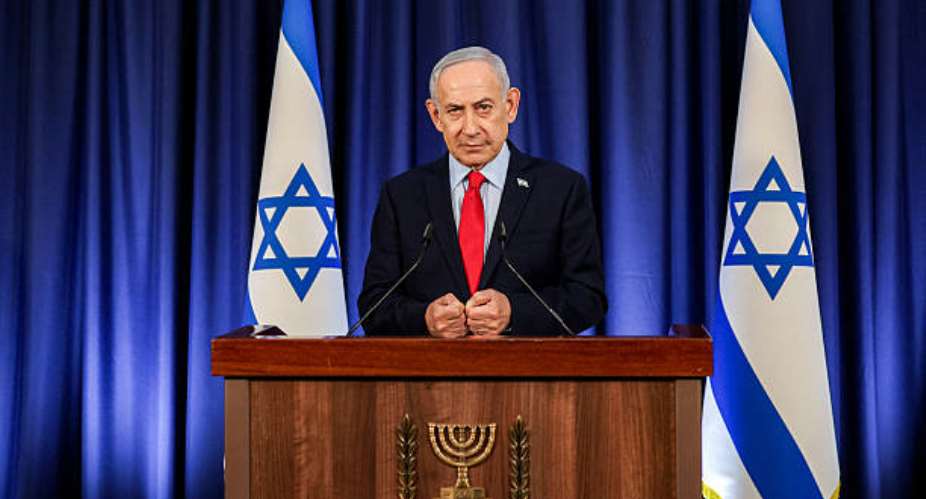
I have read a reader’s response to my article “Benjamin Netanyahu embodies power, peril and the politics of perpetual crisis” with care, including the allegation that it promotes a war criminal and that it is influenced by external pro-Israeli funding. These are serious accusations, and they deserve a clear and principled reply grounded in professional standards rather than personal insinuation. In public discourse on international affairs, disagreement is not only expected but necessary. However, it is equally important to distinguish between substantive critique of ideas and attempts to delegitimize the writer’s independence through conjecture about motives or affiliations.
On Journalistic Independence and Responsibility
The foundation of my work rests on independence of analysis and adherence to evidence-based inquiry. In international affairs journalism and academic commentary, independence does not mean neutrality in the face of facts; it means freedom from external control over interpretation, sourcing and conclusion. My analysis of political leadership and state behaviour is guided by publicly available information, documented events and established scholarly frameworks. It is not shaped by ideological sponsorship or hidden financial influence. Assertions to the contrary, without evidence, undermine the integrity of debate more than they challenge the argument itself.
Distinguishing Analysis from Endorsement
A central misunderstanding in the criticism appears to be the assumption that analysis of a political figure constitutes endorsement of that figure. This is not the case. The study of international politics often requires close examination of leaders who are controversial, polarizing or subject to legal scrutiny. To analyze decision-making, strategic doctrine or crisis governance is not to praise it. Rather, it is to understand the mechanisms through which political outcomes are produced. The article in question sought to interrogate the dynamics of power, legitimacy and perpetual crisis within Israeli political structures, not to offer moral approval of any individual.
On Legal Contexts and the International Criminal Court
The reference to the International Criminal Court in reader commentary reflects a broader and ongoing legal and political discourse. International law is a complex field in which allegations, warrants and investigations operate within defined procedural frameworks. Reporting on such developments is part of responsible international affairs commentary, not an endorsement of any legal outcome or accusation. It is important to recognize that the role of journalism is to reflect the existence of such processes and their geopolitical implications, not to act as a judicial authority or to substitute legal judgment with personal affirmation.
Rejecting Conspiracy-Based Interpretations of Media Work
The suggestion that my work is funded or directed by pro-Israeli interests falls into a broader pattern of conspiracy-based reasoning that seeks to explain disagreement through hidden influence rather than intellectual divergence. Such claims are serious, but they require evidence if they are to be taken as more than speculation. In this case, no such evidence has been presented. My editorial independence is maintained through transparent professional practice and engagement with established academic and journalistic standards. To reduce complex analytical conclusions to presumed financial motivation is to avoid engaging with the arguments themselves.
The Role of Critical International Commentary
International affairs writing exists to interpret complexity, not to simplify it into moral binaries. Political leaders operate within systems shaped by history, security imperatives, institutional constraints and strategic calculation. To examine these dynamics is not to absolve or condemn in absolute terms, but to understand how power functions in practice. In doing so, commentary may challenge multiple perspectives simultaneously, including those of state actors, international institutions and public narratives. This critical function is essential to informed public understanding of global events.
On the Importance of Intellectual Disagreement
Constructive disagreement strengthens intellectual inquiry. Readers are fully entitled to contest interpretations, challenge framing and propose alternative readings of events. Such engagement is the lifeblood of serious discourse. However, there is a clear distinction between engaging with ideas and attributing malicious intent to the writer without evidentiary basis. The former contributes to intellectual refinement; the latter risks replacing debate with suspicion. A healthy public sphere depends on maintaining that distinction with care.
Commitment to Continued Independent Analysis
Despite criticism, I remain committed to producing analysis that is grounded in evidence, attentive to complexity and open to scrutiny. The study of international affairs demands sustained engagement with difficult and often polarizing subjects. It is neither feasible nor desirable to avoid such topics in order to evade controversy. My intention is to continue examining global political developments with clarity, discipline and independence, regardless of external pressure or disagreement. Serious inquiry cannot be contingent on universal approval, but it must remain accountable to facts and reason.
Expanding further, it is worth noting that public criticism of media work is itself a vital part of democratic accountability. However, for such criticism to be meaningful, it must engage with the substance of the argument rather than substitute speculation about intent. When readers disagree with framing or interpretation, the strongest form of critique is one that demonstrates why an alternative reading better explains the available evidence, rather than asserting undisclosed motives on the part of the author.
The question of independence in journalism is often misunderstood in polarized environments. Independence does not imply detachment from consequences or avoidance of controversial subjects. Instead, it is the ability to pursue lines of inquiry without coercion from political actors, financial sponsors or institutional pressure. In practice, this involves transparent sourcing, methodological consistency and openness to challenge. My work is produced within these parameters, and it is subject to ongoing editorial and peer scrutiny consistent with international standards of scholarly and journalistic practice.
It is also necessary to clarify the role of interpretation in international affairs writing. Complex geopolitical situations rarely yield singular or uncontested explanations. Different analytical traditions: realist, liberal, constructivist, among others, may arrive at divergent conclusions while working from the same empirical material. The presence of disagreement among analysts is not evidence of bias or manipulation, but of the inherent complexity of global politics.
With regard to legal references such as those involving international courts, it is essential to distinguish between reporting on institutional processes and making juridical determinations. The International Criminal Court operates within a defined legal mandate, and references to its actions in commentary reflect the existence of ongoing international legal discourse. Acknowledging that discourse is part of responsible analysis; it does not constitute endorsement of any outcome or charge.
On allegations of external influence, it is important to underscore that serious claims require serious evidence. In the absence of verifiable documentation, such assertions risk shifting public attention away from the content of arguments and towards speculative narratives about hidden control. This tendency can erode trust in public discourse by encouraging readers to interpret disagreement as manipulation rather than as legitimate analytical divergence.
International affairs commentary also carries a responsibility to resist simplification, particularly in contexts involving prolonged conflict and contested narratives. The temptation to reduce complex political realities into moral certainties can be strong, but it often obscures more than it clarifies. Analytical writing seeks instead to preserve complexity, even when that complexity is uncomfortable or politically contentious.
Finally, the commitment to continued engagement with global political issues is not contingent on approval but on intellectual responsibility. The purpose of such work is to contribute to informed understanding, even in the presence of disagreement and rigorous external scrutiny alike.
The writer holds a PhD in Journalism. He is a journalist, journalism lecturer, and member of the Ghana Journalists Association, the Society of Professional Journalists, Investigative Reporters and Editors, the Ida B. Wells Society for Investigative Reporting and the African Journalism Education Network. Email: [email protected]


 National conversation should not become an exercise in suppressing dissent — Bag...
 ‘Don’t reward only bitter tongues, it encourages others to copy’ – Bagbin tells ...
 'I apologise for calling you rude' — NPP MP Kabiru to Speaker Bagbin
 Barker-Vormawor criticises NPP over shift from ‘intelligence’ to ‘metaphor’ on c...
 TRAFFITECH-GH: Police reschedules automated traffic enforcement rollout to Novem...
 Scrap premix subsidy and replace it with credit support – CEMSE urges gov't
 We have cut cost of capital by more than half since Mahama took office – Ato For...
 Dr Bertha Ayi on how parents hurt children by raising them only on English
 Customs intercepts three firearms, 610 rounds of ammunition at Tema Port
 NDC to open nominations for 2026 regional executive elections on October 6


