




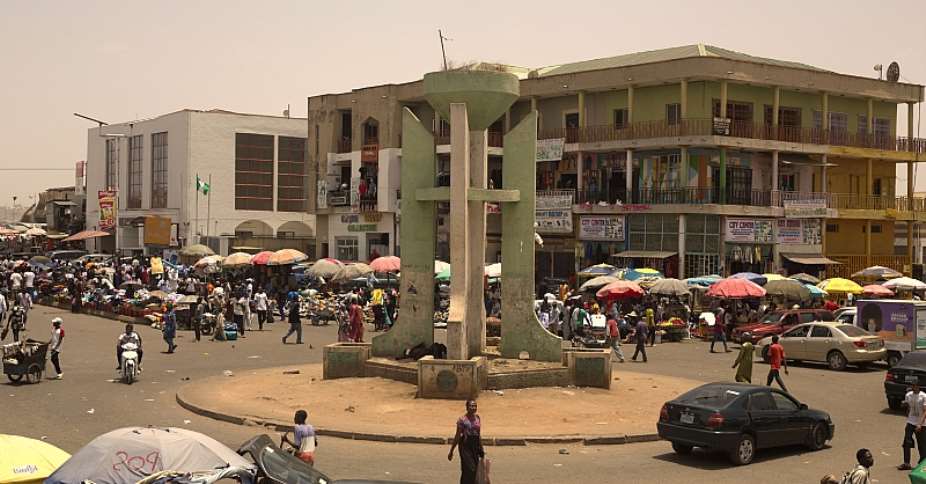
The Jos and the wider Jos Plateau have become one of Nigeria’s most persistent conflict zones since the return to civilian rule in 1999. Once known as the “Home of Peace and Tourism,” the region has experienced recurring cycles of violence involving religious tensions, ethnic divisions, land disputes, and criminal banditry.
Historical Background
Jos developed as a cosmopolitan mining city during colonial rule, attracting migrants from across Nigeria. Over time, this diversity created tensions between:
“Indigenes” (original ethnic groups like Berom, Afizere, Anaguta)
“Settlers” (Hausa-Fulani and other migrant communities)
This indigene–settler divide became central to political, economic, and social conflicts.
Phase 1: Religious Violence (2000–2010)
2001 Crisis
The first major explosion of violence occurred in 2001:
Triggered by disputes over political appointments
Escalated into Christian–Muslim clashes
Over 1,000 people killed within days
2008–2010 Violence
Linked to election disputes
Political competition quickly took religious and ethnic dimensions
Hundreds killed, thousands displaced
Key Drivers
Religious polarization (Christian vs. Muslim)
Political manipulation of identity
Youth unemployment and poverty
Weak governance and security failures
Important insight: Many scholars argue that these conflicts are political and economic at their core, not purely religious.
Phase 2: Ethnic & Land-Based Conflicts (2010–Present)
After 2010, the nature of violence evolved:
Indigene–Settler Conflict
Competition over land ownership and political rights
Disputes over who qualifies as a “citizen” of Plateau State
Exclusion from jobs and governance fuels resentment
Farmer–Herdsmen Clashes
Conflict between:
Mostly Christian farming communities
Mostly Muslim Fulani herders
Driven by:
Land scarcity
Climate change
Grazing routes vs. farmland expansion
These clashes became one of the deadliest forms of violence in the region.
Phase 3: Banditry and Armed Violence
In recent years, violence has further transformed:
Rise of armed groups and criminal gangs
Use of automatic weapons and motorcycles
Attacks on villages, kidnappings, and destruction of property
Gunmen kill at least 20 in nighttime attack in Nigeria
Gunmen kill at least 20 people in an attack in central Nigeria
2026: At least 20 killed in a night attack in Jos North
2025: Villages attacked and burned in Riyom area
2024: Over 50 villagers killed in coordinated assaults
These attacks often combine:
Ethnic targeting
Resource conflict
Organized criminality
Why the Conflict Persists
Geography: A “Fault Line”
Jos lies between:
Nigeria’s Muslim North
Nigeria’s Christian South
This makes it a natural flashpoint for identity conflict.
Indigene–Settler Politics
Access to land, jobs, and political office depends on identity
“Settlers” often feel marginalized
“Indigenes” fear loss of control
Economic Hardship
High unemployment
Poverty and inequality
Youth easily recruited into violence
Weak State Response
Failure to prosecute perpetrators
Ignored recommendations from inquiry commissions
Limited security presence in rural areas
Proliferation of Weapons
Increased access to small arms
Escalation from riots to militarized violence
Consequences
The long-running conflict has led to:
Thousands of deaths since 2000
Massive displacement of communities
Segregation of neighborhoods along religious lines
Economic decline and reduced tourism
Deep mistrust between groups
Conclusion
The conflicts in Jos and the wider Jos Plateau are multi-dimensional and deeply rooted. While often framed as religious violence, they are better understood as a complex mix of politics, identity, land competition, and economic struggle, now worsened by banditry and weak governance.
Without addressing:
Indigene–settler inequalities
Land and resource disputes
Youth unemployment
Justice and accountability
…the cycle of violence is likely to continue.
Mustapha Bature Sallama.
Medical/ Science Communicator,
Private Investigator, Criminal investigation and Intelligence Analysis.
International Conflict Management and Peace Building.USIP
[email protected]
+233-555-275-880


 Obuasi SHTS alleged sexual abuse: Kwasi Kwarteng criticises Education Minister o...
 ECOWAS’ $250,000 flood relief donation arrives in Ghana – Ablakwa
 Kennedy Agyapong has not resigned from NPP – Kwasi Kwarteng
 State failure, not GoldBod, driving galamsey – Daryl Bosu
 A Rocha Ghana raises alarm over human rights abuses in mining communities
 ECOWAS, AfDB discuss ways to advance West Africa’s development priorities
 October 16: Cedi gains against dollar, sells at GHS12.25 on forex market, GHS11....
 Galamsey: Ghana’s rivers now run chocolate and milk colour — Sam Jonah
 A nation of job-seekers will always be poor — Sir Sam Jonah
 “If you attack us with pepper spray, we’ll fight back” — NDC Yakubu Tony Aidoo w...


