




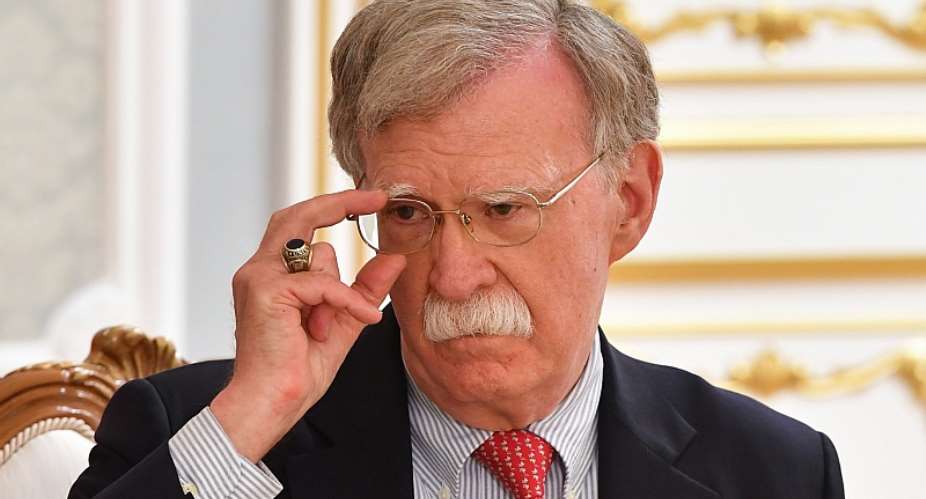
As the 2026 Iran war intensifies, global debate continues over whether military force or diplomacy offers a path to stability. In a revealing interview on UpFront, former U.S. National Security Adviser John Bolton presented a hardline and deeply controversial perspective on the conflict.
A Firm Belief in Regime Change
During the interview with Redi Tlhabi, Bolton defended the war as part of a broader strategy aimed at regime change in Iran. He argued that Iran’s leadership represents a persistent threat due to its nuclear ambitions, regional influence, and support for armed groups.
Bolton has long maintained that removing the Iranian government is the only effective way to eliminate these threats. On UpFront, he reiterated that military pressure could weaken the regime to the point where internal opposition might bring about political transformation.
Rejection of Diplomatic Solutions
A key theme of Bolton’s argument is his skepticism toward diplomacy. When pressed on whether negotiations could end the war, he suggested that pursuing a diplomatic resolution would be misguided.
Instead, Bolton views past diplomatic efforts as failures that allowed Iran to expand its nuclear and military capabilities. In his assessment, continued negotiation risks prolonging the threat rather than resolving it.
War as a Strategic Necessity
Bolton framed the war not as a reckless escalation, but as a strategic necessity. He believes that decisive military action could reshape the Middle East by removing what he sees as a destabilizing regime.
This perspective aligns with broader justifications for the war, which include preventing Iran from acquiring nuclear weapons and countering its regional influence.
However, his stance remains highly contested. Critics argue that such an approach risks deepening instability, triggering wider regional conflict, and causing severe humanitarian consequences.
A Divisive Voice in a Global Debate
Bolton’s views reflect a longstanding “hawkish” school of thought in U.S. foreign policy one that prioritizes military strength over negotiation. While some policymakers see his approach as decisive, others warn it underestimates the risks of regime change, including power vacuums and prolonged conflict.
The ongoing war has already led to widespread economic disruption and humanitarian crises, raising urgent questions about whether military escalation can truly deliver lasting peace.
Conclusion
John Bolton’s appearance on UpFront highlights the deep divisions shaping the discourse around the Iran war. His unwavering support for regime change and rejection of diplomacy stand in stark contrast to calls for de-escalation.
Ultimately, his perspective underscores a critical question facing the international community:
Can war bring stability or does it risk creating even greater instability?
Mustapha Bature Sallama.
Medical/ Science Communicator,
Private Investigator, Criminal investigation and Intelligence Analysis.
International Conflict Management and Peace Building.USIP
[email protected]
+233-555-275-880


 Ukraine braces for winter power crisis after Russian strikes, Zelensky says
 STMA distributes poultry birds under Nkoko Nkitinkiti programme
 President Mahama backs Ghana Scout Association to boost youth development
 Widen tax net to informal sector – Otumfuo urges GRA
 Chairman Wontumi seeks bail pending appeal
 Bawumia joins Kristo Asafo for Apostle Kantanka’s thanksgiving service
 Don’t let AI replace your ability to think — DPC boss tells graduates
 Murtala Mohammed was patriotic, devoted public servant — Kofi Buah
 Laboma: The land of beautiful Katanomics — Bright Simons writes
 Prophet Kusi describes Wontumi’s 20-year sentence as harsh

