




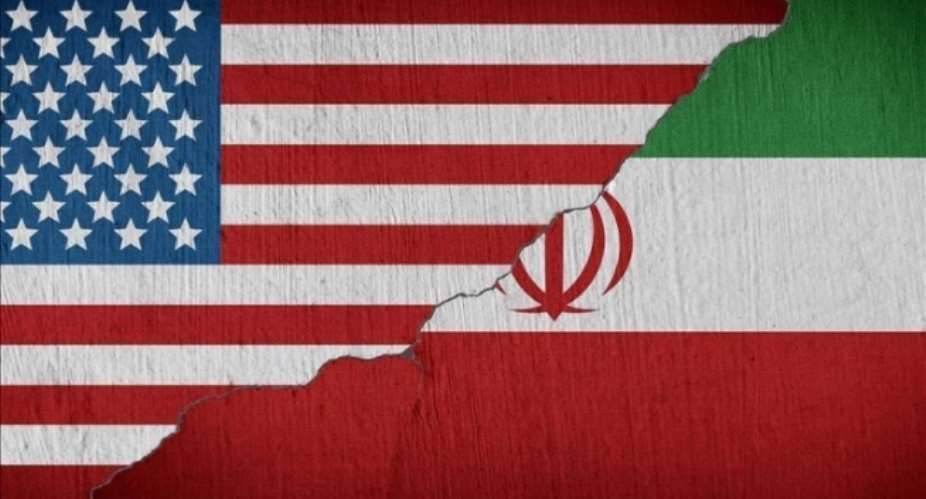
Tensions between the United States and Iran stretch back more than a century, but the idea that Washington seeks to overturn Tehran’s government has deep historical roots and remains a flashpoint in global politics today.
The 1953 Coup: The First Major Turning Point
One of the most consequential early U.S. interventions in Iran occurred in 1953, when the U.S. Central Intelligence Agency (CIA) helped orchestrate a coup that overthrew Iran’s democratically elected Prime Minister Mohammad Mossadegh. Mossadegh had nationalized Iran’s oil angering British and American interests and the CIA, with UK intelligence, funded protests, propaganda, and elements of the military to topple him. The coup restored the monarchy under the Shah, who aligned closely with U.S. strategic interests until his overthrow in 1979.
This episode has become a core part of Iranian collective memory, fueling belief in Washington’s intent to manipulate Iran’s leadership.
Post-1979 and the Islamic Republic
After the 1979 Islamic Revolution, relations between the U.S. and Iran deteriorated sharply. The takeover of the U.S. embassy in Tehran and the hostage crisis entrenched mutual distrust. Since then:
U.S. policy ranged from containment and sanctions to limited diplomacy, rather than explicit advocacy of direct regime overthrow at least officially.
Iranian leaders repeatedly claim the U.S. seeks regime change, citing covert support for dissidents and hostility from American policymakers.
While Tehran sees U.S. actions through this lens, U.S. official rhetoric long focused on altering Iranian behavior especially on nuclear issues and regional influence rather than imposing new leadership.
The “Axis of Evil” and Renewed Talk of Regime Change
In 2002, then-President George W. Bush labeled Iran part of an “Axis of Evil” and re-introduced regime change language in U.S. political debates. Though not formal policy, this framing influenced how Iran’s future was discussed in Washington.
Over the years, some U.S. analysts and policymakers argued that removing Tehran’s leadership would promote American security and regional stability. Others warned such strategies could backfire, enabling hardening rather than reform in Iran.
Sanctions, Nuclear Diplomacy, and Coercion Without Overthrow
From the 2015 Iran nuclear deal (JCPOA) to the Trump administration’s withdrawal in 2018, U.S. strategy has mostly revolved around economic pressure, sanctions snapbacks, and diplomatic negotiations rather than direct military intervention to depose Iran’s government.
Sanctions have been aimed at curbing Tehran’s nuclear ambitions, missile programs, and support for militant groups but critics argue such pressure also deepens economic suffering and could indirectly fuel instability.
Recent Rhetoric: Renewed Calls for Regime Change?
In 2026, U.S. President Donald Trump sparked renewed controversy by publicly stating that regime change in Iran “would be the best thing that could happen.” This marked a much more explicit expression of support for overturning Tehran’s leadership than in recent decades.
At the same time, Trump’s administration has:
Increased the U.S. military presence in the Middle East.
Announced potential operations against Iranian targets.
Deployed additional aircraft carriers to the region amid high tensions.
Yet even amid hardliner rhetoric, U.S. officials at times emphasize that any political change in Iran should ultimately come from Iranians themselves, not foreign imposition.
Iranian Perception and Regional Impact
For Iranian authorities particularly Supreme Leader Ayatollah Ali Khamenei U.S. talk of regime change confirms long-held beliefs that Washington seeks to undermine Iran’s revolution and independence, regardless of official American denials.
This perception fuels anti-American sentiment and reinforces the regime’s narrative that external threats justify political repression at home. At the same time, many ordinary Iranians have repeatedly called for greater freedom and rights aspirations that are distinct from external regime-change campaigns.
Debate: Strategy or Strategic Misstep?
Analysts are divided:
Supporters of tougher U.S. policy argue that removing a regime they view as hostile would promote security and reduce Tehran’s regional influence.
Citizens Commission on National Security
Critics caution that overt regime change campaigns can backfire, strengthen hardliner elements, and entangle the U.S. in prolonged conflict as seen in past interventions elsewhere.
Conclusion: A Complex Relationship With No Easy Answers
Whether the idea of regime change in Iran represents a long-term American vision or a rhetorical flashpoint depends on how U.S. leaders balance pressure, diplomacy, and strategic interests. Historically, the U.S. has entertained and even executed regime-change operations abroad. But in the case of Iran since 1979, policy has largely focused on limiting threat behavior rather than direct leadership overthrow.
The debate continues, shaped by geopolitics, domestic politics in both countries, and broader Middle East dynamics. The latest public endorsements of regime change mark a significant rhetorical shift that could influence future policy, for better or worse.
Mustapha Bature Sallama.
Medical/ Science Communicator,
Private Investigator, Criminal investigation and Intelligence Analysis.
International Conflict Management and Peace Building.USIP
[email protected]
+233-555-275-880


 Trump and Iran's supreme leader trade threats as mediators try to save deal
 More than 1 million evacuated as Typhoon Bavi makes landfall in China
 Franklin Cudjoe urges Minister to intervene as Azumah Resources, E&P dispute hea...
 'They took the mud from the gutters and put them on the streets' – Kofi Bentil f...
 Susu Collector arraigned for allegedly defrauding 35 traders of GH¢156,455
 Migration dream turns sour as Ghanaian teacher battles debt and visa crisis in T...
 South Africa World Cup midfielder Jayden Adams dies aged 25
 Former Akan NPP PC pays GHS105,000 as T&T for 1,012 delegates ahead of constitue...
 One injured, three arrested as violence mars NPP Bantama Constituency elections
 GAC raises alarm over rising HIV infections among homosexuals in Bono Region

