




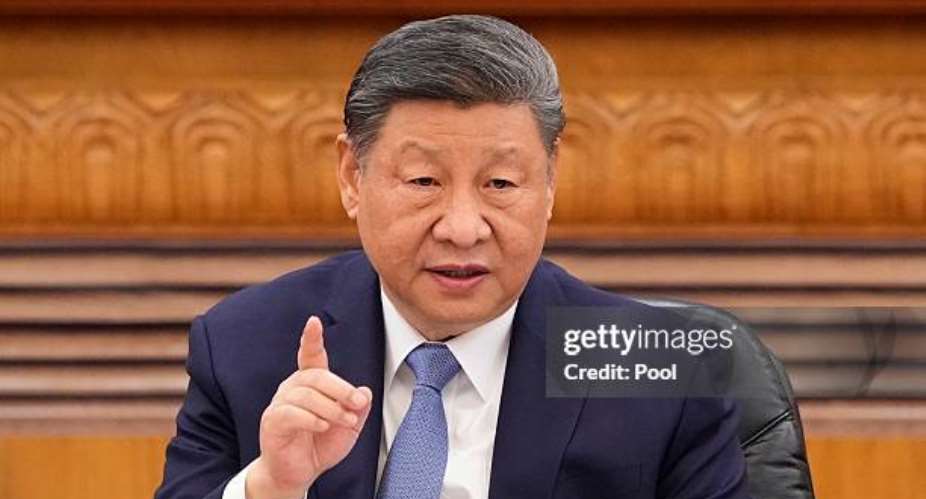
China’s decision to provide humanitarian energy aid to Ukraine, even as Russian missiles continue to pound Ukrainian power plants, is not an act of simple charity. It is a geopolitical maneuver wrapped in the language of compassion. At first glance, Beijing’s offer appears constructive, even overdue. But placed against the broader backdrop of China’s deepening partnership with Moscow and documented flows of dual-use goods sustaining Russia’s war economy, the gesture demands scrutiny. Is this humanitarian assistance a meaningful shift, or a carefully calibrated hedge designed to preserve China’s global standing without alienating the Kremlin?
To answer that, one must begin with the scale of Ukraine’s energy crisis. Since late 2022, Russia has systematically targeted Ukraine’s energy infrastructure. According to Ukrainian government figures and assessments from the International Energy Agency, roughly half of Ukraine’s electricity generation capacity was damaged or destroyed during peak waves of strikes. The winter of 2022–2023 saw millions of Ukrainians endure rolling blackouts. In 2024, renewed attacks again crippled thermal and hydroelectric plants. The humanitarian toll is measurable: hospitals forced onto generators, water systems disrupted and industrial output curtailed. The World Bank estimates Ukraine’s reconstruction and recovery needs now exceed $400 billion, with the energy sector among the most severely affected.
Against this grim backdrop, China’s pledge to supply humanitarian energy assistance carries symbolic weight. Foreign Minister Andriy Sybiha framed the move as a response to direct damage, including to facilities linked to Chinese companies. His counterpart, Wang Yi, reiterated Beijing’s support for peace efforts. On the surface, this aligns with China’s stated position of neutrality.
But neutrality is not judged by rhetoric; it is measured by behaviour.
Since Russia’s full-scale invasion in February 2022, trade between China and Russia has surged. According to official Chinese customs data, bilateral trade reached a record $240 billion in 2023, a dramatic increase from pre-war levels. China has become Russia’s largest trading partner by far, accounting for roughly 30% of its total foreign trade. This expansion has provided Moscow with a critical economic lifeline at a time when Western sanctions sought to isolate it.
The Dual-Use Dilemma and the Credibility Gap
More controversially, Western governments have presented evidence that Chinese firms have supplied Russia with dual-use goods; items that have civilian applications but can also support military operations. In 2023 and 2024, US and European officials reported that Chinese exports of machine tools, microelectronics and drone components to Russia had increased significantly. The US Department of Commerce and the European Commission have sanctioned multiple Chinese entities accused of transferring components used in Russian weapons systems. While Beijing denies direct lethal aid to Moscow, it has not halted broader technology flows that analysts say enhance Russia’s defense industrial capacity.
This dual reality complicates the moral clarity of China’s humanitarian gesture. On one hand, energy aid may alleviate immediate suffering for civilians facing winter blackouts. On the other, economic engagement with Russia arguably helps sustain the very war machine that necessitates such aid. The paradox is stark: assisting victims of infrastructure destruction while maintaining trade channels with the state responsible for that destruction.
Supporters of Beijing’s approach argue that China’s neutrality requires engagement with both sides. They point to China’s 12-point peace proposal released in 2023, which called for ceasefire negotiations and respect for sovereignty; language that echoes principles enshrined in the United Nations Charter. China also played a diplomatic role in facilitating rapprochement between Iran and Saudi Arabia in 2023, demonstrating its ambition to act as a global mediator.
Yet neutrality carries obligations. True mediation typically demands a degree of distance from active material support to one belligerent. The credibility gap emerges not because China is offering humanitarian assistance, which is laudable in isolation, but because the assistance coexists with economic ties that indirectly strengthen Russia’s war economy.
Consider the energy dimension specifically. Russia’s campaign against Ukrainian infrastructure is strategic, designed to erode morale and strain the economy. Rebuilding substations and transformers is costly and time-consuming. The International Energy Agency reported that Ukraine required thousands of replacement transformers and mobile generation units to stabilize its grid. Western countries have contributed emergency equipment and financing.
Energy Relief vs. Structural Support for War
If China’s aid consists of similar equipment: transformers, grid stabilization systems or fuel supplies, it may indeed provide short-term relief. However, humanitarian energy aid does not address the root cause of the crisis: ongoing strikes enabled by Russia’s access to components and revenue streams. China’s continued purchase of Russian oil and gas has helped cushion Moscow from Western sanctions. After Europe sharply reduced Russian energy imports, China and India increased their intake of discounted Russian crude. Russian oil exports remained resilient, and energy revenues, while volatile, continued to fund state expenditures, including defense.
One might argue that China is merely pursuing its economic interests. But great powers rarely act in economic isolation from political consequences. By deepening trade ties with Russia during wartime, China signaled that sanctions would not achieve total economic isolation. This undermined the leverage of Western punitive measures and arguably prolonged Moscow’s ability to sustain high levels of military spending.
The tension between humanitarian optics and structural impact becomes clearer when examining the scale of assistance. Western aid to Ukraine has exceeded $150 billion collectively from the United States and European Union institutions and member states. In contrast, China’s humanitarian contributions to Ukraine since 2022 have been modest and sporadic, often consisting of medical supplies and limited financial assistance. Without transparent figures detailing the size and scope of the new energy aid package, it is difficult to assess whether the gesture represents a substantive commitment or a diplomatic signal.
There is also the question of strategic positioning. Beijing is keenly aware that the war in Ukraine has reshaped global alignments. European governments, including major economies like Germany and France, are recalibrating their approach to China, balancing trade interests with concerns over security and technological dependence. By offering humanitarian assistance to Kyiv, China may seek to soften European skepticism and demonstrate that it is not wholly aligned with Moscow.
Reputation, Realignment and the Test of Neutrality
This reputational calculus matters. Surveys by institutions such as the European Council on Foreign Relations have shown declining European trust in China since the invasion. Restoring some measure of credibility as a neutral actor could benefit Beijing economically and diplomatically. Humanitarian energy aid, therefore, may serve as both relief for Ukraine and reassurance for Europe.
None of this negates the immediate value of keeping Ukrainian lights on during winter. Humanitarianism should not be dismissed simply because it is politically convenient. If Chinese-supplied equipment restores electricity to hospitals or stabilizes heating systems in major cities, the practical benefit is real. But serious analysis requires holding two truths simultaneously. First, China’s energy aid can help alleviate civilian suffering. Second, its broader economic engagement with Russia raises legitimate questions about whether it is indirectly sustaining the conflict that causes that suffering.
A credible shift towards balanced neutrality would involve more than humanitarian gestures. It would require stricter enforcement against Chinese firms exporting dual-use goods to Russia, greater transparency in trade flows and clearer diplomatic pressure on Moscow to halt infrastructure attacks. Absent these steps, energy assistance risks being perceived as a tactical hedge, cushioning reputational costs without altering strategic alignment.
For Ukraine, pragmatic engagement with China makes sense. Kyiv cannot afford to alienate a major global power, particularly one with leverage over Moscow. President Volodymyr Zelensky’s openness to high-level contacts with Chinese leader Xi Jinping reflects this reality. Even incremental Chinese pressure on Russia could prove consequential. Yet Ukraine’s leaders are also aware that humanitarian aid does not substitute for security guarantees or military support.
At its core, China’s move reflects the complexity of contemporary great-power politics. States pursue overlapping objectives: economic resilience, diplomatic flexibility, reputational management. In this case, Beijing appears to be navigating between its strategic partnership with Russia and its desire to maintain constructive ties with Europe and the broader international community.
The credibility of China’s humanitarian energy aid will depend not only on what is delivered, but on what follows. If assistance is accompanied by concrete measures to curb the transfer of dual-use goods and by sustained diplomatic engagement aimed at protecting civilian infrastructure, it could mark the beginning of a more balanced role. If not, it will stand as a symbol of strategic ambiguity, a reminder that in modern conflicts, even acts of compassion are inseparable from calculations of power.
In war, intentions are scrutinized as closely as actions. China has chosen to illuminate Ukraine’s darkened cities. Whether it is also prepared to dim the economic currents sustaining Russia’s war effort remains the defining question.
The writer is a journalist, journalism lecturer, and a member of the Ghana Journalists Association, the Society of Professional Journalists, Investigative Reporters and Editors and the African Journalism Education Network. Email: [email protected]


 Ukraine braces for winter power crisis after Russian strikes, Zelensky says
 STMA distributes poultry birds under Nkoko Nkitinkiti programme
 President Mahama backs Ghana Scout Association to boost youth development
 Widen tax net to informal sector – Otumfuo urges GRA
 Chairman Wontumi seeks bail pending appeal
 Bawumia joins Kristo Asafo for Apostle Kantanka’s thanksgiving service
 Don’t let AI replace your ability to think — DPC boss tells graduates
 Murtala Mohammed was patriotic, devoted public servant — Kofi Buah
 Laboma: The land of beautiful Katanomics — Bright Simons writes
 Prophet Kusi describes Wontumi’s 20-year sentence as harsh

