




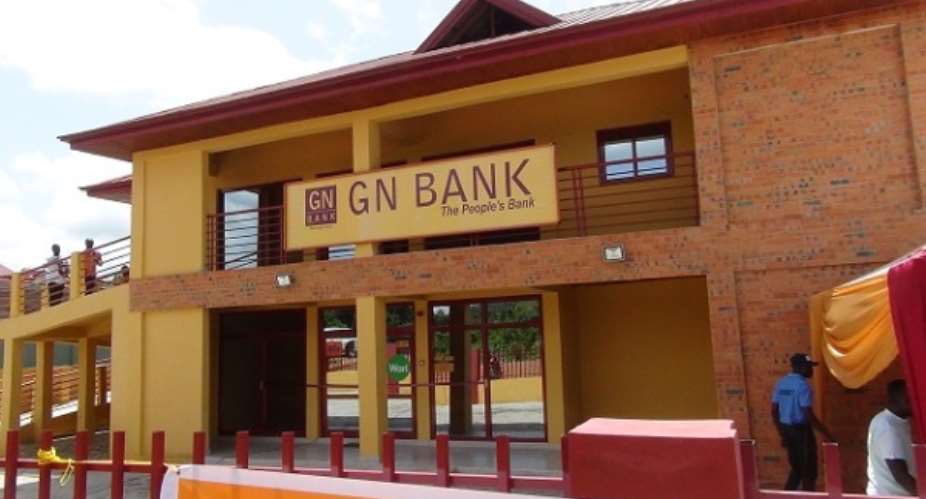
The renewed public chatter about “bringing back”, “restoring” or “reinstating” the revoked licences of Group Nduom’s Bank and Savings and Loans company may sound hopeful and comforting to loyal supporters of Papa Kwesi Nduom, but it is legally misconceived and mostly built on misunderstanding. Godwin Ako Gunn, the NDC Deputy Communications Officer’s claim that government is ‘‘set to restore Paa Kwesi Nduom’s GN Bank Licence’’ is either a misunderstanding of the law or an irresponsible simplification. A bank licence in Ghana is not like a television subscription that can be cancelled today and reactivated tomorrow by someone’s instruction. A deposit-taking licence in Ghana is not a political favour that can be granted, withdrawn, and then returned at will. It is a legal permission, controlled by strict rules. And those rules are designed to protect ordinary depositors and the whole financial system from collapsing.
That is why calls - whether from sympathisers, partisan voices, or well-meaning observers for John Mahama’s government to “bring back” the revoked licence of GN Bank are not merely unrealistic, but misleading and inconsistent with the architecture of Ghana’s banking laws. Even if a government wanted to do it, the law does not give politicians that power. The law gives that power to the Bank of Ghana (BoG), and it expects BoG to act based on financial facts, especially whether an institution can pay depositors and meet key safety requirements. The legal framework does not prioritise sentiment. Thankfully, the position of the Bank of Ghana has been unambiguous. It is not possible to restore the revoked license of GN Bank or any other Bank. Clearly, if you use Banking Clean-up propaganda to win an election, Bank of Ghana will expose you.
To understand the issue, we must start with why BoG revoked GN Bank’s licence in the first place. BoG said the decision was based on serious financial and regulatory problems, including insolvency. Act 930 even defines insolvency in practical terms. Section 123(4) treats an institution as insolvent where it cannot “pay its obligations as they fall due” or where its liabilities exceed its assets. In simple terms, insolvency means the institution does not have enough money or strength to meet its obligations, especially paying depositors when they come for their money. Reports about BoG’s reasons for revoking the license of GN Bank point to a bank that was deeply financially weak and unable to operate safely as a deposit-taking institution.
Now, here is the key point many people miss: once BoG decides an institution is insolvent, the law says BoG must revoke the licence. It is not optional. The main banking law, Banks and Specialised Deposit-Taking Institutions Act, 2016 (Act 930) uses strong language. It says BoG “shall revoke” the licence if the institution “is insolvent or is likely to become insolvent.” In everyday language, “shall” means “must.” It is not “may.” It is not “if you feel like it.” It is “must” (Act 930, section 123(1)).
The law then says something else that is equally important: after revocation, the law says BoG “shall appoint a receiver.” (Act 930, section 123(2)). And it states that the receiver “shall take possession and control of the assets and liabilities” of the institution (Act 930, section 123(3)). A receiver is a person or body appointed to take control of the institution’s assets and manage the situation for an orderly clean-up.
In plain terms, once a licence is revoked and a receiver is appointed, the institution is no longer operating as a normal bank. The law places it in a special resolution process focused on protecting depositors and managing the fallout, not on returning to business as usual. It is therefore not a situation where the licence can simply be restored, and operations resumed because the President promised so.
Under Act 930, the receiver becomes the sole legal representative of the institution, taking over the powers of shareholders, directors, and top managers (section 127(1)). The law also expressly prohibits the receiver from taking new deposits (section 127(5)). This makes clear that a bank under receivership cannot “start operating again” in the normal sense. The process is designed to resolve failure, not to keep the bank running.
Another major misunderstanding is who has the legal power to issue bank licences. Many people speak as if President Mahama, minister for finance, or Chairman Asiedu Nketia can direct BoG to restore the licence of GN Bank. Act 930 clearly places licensing power in BoG’s hands. It says BoG has the “sole responsibility” for issuing licences (Act 930, section 5). And it also says nobody should take deposits from the public without a licence (Act 930, section 6(1)).
So, even if John Mahama promised during campaigning that he will restore revoked licenses of any bank, the law does not allow him to fulfil such a promise. President Mahama knew he couldn’t do it. He just deceived unsuspecting Ghanaians. Deposit-taking is controlled by BoG through law, not through political announcements. To make the point even stronger, Ghana’s laws also protect BoG from being pushed around by politicians. Ghana’s law deliberately erects a firewall around central bank functions. The Bank of Ghana (Amendment) Act, 2016 (Act 918) states that, except where the Constitution provides otherwise, BoG “shall not be subject to the direction or control of any person or authority” in performing its functions. That means political instructions should not determine banking supervision decisions. This is not mere theory. It is the legislative embodiment of central bank independence in supervision. It exists precisely to prevent political interference with licensing, enforcement, and resolution - areas where the temptation for short-term populism can be high and the cost to depositors can be devastating.
Dr. Papa Kwesi Nduom’s action in the Human Rights Court is often referenced by supporters as evidence that the revocation was contestable. Some people may point to Dr. Papa Kwesi Nduom’s legal challenge and say, “But he went to court.” Yes, he did. But what matters is how the challenge ended. The Human Rights Court dismissed the case and upheld BoG’s action, saying BoG could not be faulted for revoking the licence. The Court said the central bank acted within its lawful supervisory remit and in the public interest. In effect, the legal system affirmed the principle that BoG’s prudential judgment once properly grounded will not be lightly displaced by emotive arguments or political sympathy.
This brings us to the most important public education point: if GN wants to operate again as a deposit-taking institution, the law provides only a few realistic routes. The first is a successful legal process that overturns the revocation decision. In other words, if a court (or the appropriate legal process under the law) sets aside the revocation, then the situation changes through law, not through political commentary.
The second option is to apply again, fresh. The law says “A person who seeks to carry on a deposit-taking business shall apply in writing” to BoG for a licence. (Act 930, section 7(1)). In practical terms, this means satisfying current capital requirements, governance and “fit and proper” standards, risk management expectations, liquidity and reserve requirements, transparency obligations, and any other prudential conditions BoG imposes under the statute and supervisory directives to protect depositors. It is not a continuation of the old licence; it is an entirely new prudential assessment. That is precisely why it is misleading to tell the public that a revoked licence will simply be handed back.
That is why it is wrong and unfair and socially dangerous when political communicators, activists, or influential voices tell people that government will simply “restore the licence.” Those statements create expectations that the law does not support. Some people spreading the message may not know the law, and they need to learn. But others may know exactly what they are doing: selling hope for attention and political points, while ordinary people hold on to that hope and suffer disappointment.
This is why the public must strongly reject talk that gives people false hope, especially when it is presented as certainty. If someone claims a party or government will restore a revoked banking licence, the right response is simple: “Show us the legal basis.” The law is clear. Act 930 makes revocation mandatory on insolvency, gives BoG sole licensing power, and places the institution into receivership where deposits cannot be taken. Act 918 protects BoG from political direction. These are not opinions. These are statutory rules.
In the end, Ghana’s banking laws were written to protect depositors. They were written to keep banking decisions away from politics and to ensure that weak institutions do not continue to endanger people’s savings. If the goal is to see GN operating again lawfully, then the honest conversation must focus on the lawful routes: either overturn the revocation through legal process or apply again under the law and meet BoG’s requirements. Anything else, especially political rumours about “restoration” is simply noise, and it should be called out as such for the sake of truth and public protection.
James McKeown
[email protected]


 Chief Justice Baffoe-Bonnie is Mahama's surrogate to control the judiciary — Mar...
 Court gives OSP four more weeks to serve Ofori-Atta, Akore in US
 Dangote's $16bn Kenya refinery 'new chapter' for Africa
 Mahama to open national conference on housing finance
 NPP announces voter ID requirements for October 3 national conference
 Ghana rejects calls to abolish International Criminal Court , urges stronger act...
 September 30: Cedi sells at GHS12.20 on forex market, GHS11.70 on BoG interbank
 'Ghana is now training lawyers illegally' — Former Bar president
 Akyem Hemang residents demand justice for alleged military shooting of 29-year-o...
 Adenta-Accra morning travel time improves significantly in just 23 minutes under...



Comments
It will be a waste of time to respond. Just because the governor claims insolvency, let the court decide. You are also misleading the people by your statements.