




Introduction
As painful as it may be, this African story and history must never be lost. It must be told over and over again until Africans learn and accept the truth. And the bitter truth is that our true enemy is not my fellow African or brother from another political party, from another region, from another ethnic group from another African country. Our real enemies has been and is still the West, and their tool of destruction is our fellow African. As Brother Malcolm X taught us before dying at the hand of another paid and used fellow African brother....."They will pay one of us, to kill one of us, just to say it was one of us".
Lumumba; A Major Force At The Brussels Round Table Conference, Brussels,1960
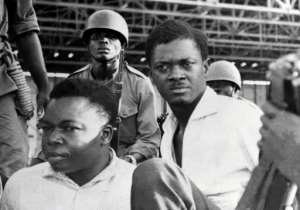
Lumumba had to be released from prison due to strong pressure from other delegates to attend the Roundtable talks 1960 in Brussels. And his wrists had visible wounds from prison handcuffs. Lumumba's presence itself was a powerful symbol of the popular will for freedom and a revolutionary triumph over colonial repression. Patrice Lumumba played a pivotal role at the Belgo-Congolese Round Table Conference in Brussels. Patrice Lumumba served as a leading nationalist and Pan- Africanist who successfully advocated for the Congo's immediate and unconditional independence.Lumumba' s firm and uncompromising stance made him popular among the Congolese masses, but very unpopular with Western powers like United States of America (US) and Belgian authorities, who viewed his radical anti-colonial and Pan-Africanist views as a threat to their imperial and colonial interests in the Congo. Lumumba and his Mouvement National Congolais (MNC) party rejected the Belgian plan for a slow, managed transition, successfully pressurizing the Belgian government and other Congolese leaders to agree to a specific date for independence- June 30, 1960. Lumumba sought to overcome ethnic and regional divisions. He worked to form a united front among the diverse Congolese political leaders, arguing that a unified, indivisible Congo was essential for genuine self-determination. Lumumba publicly identified and condemned the efforts of certain Belgian financial and political groups who were trying to manipulate the conference to maintain economic control and encourage secessionist movements (particularly in Katanga Province). Lumumba fought for total control over the Congo's finances, defense, and foreign affairs, not a mere transfer of power that left the new nation economically subservient.Lumumba played a central role in the complex negotiations to form a broad coalition government , eventually becoming the Congo's first Prime Minister.
Lumumba Speech
Parts Of Lumumba's Speech That Got Him Killed
It need to be noted that Lumumba was not scheduled in the program of the day to speak. In fact, Patrice Lumumba defied protocol to deliver an unscheduled, powerful, impromptu condemnation of colonialism, neo- colonialism and a call for African unity, freedom, and prosperity, asserting the Congo's future belonged to its people, not Belgium.In essence, the speech was a declaration of self-determination and a powerful statement against neo-colonialism.
Extracts from the speech
Men and women of the Congo, Victorious independence fighters,
I salute you in the name of the Congolese Government.
I ask all of you, my friends, who tirelessly fought in our ranks, to mark this *June 30, 1960* , as an illustrious date that will be ever engraved in your hearts, a date whose meaning you will proudly explain to your children, so that they in turn might relate to their grandchildren and great-grandchildren the glorious history of our struggle for freedom.
Although this independence of the Congo is being proclaimed today by agreement with Belgium, an amicable country, with which we are on equal terms, no Congolese will ever forget that independence was won in struggle , a persevering and inspired struggle carried on from day to day, a struggle, in which we were undaunted by privation or suffering and stinted neither strength nor blood.
It was filled with tears, fire and blood. We are deeply proud of our struggle, because it was just and noble and indispensable in putting an end to the humiliating bondage forced upon us. That was our lot for the eighty years of colonial rule and our *wounds are too fresh and much too painful to be forgotten.
We have experienced *forced labour* in exchange for pay that did not allow us to satisfy our hunger, to clothe ourselves, to have decent lodgings or to bring up our children as dearly loved ones.
Morning, noon and night we were subjected to *jeers, insults and blows* because we were "Negroes". Who will ever forget that the black was addressed as "tu", not because he was a friend, but because the polite "vous" was reserved for the white man?
We have seen our *lands seized* in the name of ostensibly just laws , which gave recognition only to the *right of might.We have not forgotten that the *aw was never the same for the white and the black,* that it was lenient to the ones, and cruel and inhuman to the others.We have experienced the atrocious sufferings, being persecuted for political convictions and religious beliefs, and exiled from our native land: our lot was worse than death itself.
Who will ever forget the shootings which killed so many of our brothers , or the cells into which were mercilessly thrown those who no longer wished to submit to the regime of *injustice, oppression and exploitation used by the colonialists* as a tool of their domination?
The *Republic of the Congo has been proclaimed* and our beloved country's future is now in the hands of its own people.Brothers, let us commence together a new struggle, a sublime struggle that will lead our country to peace, prosperity and greatness.We shall see to it that the lands of our native *country truly benefit its children.
Even Belgium, which has finally learned the lesson of history and need no longer try to oppose our independence, is prepared to give us its aid and friendship; for that end an agreement has just been signed between our two equal and independent countries. I am sure that this co-operation will benefit both countries. For our part, we shall, while remaining vigilant, try to observe the engagements* we have freely made.
Finally, I ask you unconditionally to respect the life and property of fellow-citizens and foreigners who have settled in our country; if the conduct of these foreigners leaves much to be desired, our Justice will promptly expel them from the territory of the republic; if, on the contrary, their conduct is good, they must be left in peace , for they, too, are working for our country's prosperity .
The Congo's independence is a decisive step towards the *liberation of the whole African continent.
Long live independence and African unity!!
Long live the independent and sovereign Congo!!
This is when all hell broke lose. In the presence of the Belgian King, King Beoudin and some United Nations (UN) observers as well as some observers from some Western Capitals, Lumumba belted out a fiery, emotional, pugnacious speech, chronicling the suffering the Congolese had gone through in the hand of their colonial master. Belgium and how his government planned to address them. Nationalisation of Congo minerals, replacement of old laws with new laws...in essence breaking down the colonial order. After the ceremony or after "the speech" western interests knew Patrice Emery Lumumba was too headstrong, too principled, too focused on Congo and African liberation and they could not trust him to do their wish.The West now planned his death.
Lumumba's Seventy- Three (73) Days In Office
As Prime Minister of Democratic Republic of Congo (DRC) Lumumba was in office for less than three (3) months.To be specific, Lumumba was in office for 73 tumultuous and eventful seventy- three (73days). Lumumba's tenure in office ran from June 24, 1960, until September 5, 1960, when he was dismissed by President Joseph Kasavubu amidst a constitutional crisis.However, Lumumba contested the dismissal, and the constitutional deadlock was only definitively broken by a military coup led by Colonel Joseph-Désiré Mobutu on September 14, 1960, which removed him from power. Also his time in office was dominated by significant challenges, including a widespread army mutiny and the secession of the mineral-rich Katanga province, which led to the Congo Crisis. His appeal to the Soviet Union for support after Western powers and the United Nations refused adequate assistance created further domestic and international opposition
What was Lumumba's crime?
Lumumba made a fateful step - he turned to the Soviet Union for help. This set off panic in London, Brussels ,Paris and Washington who feared the Soviets would get a foothold in Africa much as they had done in Cuba.The West – in particular Belgium and the US opposed Lumumba's plans to nationalize Congo's raw materials (mineral wealth) and his proximity with the Soviet Union in the midst of the Cold War.
Who killed Lumumba?
Offcourse, certain narratives would want the world to believe that Lumumba was killed by his fellow Africans, fingers pointing at (Mobutu Seseko and Moise Tshombe). In a way yes, but a deeper analysis of history shows that Lumumba was a victim of imperial (Anti- African forces) as well as global capital. According to Georges Nzongola-Ntalaja, Lumumba's assassination
"was a culmination of two inter-related assassination plots by American and Belgian governments, which used Congolese accomplices and a Belgian execution squad to carry out the deed."
A Belgian parliamentary investigation in 2001 concluded that Belgium bore "moral responsibility " for the events leading to Lumumba's death.US officials, operating during the Cold War, viewed Lumumba as a potential communist and a threat to Western interests after he sought support from the Soviet Union to suppress Belgian-backed secessionists. The CIA actively plotted to assassinate him (though the specific poison plot was not carried out) and covertly funneled money and aid to his political rivals, including Joseph-Désiré Mobutu, who eventually seized power in a coup.United Kingdom of Great Britain and Northern Ireland (UK) is somewhere implicated. Some reports and declassified documents suggest possible British intelligence (MI6) involvement or knowledge of plots to eliminate Lumumba, with a UK Foreign Office official noting "removing him from the scene by killing him" as an option. France played a complex, supportive role in the overthrow and assassination of Patrice Lumumba, particularly through its influence in the rival Republic of the Congo (Congo-Brazzaville) and its covert operations, but Belgium and the US were the primary Western powers *directly involved in his murder.
As the former colonial power, Belgium had significant economic interests in the mineral-rich Katanga province and strongly opposed Lumumba's nationalist vision. Belgian officials and mercenaries facilitated his arrest, transfer to the hostile Katanga province, torture, and eventual execution by a firing squad.
In late August 1960, the then US President Dwight D. Eisenhower ordered Lumumba’s elimination ostensibly due to fears that Lumumba was a communist sympathiser who would align with the Soviet Union. At one security meeting, CIA Director Allen Dulles said Lumumba,
“remained a grave danger as long as he was not disposed of”.
President Eisenhower, for his part, told the British foreign secretary that he wished,
“Lumumba would fall into a river full of crocodiles ”.
Lumumba’s Washington visit that July of 1960 had set the Americans on edge. His request for US military intervention had been ignored. He resorted to the Soviet Union as a last option.The Soviet Union did not consider him radical enough, their support was too little, too late.
Coup, Arrest, Torture & Murder
On 14 September 1960, the army chief, United States of America (US) backed Colonel Joseph Desiré Mobutu led a military coup, suspending parliament and effectively removing Lumumba from power. Until then, Lumumba had considered Mobutu his closest friend, unaware that Mobutu was the CIA’s principal agent in the Congo and the ringleader of the plot against him. On 10 October 1960, Lumumba was put under house arrest. On 27 November 1960, he escaped with his two companions, (Joseph Okito and Maurice Mpolo). He was caught en route to Stanleyville (now Kisangani), his political bastion, on the 1st of December 1960, he was transferred to the main army barracks at Thysville, located halfway between Leopoldville and the Atlantic coast, and subjected to thorough, inhumane torture and beatings. On 17 January 1961, Lumumba and his two colleagues (Mpolo & Okito) landed in Elisabethville (now Lubumbashi) and were handed over to the secessionist forces in Katanga, under the sellout Moise Tshombe.After inhumane torture and thorough beatings they were executed that evening between 9:30 and 9:45pm with Lumumba the last to face the firing squad.
Defiant Lumumba
During his time when he was imprisoned by imperial forces fronting Mobutu Seseko, in one of his last letters to his wife, Lumumba wrote,
“Neither brutal assaults, nor cruel mistreatment, norw torture have ever led me to beg for mercy, for I prefer to die with my head held high, unshakable faith, and the greatest confidence in the destiny of my country rather than live in slavery and contempt for sacred principles.”
Ever a man of unshakable courage, Lumumba also stated that history in the future will judge in his favour.
Killer's Confession
Cut Into 34 Pieces
Gérard Soete, a former Belgian police commissioner, publicly confessed in a 1999 documentary and subsequent interviews to his role in dismembering and dissolving the body of assassinated Congolese leader Patrice Lumumba. He described the gruesome process in detail and stated he kept some of Lumumba's teeth as a "hunting trophy".
"I cut up and dissolved Lumumba’s body in acid. In the middle of the African night, we started by getting drunk to have courage. We got rid of the bodies. The hardest part was cutting them into pieces with a chainsaw before pouring acid into them. There was almost nothing left, only a few teeth. And the smell! I washed three times and always felt like a barbarian dirty .”
Gérard Soete, 15 May 2002.
Lumumba Corpse Dissolved In Sulfuric Acid
Sulfuric acid turned Lumumba, “into a mass of mucus”. But the bones and teeth survived, and when the acid ran out, Katanga’s Belgian Police Commissioner, Gerard Soete and his brother Michael, ‘doused the remaining parts with gasoline and set them aflame. The whole job took two days. Soete returned home a changed man, his daughter observed. Along with the darkness he brought back, he carried a gruesome souvenir: one of Lumumba’s fingers and a pair of gold-capped molars, twisted out from his skull with pliers.”
Lumumba's Tooth Returned To Congo
Lumumba's tooth, a macabre trophy preserved by the daughter of Gerard Soete after sixty one (61 years) was returned back. On 22 June 2022, a plane transporting a coffin containing a gold-crowned tooth (Lumumba's tooth) landed in Kinshasa(DRC). Eight days later on 30 June 2022, it was installed in a mausoleum in Kinshasa.
Elusive Justice
"No one has been held accountable. No Belgian, no European, no Congolese. No white, no Black. Everybody agrees that there was an assassination. There is a crime. But nobody has done it,
Juliana Lumumba, daughter of Patrice Emery Lumumba.
Lumumba Legacy
Patrice Emery Lumumba's legacy is that of a courageous African anti-colonial icon, symbolizing national unity and pan-Africanism, whose vision for a sovereign, independent Democratic Republic of the Congo was tragically cut short by his assassination. Nontheless, his ideas continue to inspire struggles for liberation, self-determination, sovereignty and resistance against neocolonialism worldwide. The name Lumumba has become a powerful symbol globally.
Lumumba Honoured
Many countries have named streets and squares after this African icon, Patrice Emery Lumumba. In Africa ; Nigeria, Morocco, Ghana, Egypt, South Africa, Uganda, Burundi, Kenya, Ethiopia, Zambia, Zimbabwe, Mozambique, Tanzania, Cameroon, Angola. In Europe: Serbia, Ukraine, Belgium, Germany, and Poland (city of Lodz). In the Middle East:Iran. In the Caribbean, Haiti. In Belgium,the former colonial power, a square in Brussels was renamed Lumumba Square in 2018, and there are ongoing discussions in other cities like Ostend about similar gestures of reconciliation.
Other institutions and memorials have been established. Russia is home to the Patrice Lumumba Peoples' Friendship University (formerly Lumumba University). Several university halls in other countries, such as Uganda and Kenya, also bear his name. In Kenya, there are a hospital and housing estates named in his honor. The Democratic Republic of Congo (DRC) officially celebrated the 60th anniversary of his assassination and interred his only returned remains (a tooth )in a dedicated mausoleum in Kinshasa in 2022.The DRC government has also announced plans to build a town, "Lumumbaville", in his honor. At the recent 2025 Africa Cup Of Nations (AFCON) tournament a DRC football fan, Michel Kuka Mboladinga "Lumumba Vea", stood motionless and expressionless during DRC matches as a tribute to the memory and rememberance of Patrice Emery Lumumba.
F. Madondo (African Teacher) [email protected]
References
The Lumumba Plot: The Secret History of the CIA and a Cold War Assassination,
Stuart A. Reid (Alfred A. Knopf, (2023), 618 Pages.
De Witte Ludo, 2003, Assassination Of Patrice Lumumba, Verso internet archive books,

 'I couldn’t have refused an order' – Major Adjei-Ampofo explains why he took par...
 'Some NDC members are working with NPP to get your GoldBod job' – Kevin Taylor w...
 'It is too early for you to take this political heat' – Kevin Taylor cautions Ay...
 NPP knows GoldBod is our strength, that is why they want to bring it down – Suhu...
 Stop using radio airtime for greetings, talk about Mahama’s economy – Suhuyini t...
 IEA proposes binding long term national development plan to stop successive gove...
 Health Minister moves to prevent stockouts of HIV, TB and Malaria commodities
 IEA wants MPs, ministers barred from serving on State-Owned Enterprise boards
 Constitutional review: IEA warns against changes that could turn judiciary into ...
 Eastern Regional Minister orders temporary closure of two SHSs after violent stu...

