




Since mid-November 2025, an emerging social movement, Pensioners for Reforms has been quietly but persistently mobilizing unregistered pensioners across the country. Though yet to formalize as a registered association, its advocates, all of them pensioners themselves, have embarked on an awareness campaign that is both reflective and urgent. Their message strikes at the heart of a national question: Is Ghana’s pension system working for the people it was built to protect? At its core, the group’s plea is straightforward. The current pension framework must evolve — not just in technical fixes, but in governance, inclusion, and equity. What began as quiet conversations among retirees has expanded into a broader dialogue about dignity in retirement, transparency in pension governance, and the very purpose of social security in Ghana’s rapidly changing economy.
The Structure and the Gap: What Ghana’s Pension System Looks like Today
Ghana’s pension landscape is grounded in the National Pensions Act, 2008 (Act 766), which created a multi-tier structure aimed at diversifying how workers save for retirement:
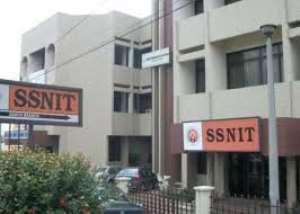
- Tier-1 is a mandatory defined benefit scheme managed by the Social Security and National Insurance Trust (SSNIT), designed to provide continuing monthly pensions after retirement.
- Tier-2 is a mandatory defined contribution scheme not managed by SSNIT but by licensed private trustees, intended to provide a lump sum at retirement based on contributions and investment returns.
- Tier-3 is a voluntary savings tier that allows additional contributions to grow over time under private trusteeship.
Under this framework, Ghana has made measurable progress. Pension fund assets grew by an estimated 39.5 % in 2024, reaching a historic high of about GH¢86 billion, spurred by stronger enforcement and improved enrolment in private pension schemes. Yet, despite these gains, fundamental gaps persist, and they show up most starkly in the lived realities of pensioners.
The Unregistered Majority: Missing Voices in Pension Conversations
Official statistics suggest that around 100,000 pensioners are registered with the National Pensioners Association (NPA) (often used interchangeably with the SSNIT Pensioners’ Association), even as perhaps twice that number remain unregistered and effectively outside formal pension policy conversations. Pensioners for Reforms leaders argue that this missing constituency --- particularly unregistered retirees from the civil service and informal sectors --- represents enormous untapped experience, knowledge, and pressure for a more inclusive system. These are technocrats --- accountants, policy analysts, lawyers, administrators, project managers, whose expertise in pensions, governance, and financial systems is, paradoxically, overlooked just as they themselves face retirement insecurity. They emphasize that their skills could be an asset to institutions like NPA, SSNIT and the NPRA, which all too often operate with bureaucratic inertia rather than technocratic discipline.
Regularity vs. Adequacy: What Pensioners Really Need
One of the most significant shifts Pensioners for Reforms advocates is a shift in emphasis from pension regularity to pension adequacy. While ensuring that pensions are paid every month is essential, the group argues that what pensioners receive must reflect their economic realities --- particularly the crushing burden of health care, inflation, and age-related expenses.
Under SSNIT’s indexation regime --- the legally mandated mechanism for adjusting pensions, modest annual increases have been granted. For 2025, pensions were indexed upward by an average of 12 %, designed to cushion retirees against rising costs of living. Prior years saw similar adjustments, such as a 15 % increase in 2024 intended to preserve purchasing power. Yet many pensioners point out a hard truth. Even with indexation, monthly pension incomes often fall short of covering basic healthcare and living costs, especially for those facing multiple age-related ailments such as diabetes, hypertension, vision and hearing loss, and neuropathy. When pensions represent roughly 60% of the last active income, retirees can find themselves squeezed between expenses and subsistence. This raises a deeper question about what retirement dignity actually means in contemporary Ghana.
Tier-2 Underperformance: Pensioners’ Rights or Risk Bearers?
One of the most contested areas of Ghana’s pension architecture is Tier-2, the mandatory occupational pension savings that every formal employee contributes to, but which is overseen by private trustees and fund managers. Many pensioners observe that Tier-2 has performed abysmally relative to its promise, delivering modest returns while exposing pensioners to investment risks that private fund managers do not equally bear. Pensioners for Reforms advocates propose a radical rethinking. Why not allow individual pensioners to hold their Tier-2 savings in fixed deposits with their own bankers if they choose? Such a model could preserve capital and deliver predictable returns without forcing retirees into volatile markets. At minimum, the group argues, pensioners must have a decisive say in decisions that affect how their money is managed --- a right often denied under the current structure.
This contention speaks to a broader issue. The perception that pensioners are treated as passive recipients rather than stakeholders with agency. The group insists that pensioners’ voices must be represented in the governance of SSNIT and NPRA, including at the board level, rather than being sidelined by appointed executives and bureaucrats.
SSNIT’s Legacy, Governance Gaps, and Ghost Names
SSNIT was established not with government seed capital, but with workers’ contributions --- a foundational reality that many pensioners say must be honoured with respect, transparency, and accountability.
The Trust has taken commendable steps in financial management, particularly in rooting out fraudulent or unverified pension claims, so-called “ghost pensioners.” Over recent years, SSNIT has reported significant savings from removing ghost names from its payroll, with figures ranging from tens to hundreds of millions of Ghana cedis. For example, GH¢425 million was reportedly saved after identifying and eliminating unverified pensioners’ names since 2018. Such efforts not only recover public funds but also ensure that legitimate pensioners are not competing with fictitious accounts for limited resources.
Yet, persistent governance concerns remain. The Auditor-General has flagged missteps in pension governance in past reports, including weaknesses in internal controls and actuarial forecasts, areas pensioners believe require thorough public scrutiny. There have been widespread calls for forensic audits of both SSNIT and the NPRA, aimed at restoring public confidence and accountability. Pensioners for Reforms further insists that both institutions must appear before Parliament’s Public Accounts Committee to explain decisions and performance in clear terms.
NPRA: Regulation, Automation, and Informal Sector Inclusion
The National Pensions Regulatory Authority (NPRA) plays a critical role in overseeing all private and public pension activity. In 2025, President John Dramani Mahama announced plans to fully automate NPRA operations, a reform aimed at reducing bottlenecks, enhancing transparency, and modernizing pension administration across the board.
Automation is seen as a step toward eliminating bureaucratic delays, improving record-keeping, and ensuring that contributions and benefits are processed reliably. It also dovetails with NPRA’s objectives to expand pension penetration among informal sector workers, with targets to raise coverage considerably in coming years. However, pensioners question whether technological upgrades alone are enough. They stress that structural, legal, and democratic reforms are equally essential if the pension system is to serve all Ghanaians equitably --- not only in Accra, but in Tamale, Kumasi, Ho, and Takoradi.
Labour’s Role and the Politics of Advocacy
The Trades Union Congress (TUC) historically has been a powerful voice on labour rights, but pensioners argue that its advocacy on pension adequacy and reform has been limited. While the TUC collaborates with SSNIT on educational programmes and benefit discussions, critics say it could have been more assertive in securing better pension rights and benefits for retirees. Whether due to political constraints or strategic choices, pensioners believe labour should do more to champion their cause.
At the same time, the entire debate is deeply political. Pension reforms intersect with fiscal policy, public accountability, and governance --- areas inevitably shaped by parliamentary and executive action. The group points to President Mahama’s own remarks recognizing the need for pension reform as evidence that the political will exists, but insists it must translate into concrete legislative and administrative change.
Social Realities: Loneliness, Healthcare, and Community Support
Beyond policy and numbers, the human dimension of pension inadequacy is stark. Many retirees face isolation, poor health outcomes, limited family support, and no structured social or recreational amenities. Ghana currently lacks comprehensive social services tailored to the needs of an aging population --- a shortfall that exacerbates physical, emotional, and financial stress for countless pensioners.
For many retirees, SSNIT pensions are not a “luxury” but the only predictable monthly income they receive. When that income barely covers medication, transport, and basic food, it raises fundamental questions about Ghana’s commitment to social care for those who have spent decades contributing to the nation’s progress.
A Roadmap for Reform: What Pensioners for Reforms Propose
Pensioners for Reforms articulates a foundation of principles that they believe must inform Ghana’s next phase of pension policy:
- A Comprehensive Review of Pension Laws -- Ensure that Act 766 and related statutes reflect current economic realities and pensioners’ voices, not just actuarial models.
- Enhanced Governance Participation -- Parliament, boards of SSNIT and NPRA, and oversight bodies should systematically include pensioner representation.
- Forensic Audits and Transparency -- Thorough public audits of pension institutions to root out inefficiencies, mismanagement, and non-transparent practices.
- Pension Adequacy over Merely Regular Payments -- Indexation and benefit formulas that preserve dignity, not just compliance with statutory minimums.
- Tier-2 Reform and Pensioner Agency -- Greater choice and security for retirees’ Tier-2 funds, including options for conservative, fixed-income preservation.
- Membership Drives and Inclusion -- An NPA reimagined to reach 80% coverage of retirees and contributors, especially unregistered pensioners.
- Appoint a Pension Ombudsman as a matter of utmost urgency.
Conclusion: A Call for Unity and Shared Purpose
As Ghana marks the festive season, Pensioners for Reforms extends goodwill not only to fellow retirees but to President Mahama, Parliament, labour leaders, and pension authorities --- wishing them a Merry Christmas and a New Year of meaningful reform. In their view, the Christmas spirit of compassion and solidarity offers a timely metaphor for the kind of society Ghana aspires to be. One that honours its elders with substantive, not symbolic, support. In the New Year, pensioners say, the agenda should shift from who will bell the cat to how we can collectively transform pension governance for the betterment of all. Whether that vision becomes reality will depend on sustained advocacy, political courage, and an inclusive reform process that recognizes pensioners not as burdens, but as stakeholders and citizens worthy of dignity in retirement. The intention of Pensioners for Reforms is not to malign, but to humbly appeal for national dialogue on pension governance in this country.
FUSEINI ABDULAI BRAIMAH
+233208282575 / +233550558008
[email protected]

 Fire Service rescues trapped victim after STC Bus, Taxi collision at Konongo
 Private SHSs in Free SHS pilot programme demand payment of outstanding governmen...
 Police foil planned robbery, recover weapons at Kukuom
 A 53-year-old mechanic remanded for allegedly stabbing another over car battery ...
 Asiedu Nketiah urges IGP to speed up justice for victims of election 2024 killin...
 Each family receives GH¢15,000 support after Accra Police Barracks Fire
 Mussa Dankwah urges ministers to focus on performance amid MoFA–finance minister...
 Selling single cigarette sticks illegal – FDA
 Hungry, unhealthy workforce cannot protect nation’s health – GRNMA
 Health Minister orders suspension of KATH CEO over Emergency admissions directiv...


