




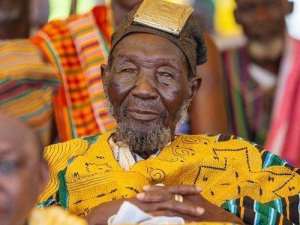
Bawku, Upper East Region, Ghana December 18, 2025
More than seven decades after it first erupted, the Bawku conflict a long-standing clash between the Kusasi and Mamprusi communities in northern Ghana remains far from resolved. Despite multiple attempts at mediation, including a high-profile peace initiative led by the Asantehene, Otumfuo Osei Tutu II, significant obstacles persist, and recent developments suggest that the two sides have yet to fully accept the proposed roadmap for peace. This stalemate underscores the urgent need for sustained political will, community engagement, and national unity to end one of Ghana’s most enduring ethnic and chieftaincy disputes.
Historical Roots of the Conflict
The Bawku dispute is deeply rooted in colonial history and competing claims to traditional authority. The conflict centers on who should hold the paramount chieftaincy (the Bawku skin) a position traditionally associated with the Mamprusi royal lineage and who has legitimate control over land, customs, and community leadership in Bawku and surrounding areas. The Kusasi, who form a demographic majority in the area and trace their indigenous roots directly to the land, argue that they deserve greater recognition and control over local affairs. The Mamprusi, on the other hand, claim historical authority under traditional structures that predate colonial rearrangements of chieftaincy jurisdictions.
Over the decades, this clash of identity, history, and power has periodically erupted into violent confrontations, displacements, curfews, and loss of life. In recent years, the conflict has even drawn concern over potential spillover of broader regional instability, as areas close to the Burkina Faso border have faced security challenges.
Why Recent Mediation Matters
In early 2025, President John Dramani Mahama appointed the Asantehene, Otumfuo Osei Tutu II, to mediate the conflict a role the respected Ashanti king had previously played in resolving other protracted chieftaincy crises, notably in Dagbon. The goal was to harness Otumfuo’s moral authority and tradition of neutral arbitration to bring both sides together, examine historical grievances, and chart a viable path to lasting peace.
After months of consultations, discussions, and attempts to bridge entrenched positions, the Asantehene presented a Bawku Peace Mediation Report to President Mahama on 16 December 2025. The document outlined recommendations aimed at restoring stability, reaffirming recognized traditional leadership, and promoting reconciliation between the factions. Included in the proposals was the directive to recognize Naba Asigri Abugrago Azoka II as the lawful Bawku Naba and the recall of rival chief Seidu Abagre to Nalerigu, where he could be reassigned under the authority of the Nayiri (Overlord of Mamprugu).
The government publicly endorsed the mediation report and its recommendations, emphasizing their importance as a comprehensive and forward-looking roadmap for peace in the conflict-prone area. Additionally, President Mahama announced the creation of a GH¢1 billion Bawku Revitalization Fund to support reconstruction, infrastructure development, and economic recovery in the region over a three-year period.
Disagreement and Rejection by Mamprusi Leadership
Despite government endorsement, the mediation outcome has not been met with universal acceptance. On 17 December 2025, the Nayiri, the Mamprugu overlord and paramount chief of Mamprusi, issued a formal rejection of the Asantehene-led mediation report. He described the document as flawed and not reflective of his discussions with the mediator or his own mediation team, which he insists makes the report invalid and unenforceable. This stance signals a significant breakdown in consensus and highlights lingering mistrust between the parties.
The rejection illustrates that, even after extensive negotiations and concessions from both factions, fundamental disagreements remain, particularly around leadership legitimacy and how historical authority should be acknowledged and shared. In the view of the Mamprusi overlord, aspects of the mediation recommendations do not align with his community’s expectations or understanding of the process, raising serious doubts about the pathway to implementation without further dialogue.
Progress and Compromise Amid Tension
Notwithstanding the Nayiri’s rejection, the Asantehene has emphasized that the mediation process did yield mutual compromises from both sides. In his assessment, representatives of the Kusasi and Mamprusi made notable concessions in discussions, which created opportunities for relative calm in some of the affected communities. Yet, the breakdown over acceptance of the official mediation report demonstrates that reconciliation at the grassroots and formal institutional levels remains fragile.
Indeed, independent observers have noted that in some towns and localities outside the core conflict zone, significant reconciliation efforts have taken place, with leaders and community members engaging in dialogue and collaborative projects aimed at defusing tensions. These local successes provide a hopeful but partial picture suggesting that while broader agreements are essential, grassroots peacebuilding continues to play a vital role.
Security Situation and Government Measures
The government has responded to persistent tensions by enforcing curfew restrictions in Bawku and its environs, limiting movement at night, and imposing bans on weapons to curb further violence. Security forces have been deployed intermittently to maintain order and protect residents from renewed clashes. These measures reflect recognition from national authorities that without stability on the ground, mediation outcomes will struggle to gain traction.
Why the Conflict Has Not Ended
Even with diplomatic efforts and formal mediation, several factors continue to hinder lasting resolution:
Deep Historical Grievances: The conflict is anchored in competing interpretations of history, land rights, and chieftaincy legitimacy issues that are difficult to resolve through simple declarations, requiring nuanced, sustained engagement.
Disagreement Over Mediation Outcomes: The Mamprusi overlord’s rejection of the mediation report signals that key stakeholders do not feel fully represented or satisfied with the recommendations.
Fragile Trust: Years of intermittent violence, political interferences, and failed negotiations have eroded trust between communities, making acceptance of compromise more challenging.
Security and Governance Challenges: Curfews, deployment of forces, and bans on weapons, while stabilizing in the short term, do not substitute for structural reconciliation and social healing.
What Comes Next
For the Bawku conflict to move toward lasting peace, Ghana’s leadership, traditional authorities, civil society, and international partners must renew efforts at inclusive dialogue, build trust, and ensure that communities feel genuinely represented in every decision. Peacebuilding at the grassroots level must be supported alongside formal political agreements.
The government’s endorsement of the mediation report and financial commitment to regional recovery are important steps, but they must be matched by broader consensus and buy-in from all major stakeholders, particularly those who have reservations about the current recommendations.
If political leaders, traditional custodians, youth groups, and civil society organizations can bridge differences and commit to peaceful coexistence, Bawku and the Upper East Region stand a chance of breaking the cycle of unrest that has persisted for generations.
Mustapha Bature Sallama
Medical Science communicator.
Private Investigator and Criminal
Investigation and Intelligence Analysis,
International Conflict Management and Peace Building. Alumni Gandhi Global Academy United States Institute of Peace.
[email protected]
+233-555-275-880


 “We never knew life was going to be hard like this in Ghana; we can’t even get j...
 $1.17bn GoldBod gave BoG is repayment, not new money’ – Dr. Gideon Boako
 Baffour Awuah didn’t help his case if he ignored EOCO’s invitation – Appiah Danq...
 Arrest warrant against Manhyia South MP does not mean conviction – Kwasi Kwarten...
 October 1: Cedi sells at GHS12.25 on forex market, GHS11.72 on BoG interbank
 Institutions, public policy must remove barriers facing women – Vice President
 Ghana has lost the fight against galamsey — Barker-Vormawor
 Fire outbreak at Avenor disrupts power supply in parts of Accra
 Accra: Fire breaks out at Avenor Industrial Area; two feared dead
 Carlos Queiroz leaves Black Stars role after poor AFCON qualifying start


