




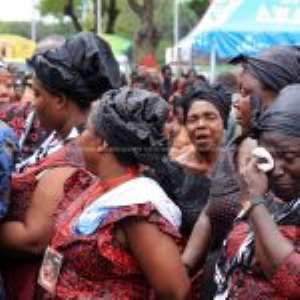
In many cultures across the world, funerals are meant to be solemn rites of passage : moments when families pause to grieve, reflect, and honor the life of a departed loved one. Yet in recent years, particularly in parts of Africa such as Ghana, funerals have shifted dramatically from their traditional purpose. What used to be dignified, sober ceremonies are gradually turning into elaborate celebrations, high-budget social events, and sometimes outright parties. The atmosphere of quiet mourning is fast giving way to competition, display, and financial pressure.
From Solemn Farewell to Weekend Festival
Funerals today often resemble festivals more than mourning ceremonies. In many towns and cities in Ghana, funerals are now held almost exclusively on weekends ; Saturday funerals, as they are popularly known, drawing hundreds or even thousands of attendees. Instead of an atmosphere of quiet reflection, loud music, DJs, dance troupes, and even hired entertainers define many funerals.
It is now common to see funerals with: Canopies decorated like wedding receptions ,Professional photographers and videographers, Uniformed funeral “T-shirts” in multiple colours, Hired bands, brass ensembles and choreographed displays, Celebrities invited to attend to boost social prestige
Funerals, which should be intimate family events, are now frequently treated as community exhibitions of status, wealth, and popularity.
The Cost of Mourning: High Funeral Budgets in Ghana
One of the most disturbing aspects of these modern funerals is the financial burden. Funerals have become so expensive in Ghana that families often take loans far beyond their means simply to host elaborate ceremonies.
Some common expenditure ranges (based on typical Ghanaian funerals):
- Coffins: GH₵ 3,000 – GH₵ 50,000+
- Food & drinks: GH₵ 5,000 – GH₵ 40,000 depending on attendance
- Funeral cloth & T-shirts: GH₵ 4,000 – GH₵ 20,000
- Hall, chairs, canopies, sound systems: GH₵ 2,000 – GH₵ 10,000
- Band or DJ: GH₵ 1,000 – GH₵ 8,000
- Photographers/Videographers: GH₵ 1,500 – GH₵ 10,000
Some funerals, especially those held for influential families, easily exceed GH₵ 200,000.
Ironically, many of the deceased lived modestly, sometimes even struggling financially, only for the family to suddenly raise impossible amounts of money often through huge loans or community contributions just to “give them a befitting burial.” The living are neglected, but in death they become the center of a costly spectacle.
A painful truth is emerging: many people receive more attention in death than they ever did in life.
It is not uncommon to see families who barely visited or supported an elderly relative during sickness, refused to help with medical bills, ignored the person’s poverty or loneliness,
…yet, once the person dies, the same family mobilizes to organize an extravagant funeral.
The money they wouldn’t contribute for medication suddenly appears for: grand coffins, expensive cloth, lavish receptions or funfair-like displays.
This raises a serious moral question: Why do we honor the dead more than we care for the living?
The Rise of “Fantasy Coffins” and Symbolic Burials
In some parts of Ghana, the tradition of designing coffins that reflect a person’s life or profession has expanded dramatically. While symbolically meaningful, it has now become competitive, commercialized, and sometimes extreme.
Examples include:
- A beer bottle coffin for someone who worked in a brewery
- A cocoa pod coffin for a cocoa farmer
- A fish coffin for a fisherman
- A Bible-shaped coffin for a pastor
- A hammer-shaped coffin for a carpenter
- A mobile phone coffin for a phone dealer
- A shoe-shaped coffin for a shoemaker
- An aeroplane coffin for someone who travelled often
- A Mercedes-Benz coffin for someone who loved cars
These coffins, which can cost between GH₵ 10,000 and GH₵ 70,000, often become the highlight of the funeral, overshadowing the human life being commemorated.
Modern funerals in many African societies have become social competitions. Families sometimes feel pressured to “outdo” others with: larger canopies, better catering, fancier coffins, more elaborate décor, bigger sound systems, high-profile guests, or multiple days of celebration.
The danger is that funerals are slowly losing their emotional and cultural essence. Instead of mourning, comforting, and supporting one another, families often focus on appearances, prestige, and social ranking.
Professional Mourners: The monetisation of grief
Another evolving practice is the hiring of professional mourners, individuals paid to cry, wail, or perform dramatic expressions of grief during the ceremony. While such practices exist in several cultures historically, their resurgence in modern African funerals represents an unintended commercialisation of emotion.
Professional mourners may: perform choreographed crying, recite dramatic laments, dance or gesture theatrically, maintain visible emotional intensity throughout the event. This introduces an additional financial burden and raises questions about authenticity. When grief becomes performative and transactional, the funeral risks becoming an aesthetic event rather than an expression of genuine loss.
What Are We Losing? In this transformation, we risk losing: the sacredness of mourning, the communal comfort originally provided by funerals, the dignity of the deceased, financial sanity and the respect for the living.
Funerals are becoming louder but not necessarily more meaningful. They are growing larger but not more compassionate.
To restore balance, societies, especially in Africa can adopt more moderate and meaningful practices such as:
1. Simplicity and dignity over extravagance
Families can choose: moderately priced coffins. simple canopies, modest but sufficient food and basic clothing. This honors the dead without burdening the living.
2. Prioritising people while they are alive
Instead of spending GH₵ 40,000 on a funeral, families can: Support medical needs, visit and care for the elderly, offer encouragement and practical help, celebrate people while they can appreciate it
3. Avoiding debt for funerals
A funeral should never put a family into debt. It is wiser to: Set budgets within means, avoid extravagant expectations, accept smaller, peaceful funerals.
4. Emphasising spiritual and communal meaning
Funerals should return to their roots: Prayer, reflection, support for the bereaved, respectful farewell rituals, community solidarity.
5. Encouraging pre-planning
Families can reduce pressure by : Having discussions about preferred burial types, saving modestly, making clear instructions before death.
Conclusion
The way a society buries its dead reflects its values. When funerals become excessive spectacles, when debt replaces dignity, when the living are ignored in favor of grand displays after death, we lose sight of what truly matters.
It is time for individuals, families, and communities to rethink the growing trend of funeral extravagance. A dignified, modest, and heartfelt farewell is far more meaningful than the most expensive coffin or the most extravagant ceremony. Honoring the dead starts with caring for the living and letting funerals remain what they were meant to be: solemn, respectful, and humane.
By MARTIN LUTHER AWUKU – PARIS, FRANCE


 Ghana Armed Forces to hold land combat firepower demonstration at Bundase on Oct...
 Gambia to pay victims of Yahya Jammeh’s rule from proceeds of his seized US mans...
 Kolgo Paramount Chief questions 24-hour economy market without security
 'ABFA utilisation data excluded from PIAC's report not withholding of informatio...
 Obuasi SHTS sex scandal: Manasseh never said headmaster is a rapist - Brako-Powe...
 Government targets GH¢15.38bn domestic financing in Q4 to support 2027 bond buyb...
 Obuasi SHTS sex scandal: GES to ban teachers from inviting students to bungalows...
 Adwoa Safo to contest Dome-Kwabenya parliamentary seat again
 UG directs students with CGPA below 1.00 to go home
 Uganda Revenue Authority delegation visits TOR to understudy Ghana’s oil refinin...


