




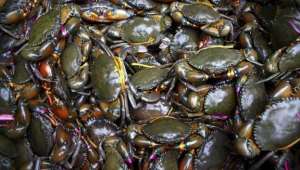
Ghana’s aquaculture industry has long been dominated by fish farming, particularly tilapia and catfish. While these species have contributed significantly to food security and local livelihoods, one promising area remains largely overlooked: crab farming. Despite the high demand for crabs both locally and internationally, the cultivation of these crustaceans in Ghana has yet to achieve substantial commercial scale. This gap represents a potentially lucrative opportunity for investors, entrepreneurs, and communities seeking to diversify the country’s aquaculture sector.
Currently, most crabs consumed in Ghana are harvested from rivers, estuaries, and coastal waters. Small-scale pilot projects and research initiatives have demonstrated that farming crabs in controlled environments is feasible, but the industry has yet to mature. Technical challenges, limited access to juvenile crabs, and a lack of infrastructure have slowed development. Nevertheless, studies conducted by local researchers have shown that with proper management of water quality, nutrition, and breeding, crab farming can be both sustainable and profitable.
The market for crabs in Ghana is substantial. Urban centers such as Accra, Kumasi, and Takoradi consistently exhibit strong demand for fresh and processed crabs. Prices are typically higher than those of many commonly farmed fish species, which makes crab cultivation an attractive economic venture. Furthermore, the environmental benefits of crab farming cannot be overlooked. By reducing reliance on wild populations, controlled farming can help preserve mangrove ecosystems and maintain biodiversity in estuarine areas that serve as natural crab habitats.
Despite these advantages, the sector faces significant hurdles. Technical knowledge among farmers remains limited, particularly regarding optimal feeding practices, disease prevention, and water management. Access to juvenile crabs is inconsistent, making it difficult to establish sustainable farming operations. Additionally, there is a lack of organized supply chains, hatcheries, and processing facilities to support commercial-scale production. These challenges have contributed to the slow growth of the industry, leaving much of its potential untapped.
Overcoming these obstacles will require coordinated efforts from multiple stakeholders. Investment in hatcheries and reliable sources of juvenile crabs is essential. Training programs for farmers can provide the technical expertise needed for successful rearing and breeding. Infrastructure development, including ponds, cages, and water management systems, will be critical to scale production sustainably. Equally important is the establishment of markets and distribution networks that allow crab farmers to reach consumers efficiently. Policy support from government agencies and partnerships with research institutions can further accelerate the development of this overlooked sector.
Crab farming in Ghana represents a unique opportunity to diversify the aquaculture industry, create jobs, and con to thetribute to economic growth. While the challenges are real, the potential rewards are significant. With strategic investment, technical support, and sustainable practices, crab cultivation could emerge as a vital component of Ghana’s food security and aquaculture development, transforming an overlooked niche into a thriving industry.
Email: [email protected]


 Accra-Kumasi Expressway to cut travel time to 2hours, drive 120km per hour — Mah...
 'Our own money $2billion ready, we have not gone to borrow money from anywhere' ...
 Founder’s Day September 21 declared public holiday
 Council of State was not qualified to determine prima facie case against Torkorn...
 'Grounds for removal of Chief Justice and justice of superior court shallow, eph...
 Ghanaian banks write Off GH¢1.23bn in bad loans in first half of 2026
 Family of Gbewaa Training College lecturer killed by curfew soldiers vows legal ...
 Don't be a Bar that flips on principles but a Bar that is consistent — AG tells ...
 Prostate cancer may show no symptoms until advanced stage – Urologist warns
 Fully completed GH¢213,490 SOCO volleyball court abandoned after Bongo youth rej...


