




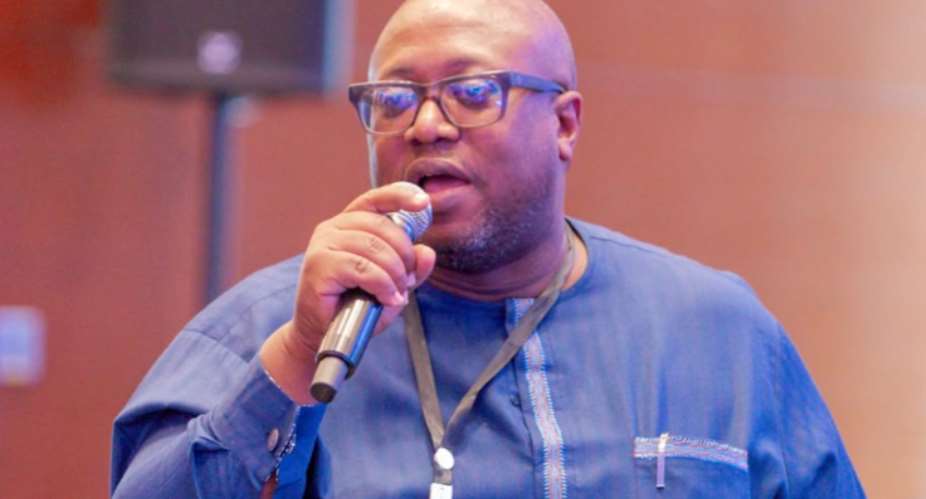
The Director of Policy Engagement and Partnerships at the Centre for Democratic Development (CDD-Ghana), Dr. Kojo Asante, has welcomed the Supreme Court's decision affirming the prosecutorial powers of the Office of the Special Prosecutor (OSP).
The apex court on Wednesday, July 29, unanimously dismissed a constitutional challenge against the OSP's prosecutorial mandate, holding that the anti-corruption agency has the legal authority to initiate and prosecute criminal cases.
However, it also ruled that the Attorney-General retains the constitutional power to enter a nolle prosequi and discontinue prosecutions initiated by the OSP.
Reacting to the judgment, Dr. Asante described the unanimous decision as significant and noted that it reaffirmed the legal basis upon which the OSP exercises its prosecutorial authority.
"The unanimous verdict was very important because it sort of reaffirms our understanding of what had happened," he stated.
Despite welcoming the ruling, Dr. Asante asserted that Ghana should pursue constitutional reforms to establish an independent prosecutorial body for corruption cases to eliminate potential conflicts of interest arising from the Attorney-General's dual role as the government's principal legal adviser and a political appointee.
He noted that CDD-Ghana and other stakeholders had consistently advocated such reforms through various governance and anti-corruption initiatives.
"We still think that in the constitutional reform proposals, we need to go back to this and deal with it. But at least now the OSP can carry on its work until we get to the constitutional reforms," noted the policy analyst.
The Supreme Court's decision followed a suit filed by private legal practitioner Noah Adamtey, who argued that Parliament acted unconstitutionally by granting the OSP independent prosecutorial powers under the Office of the Special Prosecutor Act, 2017 (Act 959).
The Attorney-General supported the challenge, contending that while prosecutorial powers could be delegated, they could not be permanently vested in an independent institution without a constitutional amendment.
However, the apex court rejected those arguments and upheld the constitutionality of the OSP Act, affirming the office's authority to prosecute corruption-related offences while preserving the Attorney-General's constitutional power to discontinue prosecutions.
The ruling also overturns an earlier High Court decision delivered on April 15, which held that the OSP could not independently prosecute criminal cases without the approval of the Attorney-General and directed that ongoing prosecutions be transferred to the Attorney-General.


 Gov't to hold state funeral for former Foreign Affairs Minister James Victor Gbe...
 Judiciary to roll out electronic court processes from October – Chief Justice ...
 Supreme Court explains why OSP can prosecute but A-G can discontinue any prosecu...
 Ghanaian jailed in US for role in $100 million romance scam
 'A very good day for accountability' — Prof Azar on Supreme Court ruling upholdi...
 Supreme Court upholds OSP’s prosecutorial powers, affirms AG’s authority to disc...
 Supreme Court abolishes delegate system for presidential and parliamentary prima...
 2026 budget is Ghana's worst performing since 2016 — Abu Jinapor
 July 29: Cedi sells at GHS12.30 on forex market, GHS11.67 on BoG interbank
 Government underfunding healthcare, putting lives at risk — Minority

