




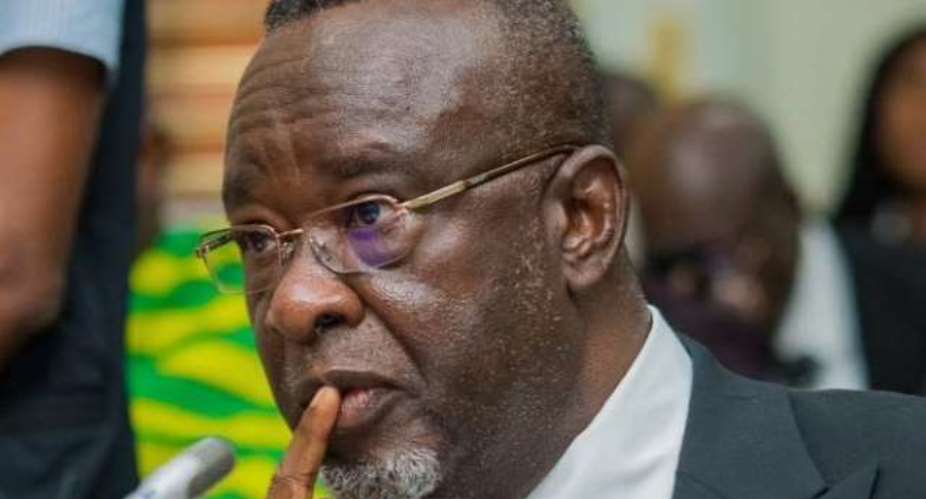
On Monday, November 17, 2025, President John Dramani Mahama swore in Justice Paul Baffoe-Bonnie as Ghana's 16th Chief Justice, concluding a turbulent chapter in the nation's judicial history. Baffoe-Bonnie replaced Justice Gertrude Torkornoo, who was suspended in April 2025 following three misconduct petitions and subsequently dismissed in September after an investigative committee found grounds of misbehaviour. The contrast between these two judicial leaders raises fundamental questions about competence, integrity and the institutional challenges facing Ghana's judiciary.
Baffoe-Bonnie brings extensive judicial experience spanning four decades. Born on December 26, 1956, he was called to the Bar in 1983 and progressed through the judicial ranks from Circuit Court Judge in Kumasi to High Court Judge in Duayaw Nkwanta, Court of Appeal Judge in 2006, and Supreme Court Justice in 2008. His credentials include a Master of Laws in Constitutional Theory from Oxford University, complementing his University of Ghana legal education. During his Supreme Court tenure, he authored 87 majority opinions, particularly on land disputes and electoral petitions.
Torkornoo's tenure, though historically significant as Ghana's third female Chief Justice, ended in unprecedented controversy. President Mahama established a five-member investigative committee following complaints that included allegations of falsifying judicial records and misusing public funds. The panel reviewed 10,000 pages of evidence from 13 witnesses, with Torkornoo calling 12 witnesses in her defence. She refuted accusations of misusing public funds for family travel, explaining that her arrangements complied with the Judicial Service Travel Policy requiring Chief Justices to travel with family for security reasons. Nevertheless, the committee recommended her removal, marking the first dismissal of a sitting Chief Justice in Ghana's history.
The judiciary Baffoe-Bonnie inherits faces profound systemic challenges demanding urgent reform. Supreme Court data reveals a backlog of 595 pending cases as of the 2022/2023 legal year, representing a 44% increase from the previous year, with only 344 of 939 cases concluded for a clearance rate of just 37%. During his parliamentary vetting, Baffoe-Bonnie acknowledged that public confidence in Ghana's judiciary is waning, citing delays in hearing cases and perceptions of corruption as key challenges.
These perceptions reflect deeper structural problems. Former Auditor-General Daniel Domelevo alleged that politically exposed persons exploit judicial vulnerabilities through endless adjournments and procedural delays, with some judges deliberately postponing cases until favourable governments assume power. Recent Afrobarometer data shows only 22% of Ghanaians express significant trust in the courts, whilst 57% distrust them completely or substantially.
President Mahama charged the new Chief Justice to prioritise reducing case backlogs through innovative case management systems, expanding court infrastructure in underserved districts, and using technology including e-filing, virtual hearings and digital recordings to improve efficiency. Baffoe-Bonnie identified Alternative Dispute Resolution as a potential tool to reduce backlog, streamline processes and restore public trust.
The constitutional mandate of Chief Justice extends beyond administrative efficiency to preserving judicial independence and institutional integrity. In his inaugural address, Baffoe-Bonnie pledged to uphold the rule of law, respect the separation of powers and protect the Constitution. These commitments assume heightened significance against the backdrop of Torkornoo's removal, which generated intense debate about political interference in the judiciary.
Ghana's corruption challenges intensify the Chief Justice's responsibilities. The nation scored 42 on Transparency International's 2024 Corruption Perception Index, declining from 43 in previous years. Restoring public confidence requires both addressing case backlogs and demonstrating that the judiciary serves justice rather than political interests. Baffoe-Bonnie's decades of judicial service, combined with his constitutional law expertise, position him to navigate these challenges, however implementation will determine whether experience translates into curing the core of the disease or treating the symptoms.

 Our expenditure ceiling for first half of 2026 was capped at GH¢910 million - Ag...
 Agric Ministry refutes Finance Ministry’s GH¢1.6bn allocation claim
 NIA begins one-month mop-up Ghana Card registration for children in Volta, Oti r...
 Barekese Water Treatment Plant to be closed from June 9 - 11 for maintenance — G...
 Prioritize safety and security of nurses and midwives — GRNMA urges government
 Man who assaulted midwife at Tema Community 22 Polyclinic to face court on June ...
 Dozens dead of thirst after truck breaks down in Niger desert
 CTN-SPN reintroduction will cost Ghanaian shippers between €187.2 million and €3...
 How guests wade through floodwaters after Longji Hotel submerges in Tarkwa
 Questions raised over claims of budget releases to MOFA


