




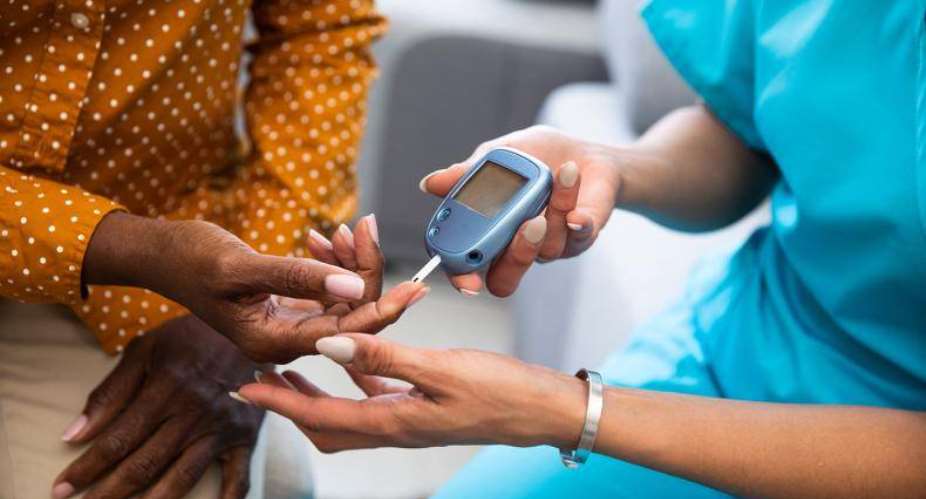
The prevalence of diabetes mellitus (especially Type 2 Diabetes Mellitus) is increasing in Ghana. For example, it rose from less than 1 % in the 1960s to around 6 % in the 2000s. Hypertension and diabetes often co‐exist; together they significantly amplify kidney disease risk. A recent national diabetes guideline for Ghana notes that diabetes is the leading cause of chronic kidney disease (CKD) and end-stage kidney disease (ESKD) globally and in Ghana. The growing prevalence is driven by urbanization, lifestyle changes (diet, physical inactivity), obesity and ageing. For instance, unhealthy dietary habits (high salt, processed foods) are flagged as accelerating kidney disease through diabetes and hypertension.
Path from diabetes to kidney disease
In people with diabetes, kidney damage typically follows this pathway:
- Hyperglycemia and metabolic derangements damage to small vessels (microvasculature) in the kidney (glomeruli), oxidative stress, inflammation.
- Early signs: Elevated albuminuria/microalbuminuria (protein in the urine), glomerular hyper filtration (increased glomerular filtration rate [GFR]) in early phases.
- Progressive decline in kidney function: GFR starts to decrease, and structural damage accumulates (glomerulosclerosis, tubulointerstitial fibrosis).
- Chronic Kidney Disease (CKD): Defined as persistent abnormalities in kidney function or structure for >3 months (e.g., GFR 60 mL/min/1.73 m² or albuminuria).
- End‐Stage Kidney Disease (ESKD)/Kidney failure: When kidney replacement therapy (dialysis or transplant) is required for survival.
In Ghana’s national guideline for diabetes management, the clinical features of diabetic kidney disease include persistent albuminuria (300 mg/day or 200 µg/min), progressive decline in GFR, and elevated blood pressure. Evidence from Ghana: key data on kidney disease in diabetics Prevalence of kidney dysfunction/KD among diabetics
A cross‐sectional study in the Obuasi East Municipality found that among 204 type 2 diabetic patients, the prevalence of kidney dysfunction (defined using eGFR) was 32.35%, with 23.5% showing hyper filtration and 8.82% showing eGFR 90 mL/min/1.73 m². In a tertiary hospital Ghana study published in 2024, among 141 T2DM patients, 70.2% had kidney dysfunction (KD) when using the CKD‐EPI classification. Formal employment was protective; every unit rise in creatinine increased KD odds by 10%.
CKD prevalence in high‐risk groups (diabetes ± hypertension)
In South‐Western Ghana (Sekondi‐Takoradi), among 208 adults with diabetes and/or hypertension: CKD prevalence was 30% overall; 27% in those with diabetes alone; 22% in hypertension alone; and 74% in those with both diabetes and hypertension. Albuminuria was highest among diabetics (39%).
A multi‐centre Ghanaian study found that the prevalence of CKD in people with hypertension and/or diabetes was rising; the overall prevalence of CKD in Ghana is estimated at 13.3%.
Implications of increasing referrals for kidney‐related disease
According to a recent article, there is a “growing kidney health crisis” in Ghana, with many people presenting late in advanced disease.
Access to kidney replacement therapy (KRT) is limited: in Ghana, many patients present at younger ages (median 45.5 years) with advanced disease and high in‐hospital mortality (50%) due to renal failure and inability to pay.
Why is the course of diabetes progressing rapidly to kidney disease in Ghana?
Several interlinked factors contribute:
Late diagnosis or delayed care: Diabetes may go undetected for long periods; by the time kidney damage is detected, it may already be advanced.
Poor glycaemic and blood-pressure control: Sub‐optimal management of diabetes and hypertension accelerates kidney damage. The national guideline emphasizes that poor control is a key driver.
Comorbid hypertension: When diabetes and hypertension coexist, risk of CKD multiplies (as shown in the Ghana studies above).
Lifestyle and diet changes: Processed foods, high salt intake, obesity, sedentary lifestyles worsen the risk. Eg., unhealthy dietary habits are contributing to kidney disease through diabetes/hypertension.
Resource limitations: Screening for kidney disease (e.g., measuring albuminuria, GFR) is not always routinely done in all diabetic clinics. Limited resources, cost barriers, shortage of specialists & diagnostics.
Younger age of onset and faster progression: Some data suggest Ghanaians develop kidney failure at younger ages and present late, which may reflect aggressive course.
The course of disease: what happens in practice?
In Ghana, the typical course from diabetes to kidney referral may look like this:
- A person develops type 2 diabetes (possibly undiagnosed for some time).
- Diabetes and sometimes hypertension go uncontrolled; early kidney damage begins (albuminuria).
- The patient may not be screened, so kidney dysfunction gradually worsens (eGFR declines).
- Symptoms or complications (fluid overload, hypertension, electrolyte disturbance) appear; the patient may be referred to a nephrologists or specialist centre.
- At that point, many patients present with advanced CKD or kidney failure, requiring dialysis. Because dialysis is expensive and limited, mortality is high.
- The burden on health services and households is substantial: the cost of dialysis is many times higher than early CKD management. For example, in Ghana one study showed that the cost for dialysis patients was almost five‐times that for non‐dialysis CKD patients.
Implications for health systems and policy
Early screening and detection: Regular monitoring of kidney function (eGFR) and albuminuria in diabetic patients is critical.
- Control of modifiable risk factors: Tight glycaemic control, blood‐pressure control, management of obesity and lifestyle reduction of salt/processed foods.
- Strengthening primary care: Integrating CKD risk into diabetic and hypertension care at primary health level.
- Improving access to diagnostics and specialist care: Ensuring that clinics can measure albuminuria, eGFR, and refer promptly.
- Financing and equitable access: Address cost barriers to dialysis/renal replacement therapy; prevention is more cost‐effective.
- Public health education: Awareness campaigns around diet, lifestyle, diabetes complications and kidney health. E.g., “unhealthy dietary habits driving kidney disease” was a headline at the University of Ghana.
Conclusion
The evidence shows that diabetes in Ghana is increasingly leading to kidney disease, with a significant proportion of diabetic patients already showing kidney dysfunction. Combined with hypertension and lifestyle change, this has created a trajectory of referrals for advanced renal disease, placing strain on both patients and the health system. The course of disease in this setting tends to be accelerated by late diagnosis and resource constraints. Addressing this demands early detection, stronger management of diabetes/hypertension, lifestyle modification, and improved renal care infrastructure.
Mustapha Bature Sallama
Medical/Science communicator ,Private Investigator, Criminal Investigation and Intelligence Analysis
International Conflict management and Peace Building. Alumni Gandhi-King Global Academy United State Institute of Peace Building USIP

 Fire Service rescues trapped victim after STC Bus, Taxi collision at Konongo
 Private SHSs in Free SHS pilot programme demand payment of outstanding governmen...
 Police foil planned robbery, recover weapons at Kukuom
 A 53-year-old mechanic remanded for allegedly stabbing another over car battery ...
 Asiedu Nketiah urges IGP to speed up justice for victims of election 2024 killin...
 Each family receives GH¢15,000 support after Accra Police Barracks Fire
 Mussa Dankwah urges ministers to focus on performance amid MoFA–finance minister...
 Selling single cigarette sticks illegal – FDA
 Hungry, unhealthy workforce cannot protect nation’s health – GRNMA
 Health Minister orders suspension of KATH CEO over Emergency admissions directiv...


