




"A nation that cannot feed itself, is a nation waiting to be conquered_ " Colonel Gaddafi
Introduction
16 October is celebrated as World Food Day. Organised by Food And Agriculture Organization (FAO).This year 16 October 2025 marks the 80th anniversary of the Food and Agriculture Organization of the United Nations (FAO). The world food day(16 October) serves also as reminder that food insecurity, hunger & malnutrition are lived realities in this world of ours.The official theme for World Food Day, 16 October 2025 is,
"Hand in Hand for Better Foods and a Better Future"
This theme emphasizes the need for global collaboration and cross-sector partnerships to create more sustainable, inclusive, and resilient food systems, and to build a peaceful, food-secure future. But Africa should be wary of some such so called partnerships & collaboration because they perpetuate ghosts of African agricultural colonialism.
AFRICA SITIUATION
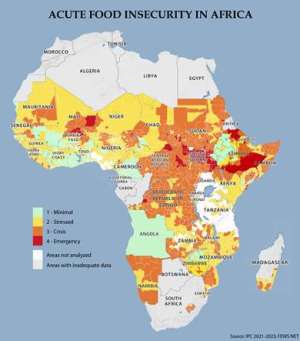
AFRICA has the most arable land, possessing *65%* of the world's fertile uncultivated arable land. But Africa, according to United Nations UN State of Food Security & Nutrition World Report, 2024, Food Insecurity in Africa is the highest of any world region. By 2030, a projected 582 million people will be chronically undernourished, more than half of them in Africa, (World Vision, 2025). Africa is so rich in farmland, so rich in arable land. So why then is Africa the hungriest in the world and a net food importer? Lack of finance capital,lack of infrastructure, limited industrial agriculture, conflicts, wars, economic crisis & instability, climate change and global warming are all credible reasons which may explain why Africa is hungry. But legacy of extractive colonial agriculture meant to serve the West and not to feed locals continues to thrive in most African countries up to this very day. The colonial agricultural structuring, orientation and the thinking that agriculture is source of exporting more instead of feeding locals more is unfortunately deeply ingrained in our attitude, perspective, learning and policy frameworks towards role of agriculture in many African countries...where agriculture is seen as source of raw materials and exporting and not as a cornerstone of feeding own people. This factor is indeed, a valid reason which may partly explain why Africa is forever hungry.
AFRICA & FOOD INSECURITY
Africa faces a severe food insecurity crisis driven by climate shocks, conflict, and economic crisis, inflation as well as the legacy of colonial agriculture structuring and purpose which continue to exists even up to this very day. This has affected over 282 million people as of July 2025 in form of facing food security in the face in Africa.
AFRICA & FOOD
Africa has 65% of World Uncultivated Arable Land, yet, Africa imports US$43 billion imports of food annually.
WHY?- LEGACY OF COLONISED AGRICULTURE AS A CONTRIBUTING FACTOR
Because colonial economic system (colonised African agriculture) & mentality never left us.... Africa was taught to export cash crops (cotton, tobacco, cocoa, tea, coffee etc) & not to feed itself.
Colonized African Agriculture
It is a fact that African agriculture was fundamentally and adversely colonised by colonialism. This saw African lands being redirected from production of local food to promote security to production of export-oriented cash crops for Western countries markets. Sadly, this colonised agriculture set up persists up to this very day and continues to be one of the reasons why Africa continue to be haunted by food insecurity. The extractive agriculture set up constructed by colonial dispensations continue to influence African agriculture to this very day.
Producing Food For Others, But Not For Ourselves
A major part of African farmlands is used to grow crops such as coffee, cocoa, and cottonseed oil for export, while the staple crops of the African diet, wheat, and rice, mainly come from outside of the continent.Surprisingly, a lot of imported food can be produced locally. According to the World Bank, while African countries' self-sufficiency could also be boosted by replacing foreign cereal with regional crops such as fonio, teff, sorghum,rapoko, amaranth, and millet. African countries could trade these crops between themselves, creating much-needed jobs for their youth and income for their farmers. The crops would also serve as the basis for a healthy diet. But this is not the case.This is not happening and there is not even a hint of that happening...why?
Pauline Chivenge, a researcher at the African Plant Nutrition Institute in Morocco commented that ;
"Indigenous crops have benefits that go beyond sustaining food security. They are more nutritious, so in addition to the necessary callories, they contain higher amounts of protein and vitamins"
But the reality is that indigenous crops have long since been neglected for decades... Why?largely due to states and international companies pushing for the mass production of maize and wheat and promoting them as staples.
"Research and development and mechanization have focused on maize, rice, and wheat, and producing them in large, mono-crop fields at the expense of the region’s biodiversity"
"But the fact is that grains like maize and wheat are not really suitable for growing in most regions of Africa, where water is in short supply...for there are very much dependent on regular rainfall, which is becoming a real challenge in the wake of climate change", Chivenge added.
Continuation Of Colonial Extractive Policies Favouring Export- Oriented Agriculture
Colonial powers restructured African agriculture to focus on producing cash crops for export, a pattern that many post-independence African governments continued through their policies and trade agreements. African governments continue to favor and support agricultural policies that favor export crops. Land is often used for commercial crops due to historical legacies of colonial export-oriented agriculture. Most African governments' s economic policies tend to favor exports. Morever, large-scale commercial investments, sometimes is supported by foreign governments or corporations, can take precedence over local food security needs, leading to a shift away from food crops and thereby, contributing to food insecurity.
CONCERNING
African countries still trade their raw materials and food to European Nations, and in return import mostly manufactured goods. According to Eurostat, in 2021, 65% of African goods exported to the European Union (EU) were food, drinks, raw materials, and energy while 68% of goods imported by Africa from the EU were manufactured goods. And only 16% of international trade in Africa happens between African countries. According to a 2017 report by the African Development Bank( ADB), the ghosts of colonialism continue to haunt Africa fertile lands , interwoven into the trade structures and the seams of the contemporary global economy.African fertile and arable lands continue to serve others and not her own needs.
WORLD BANK
It tells Africa that growing cash crops is economic efficiency. But in reality, that is, economic suicide.
EXAMPLES
Nigeria imports rice....why not produce own rice?
Malawi relies on maize aid...why not plant own maize?
Senegal imports onions from Netherlands...but has fertile land of it's own.
SOLUTIONS
1.Decolonize African agriculture.
2.Adopt use of modern technology & machinery in local agriculture.
3.Invest in irrigation .
4.Promote Progressive land reform ....give land to those *who work it* (not foreign agro businesses, not local elites, politicians etc).
5.Ban GMOs monopolies
DECOLONIZATION OF AFRICAN AGRICULTURE
Africa's arable lands should first and foremost serve her citizens as a way of cushioning her own from hunger, starvation and malnutrition.This can be successful when,
1. Reducing the focus on commercial agricultural production and focus on mainly local food production as a way to address food insecurity of Africa.
2. Do away with the notion that agricultural development is solely about commercialising farming, supporting other industries and exporting raw materials.
3. Adopt an agroecological approach utilizing farmer knowledge and natural ecological processes to grow more with fewer external inputs, such as synthetic fertilizers, hybrid seeds and GMOs.
Beware of Synthetic Fertilizers, Hybrid Seeds & GMO ln African Agriculture
Certain world proponents of the Green Revolution in Africa, have been and are promoting *the use of high yield hybrid seeds, synthetic fertilizers & Genetically Modified Organisms (GMOs ). The aim, as the argument goes, is to increase agricultural productivity in Africa. But one cannot afford to turn a blind eye to some dire effects and consequences of such GMO propelled green revolution in Africa. Despite health and environmental concerns is possibility of re-colonisation of African agriculture.
Agricultural Colonialism
This green revolution being talked about, to be advanced through use of hybrid seeds, synthetic fertilizers & GMOs at face value looks like philanthropic enough to serve starving Africans... but in reality , it is something else. A deeper look shows a more sinister agenda... a form of new colonialism... yes indeed!! agricultural colonialism. This form of agriculture whereby African farmers are encouraged to use hybrid seeds that cannot be replanted , synthetic fertilizers that degrade soil health over time and GMOs that tie them to specific agrochemical products. Who produces & supplies these specific agrochemical products?... Multinational Corporations... and at the end of the day... this model of boosting African agricultural productivity means African farmers are forced to purchase seeds & inputs season in & season out from these multinational corporations. This makes African agriculture depended on Multinational Corporations.... seriously undermining and eroding Africa's agricultural sovereignty.
Always Remember "FOOD IS POLITICAL"
F. Madondo (African Teacher) [email protected]
REFERENCES
.Africa’s hunger crisis: Facts, FAQs, and how to help at: www.worldvision.org
.Integrated Food Security Phase Classification Report
.Global Report on Food Crises 2025
.UN State of Food Security and Nutrition in the World Report 2024


 'I couldn’t have refused an order' – Major Adjei-Ampofo explains why he took par...
 'Some NDC members are working with NPP to get your GoldBod job' – Kevin Taylor w...
 'It is too early for you to take this political heat' – Kevin Taylor cautions Ay...
 NPP knows GoldBod is our strength, that is why they want to bring it down – Suhu...
 Stop using radio airtime for greetings, talk about Mahama’s economy – Suhuyini t...
 IEA proposes binding long term national development plan to stop successive gove...
 Health Minister moves to prevent stockouts of HIV, TB and Malaria commodities
 IEA wants MPs, ministers barred from serving on State-Owned Enterprise boards
 Constitutional review: IEA warns against changes that could turn judiciary into ...
 Eastern Regional Minister orders temporary closure of two SHSs after violent stu...

