




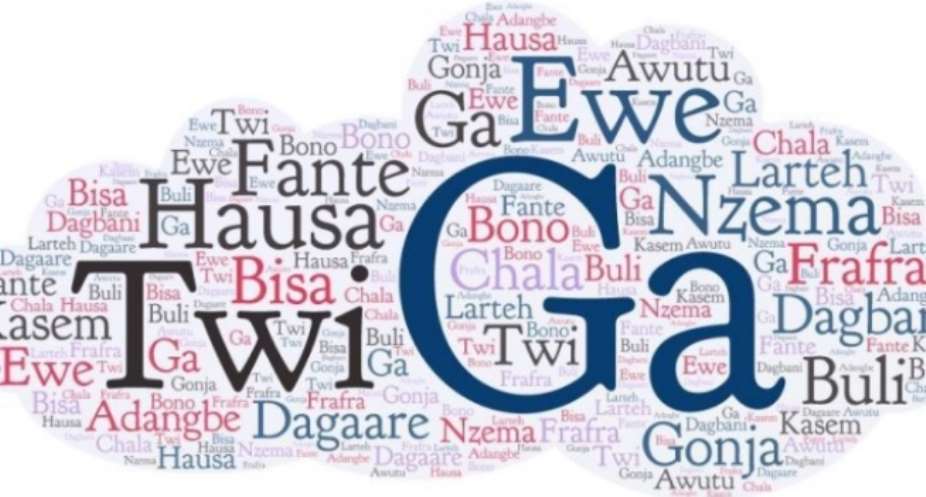
Ghana is one of the most linguistically diverse countries in Africa, home to over 80 languages spoken across its regions. In this vibrant multilingual society, it's common for individuals to grow up speaking not just their mother tongue, but also several other languages. This unique linguistic landscape reflects the country’s rich cultural diversity, social interactions, and historical influences.
A Nation of Many Tongues
The languages spoken in Ghana belong to several major language families, predominantly the Niger-Congo family. Major local languages include Akan (with dialects such as Twi and Fante), Ewe, Ga, Dagbani, Nzema, Gonja, and Hausa, among others. Each ethnic group typically has its own language or dialect, and in many cases, people learn to speak more than one as a practical necessity.
For example, someone born into an Ewe-speaking family in the Volta Region might also learn Twi because of its widespread use in commerce and education. If that person moves to Accra, they may pick up Ga to integrate socially, and also learn English, the country’s official language, used in schools, government, and media.
English: The Lingua Franca
While local languages are vital to cultural identity and community life, English plays a unifying role as the official language. Introduced during British colonial rule, English is the medium of instruction in schools and is used for official communication across the country. However, most Ghanaians acquire it as a second or third language after learning their mother tongue(s) at home.
This layered learning process results in a high level of multilingualism. Children often grow up hearing and speaking at least two or three languages daily at home, in school, and in their communities.
Urbanization and Language Mixing
In urban centers like Accra, Kumasi, and Tamale, the intermingling of people from different ethnic backgrounds further fuels multilingualism. Pidgin English, a simplified form of English mixed with local expressions and grammar, is especially popular among the youth as a form of informal communication across language barriers.
It is also common to hear people code-switch alternating between languages in conversation depending on context, audience, or topic. A single conversation might include Twi, English, and Pidgin, reflecting not confusion, but linguistic flexibility and creativity.
Cultural Identity and Communication
Being multilingual in Ghana is not just about language proficiency; it is also deeply tied to cultural identity. Speaking one's mother tongue is a source of pride and a way to connect with heritage and ancestry. At the same time, learning other local languages is a sign of respect, openness, and adaptability in a multicultural society.
This environment encourages children from a young age to develop a natural fluency in multiple languages, equipping them with communication skills that serve them well both locally and globally.
Conclusion
Ghana’s linguistic diversity is one of its cultural treasures. In a society where growing up with more than one mother tongue is the norm rather than the exception, multilingualism is not just a skill but a way of life. It fosters deeper social bonds, mutual respect, and a broader understanding of the country’s many communities all while strengthening the collective identity of a proudly diverse nation.
Mustapha Bature Sallama
Medical/Science communicator
International Conflict management and Peace Building.
Alumni Gandhi-King Global Academy
United State Institute of Peace Building USIP


 Adu-Boahene’s lawyers ask court to strike out fabricated, invented evidence in D...
 'He is part of National Film Authority' – Kwasi Kwarteng exposes Obuasi SHTS hea...
 'Mahama should have appointed Edudzi Tameklo to EC to teach hypocrite NPP some s...
 'You have no moral right to complain about cost of living' – Prof Anankware to B...
 'You did the same thing' – Solomon Owusu defends EC appointment
 GFL vows to pursue justice for worker who lost five fingers at Afienya Industria...
 State to call first witness on January 12 in Canadian murder case
 Haruna Iddrisu refers Obuasi SHS headmaster's sexual misconduct allegations to C...
 Bawumia is a ‘prophet of pocket economy’ in opposition, ‘priest of paper economy...
 Bolgatanga Technical University Council Chairman allegedly locks up Vice-Chancel...


