




Ghana’s great rivers are hurting. From the Densu and Ayensu to the Ankobra and Pra, turbidity spikes and heavy-metal burdens now push treatment plants to the edge or force them to shut down. Operating costs rise, taps run dry, and households pay more for water that still worries them. Illegal mining upstream has carved scars into hillsides and floodplains, and every rainstorm washes a fresh dose of silt and metal downstream. This is a national problem. It is also a solvable one if the country stops chasing instant solutions and starts restoring rivers at the basin scale.
Quick Fixes Promise Speed, Not Solutions
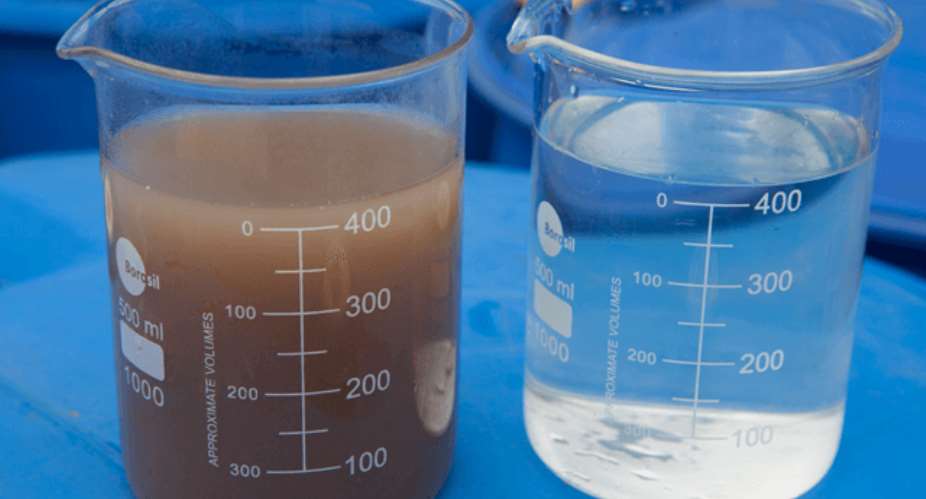
Talk of “dechemicalising” rivers has gained attention. The idea is simple. Dose the water with special additives and watch the brown turn blue. It promises speed and spectacle. It also misdiagnoses the problem. These rivers are not only chemically contaminated. They are overloaded with fine sediment, and in mining landscapes most metals ride on those particles. If the sediment keeps coming, any cleared reach will foul again with the next storm. No one can dose away a conveyor belt that begins on gullied hills and bare streambanks.
Riparian Buffers: What They Are and Why They Work
A better path is already on the books. Enforce and fund riparian buffer restoration across entire basins. A riparian buffer is a living strip of grasses, shrubs, and trees along both banks. It slows water, traps sediment, anchors soil with roots, shades the channel, and gives floods a safe place to spread and deposit silt. Buffers are not theory. They are standard practice in river management around the world and a central feature of Ghana’s policy guidance. They work with physics and biology and they get stronger with age.
Start Upstream: Headwaters as the Front Line
Most of the mud and attached metals come from first and second order tributaries where illegal mining, haul tracks, and bare banks are common. Along these small feeders, plant three zones on each bank. Start at the field edge with a stiff-stem grass strip that grabs coarse sediment. Follow with a dense belt of native shrubs that acts like a living sieve. Finish with a tree zone at the water’s edge to lock the bank and cool the water. Begin with 15 to 30 metres per bank on tiny headwaters and expand toward 30 to 50 metres where slopes are steeper or where disturbance is heavy. Add simple forebays and vegetated swales at track outlets so muddy runoff settles before it reaches the stream. Communities can build this quickly with local labour and simple tools. The benefits start in the first rainy season.
Scaling for Second-Order Streams
Second-order streams deliver a large share of sediment and metal-bearing fines. Here the buffer should widen toward 30 to 50 metres on each bank, with shrubs and trees making up most of the width. Where access tracks feed the channel, add small sediment basins that can be cleared with a loader after storms. Stabilise outside bends with live stakes, brush mattresses, and toe protection that uses rock or coir where flows are concentrated. Keep animals out with simple fencing and provide single-span footbridges or properly sized culverts so people and equipment cross without cutting the bank.
Mainstem Standards for the Ankobra and Peers
On main rivers such as the Ankobra, adopt 50 metres per bank as a floor. Step out to 100 metres on eroding meanders, floodplain pockets, or near drinking water intakes. Where it is safe, lower or set back the bank to reconnect small floodplains. When a two-year flood spreads across a vegetated bench, velocity drops and silt is deposited where plants can hold it. In quiet backwaters that have already captured contaminated fines, use thin layers of clean sand or organic material within planted reed rings to bind and bury the legacy sediment. This is cheaper than wholesale dredging and avoids resuspending what you are trying to retire. Treat the riparian strip as a no-activity zone. Tie district by-laws, building permits, land titles, and mineral licences to buffer compliance.
Designing for Floods, Banks, and Legacy Sediment
Buffers do more than filter runoff. They reshape how the channel and floodplain share the work of carrying water and sediment. Trees deflect flow away from raw toes. Roots knit banks that would otherwise slump. Shade reduces thermal stress on aquatic life. Floodplain benches act as settling trays during moderate floods. Where legacy contamination lies in backwaters, a thin protective cap paired with reeds and shrubs reduces resuspension and limits exposure in the food web. These designs favour natural energy over perpetual machinery.
Timelines the Public Can Trust
Buffers do not work overnight, but they are quicker than many assume. Grasses and shrubs begin to trap sediment within months. Tributary water often looks clearer within six to twelve months. Bank stability improves over one to three years as roots knit the soil and flow deflects away from raw toes. Fish tissue responds more slowly because it reflects legacy contamination and food-web turnover. Expect five to ten years for a strong signal. That is exactly why the right time to start is now. Each rainy season lost is another year of fresh deposits on top of the old.
The True Cost of Perpetual Chemical Dosing
Chemical dosing of rivers is by nature a perpetual operation. It requires a supply chain, trained dosing teams, storage and safety provisions, and ecological guardrails so non-target species are not harmed. It does not stop new loads from entering the river. It simply tries to keep up. The bill arrives every month and never goes away. Treatment plants already pay for coagulants, polymers, and power just to meet baseline standards. Adding a river-scale additive on top of that is a promise to keep paying forever, while the sediment conveyor continues to run.
Governance Inside the Design
Enforcement is the real challenge, which is why governance must sit inside the design. Demarcate the strips with surveyed coordinates. Post them publicly. Train and fund community planting crews and maintenance teams. Tie compliance to the paperwork people already need. If you want a permit, a subsidy, or a licence, keep the buffer intact. Pair this with formalised processing away from channels, lined settling ponds, and proper tailings management. These measures are complements, not substitutes. Even perfect policing leaves scars. Buffers heal them.
Community Jobs, Local Materials, Lasting Results
A buffer programme creates practical work. Nurseries raise native seedlings. Local crews plant, mulch, and maintain banks. Small contractors build simple sediment basins and access paths. Schools and churches can adopt reaches to help with monitoring and care. Materials are affordable. Coir logs, brush bundles, vetiver mats, and native poles can be sourced or grown locally. Every cedi spent employs neighbours and leaves skills behind.
The Health Case: Less Mud, Lower Metals
When most metals move with mud, cutting sediment reduces exposure at its source. Stabilised banks and vegetated floodplains mean fewer fine particles in the water column during storms and fewer contaminated deposits in the places where people fish and people fetch water. Over time, fish tissue levels fall as cleaner conditions persist and the food web rebalances. Add routine monitoring and clear reporting, and communities can see the risk curve bend in their own catch.
Measure, Publish, Improve
Progress must be visible. Install turbidity and suspended-solid sensors on priority tributaries. Sample dissolved and particulate metals at river nodes. Test fish tissue quarterly in depositional zones. Publish a dashboard that communities and decision makers can track. What is measured and shared is managed and improved.
Choose the Basin, Not the Gimmick
The larger choice is about leadership. Quick fixes are tempting because they appear to act fast. They also fade as soon as the conditions that caused the problem return. A riparian restoration programme is slower to launch but faster to endure. It is law-ready, locally buildable, and scientifically sound. It does not rest on a proprietary formula or a single contractor. It rests on how rivers work.
If Ghana wants cheaper treatment plants, safer fish, and rivers that run clear after the rains, the decision is not between doing something fast and doing something slow. It is between doing something flashy that fades and doing something living that lasts. Choose the basin. Choose the banks. Choose a future in which the next storm is not a crisis but a test that our rivers can pass.
Dr. Enoch Ofosu | Waterloo, Canada.
Email: [email protected]


 ‘We have turned the tide’ – Ato Forson says Ghana is ready to take off
 Sammy Gyamfi refuses to file defence, hides behind technicalities — Lawyers
 Osahen Afenyo-Markin vows to pursue case against Sammy Gyamfi despite high court...
 Let us all be mentors to our younger generation - Mahama
 Court stops Osenase homecoming over security concerns
 Supreme Court dismisses Solomon Asamoah's bid to stop Sky Train trial
 GRA denies imposing new 20% tax on Netflix, Google and Amazon subscriptions
 Police arrest 16 suspects, seize 209 rounds of ammunition at Gbane mining site
 ‘Mahama has lost his moral high ground’ – Dr Zaato on Affi Agbenyo’s EC appointm...
 Cassava, hemp could offer alternatives to plastics – Zanetor challenges scientis...


