




The passing of President John Evans Atta Mills in 2012 remains one of the most poignant and transformative events in Ghana’s democratic journey. His sudden death did not only bring the nation to tears but also reshaped the political consciousness of Ghana’s leaders and citizens alike. It was a powerful reminder of the impermanence of power and the unpredictable nature of political transitions. Within hours of the sad announcement, Ghana witnessed the seamless constitutional elevation of then Vice President John Dramani Mahama to the highest office of the land. This event, though tragic, stood as a testament to Ghana’s democratic resilience and adherence to constitutional order. Yet, beyond the smooth transition lay deep political lessons that continue to echo within the corridors of power today.
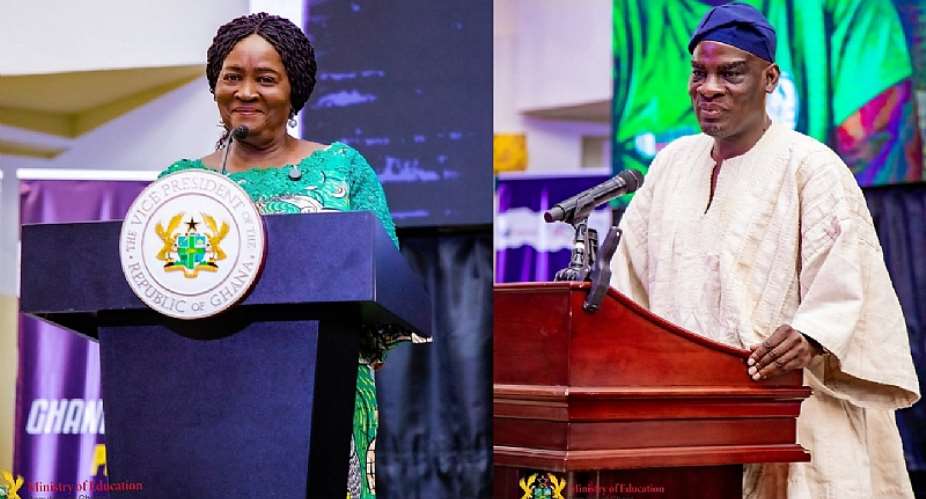
It is against this historical backdrop that Hon. Haruna Iddrisu’s recent statement concerning Professor Naana Jane Opoku Agyemang, the National Democratic Congress’s Vice Presidential candidate, must be understood. His remark, suggesting the possibility of the Vice President ascending to the presidency, was not a casual or spontaneous comment. Rather, it was a thoughtful and deliberate reflection rooted in the lived experience of Ghana’s political history. Haruna Iddrisu, an astute politician and one of the most strategic minds within the NDC, understands better than most the lessons drawn from President Mills’ passing. The statement was, therefore, far more than a comment about Naana Jane; it was a layered message carrying implications for the future of the party and for Haruna himself.
When President Mills passed away that fateful afternoon, the nation was thrown into shock. The sense of loss was profound, but amidst the grief, Ghana’s constitutional democracy stood firm. By evening, the Vice President, John Dramani Mahama, had taken the presidential oath, ensuring continuity and stability. For many politicians observing this, it was a moment of both revelation and awakening. It demonstrated that the office of the Vice President, often viewed as secondary or symbolic, is in fact the most strategically positioned seat in Ghana’s political structure. It is the immediate bridge to the presidency, an office that may be attained not through elections alone, but sometimes through the sudden twists of fate and history.
Hon. Haruna Iddrisu’s allusion to this truth, therefore, carries weight. On the surface, it can be read as a respectful nod to the Vice Presidential candidate’s potential and readiness. But on a deeper level, it is a subtle political signal, a reflection on succession, preparation, and positioning within the NDC’s internal hierarchy. Haruna’s choice of words appears calculated, as if to remind both the party and the nation that political reality is shaped as much by preparedness as by opportunity. The late President Mills’ passing taught all observers, especially within the NDC, that the line between serving as Vice President and becoming President is not merely theoretical; it is one breath, one heartbeat away.
In essence, Hon. Haruna’s statement encapsulates three intertwined ideas: historical reflection, political prudence, and personal ambition. First, it acknowledges a historical reality that Ghana has already lived through, the sudden transition from Mills to Mahama. Second, it emphasizes prudence, reminding all political stakeholders that leadership transitions can occur unexpectedly, hence the need for readiness, competence, and foresight. And finally, it hints, ever so subtly, at Haruna’s own presidential aspirations. For a man of his political experience, it would be naive to assume his comment was purely observational. Rather, it reflects the mindset of a politician aware of how power shifts, how moments define legacies, and how history can repeat itself.
It is also important to consider the broader implications of such a statement for Ghanaian politics. The mention of Professor Naana Jane Opoku Agyemang’s potential ascension is particularly significant because it touches on two powerful themes, gender and succession. If such a moment were to occur, it would make her the first female President of Ghana, a historic milestone in West African politics. By invoking her name in the context of presidential succession, Haruna not only signals respect for her capability but also positions himself as a forward-thinking leader who understands the evolving dynamics of political legitimacy and inclusiveness. Yet, at the same time, his remark can be interpreted as a careful attempt to plant a seed, a suggestion that he, too, understands the paths through which political power can be attained.
Ultimately, the loss of President Mills remains a defining political lesson. It taught Ghana’s politicians that power is not a guaranteed tenure but a trust that can be transferred in an instant. It taught them that the Vice President must always be prepared, not as a deputy, but as a potential successor. It taught them that leadership requires not only vision but readiness. And it taught ambitious politicians that history rewards those who study its patterns and position themselves wisely within them.
Hon. Haruna Iddrisu’s statement, viewed through this lens, is more than political commentary; it is a masterclass in subtle communication. It reveals a man reflecting on the past while signaling his awareness of the future. It invites reflection on how political destinies unfold, sometimes through elections, sometimes through fate, but always through preparation. His words remind us that in politics, every statement carries a shadow of intent, and every reflection on history is also a projection of ambition. Indeed, as he himself might say, this is truly a topic for deep reflection, dear friends

 Don’t let speed of information become your judgement — Chief Justice tells new l...
 ‘Big Push’: Government assures contractors of prompt payments
 GES to develop plan to recover teaching time lost during teachers’ strike – Clem...
 Fire guts Kumasi Central Market near Aboabo Station
 'All human emotions': French astronaut Sophie Adenot's first words since returni...
 French astronaut recounts 'astonishing' emotions after return to Earth
 India's 'cockroach' movement chief detained ahead of major protest
 Strike suspended, but negotiations for teachers’ benefits not over — GNAT
 CSA rejects FBI claims, insists Ghana led cybercrime operation
 Govt suspends enforcement of ban on preaching in moving vehicles


