




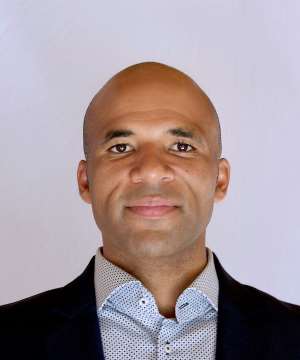
A learned assistant professor in the department of sociology at the University of Toronto Dr. Akwesi Owusu Bempah, is to a great extent offering a lot of ideas and direction on to fight racial discrimination and making sure that crime is reduced to the barest minimum in Mississauga and other parts of Greater Toronto Area [GTA] in Canada.
No wonder the Peel Police Service Board has adopted sweeping new measures aimed at reducing racial disparities in policing after receiving Peel Regional Police’s 2024 Use of Force report.
Dr. Akwesi Owusu Bempah.
The report revealed that while Black residents continue to be overrepresented in use of force incidents, disparities are at their lowest levels since reporting began. In 2024, 28% of use of force incidents involved Black individuals down from 34% in 2022. Still, Black residents, who make up just 9.87% of Peel’s population, remain nearly three times more likely to experience police force than their share of the population.
In partnership with the Anti-Racism Advisory Committee, community leaders, and academic experts, Peel Police analyzed data from more than 10,000 individuals in custody in 2024. The in-depth disparity analysis showed that no single factor explains these outcomes. Instead, age, prior arrests, mental health, addiction challenges, unstable housing, and crime severity all play a role. Of these, crime severity was the top driver, increasing the likelihood of Use of Force by 455%.
The report also noted a 111% increase in Use of Force reports compared to 2023, attributed largely to rising violent crime and weapons-related calls. Despite the increase in reports, Peel Police highlighted progress under the Human Rights Project: a 79% decrease in community injuries and a 90% decrease in officer injuries related to Use of Force since the initiative began. Officers employed de-escalation in 96.1% of all Use of Force incidents in 2024.
New Steps: Disparity Analysis and Well-Being Plan
To build on this progress, the Board has endorsed two new initiatives which are: Disparity Analysis framework and a Well-Being Plan and: Together, these will expand Peel’s approach beyond policing to tackle systemic inequities.
Key measures include, multi-sector consultation with schools, child welfare, social services, and agencies, regional advocacy to align municipal policies and resources with equity priorities. Other key measures include cross sector strategy table to coordinate systemic response and ensure accountability, data expansion, broadening disparity analysis to include arrests.
The rest includes charges by 2026-2027 and youth focused initiatives, building on the Peel Police Youth Entertainment Strategy and Peel Police Foundation.
Voices from the Community
“As Peel’s civilian police governance body, the Board is committed to ensuring policing reflects the values of equity, transparency, and accountability,” said Board Chair Nando Iannicca. “The Use of Force report and Disparity Reduction Plan show meaningful progress, while underscoring the work still ahead.”
Peel Regional Police Chief Nishan Duraiappah added, “Our commitment to de-escalation, human rights focused training, and long-term solutions for vulnerable populations is stronger than ever. This journey has been shaped by community voices and strengthened through collaboration.”
Dr. Akwasi Owusu-Bempah, Associate Professor at the University of Toronto, “Mississauga Campus” noted, “Disparities in policing are deeply connected to broader social and structural inequalities. Peel’s approach to linking disparity analysis with well-being strategies is a model for how communities can move forward.”
The findings will inform Peel Regional Police’s 2027–2030 Strategic Plan, with an emphasis on combining data-driven enforcement with community-focused strategies.
Dr. Akwasi Owusu-Bempah B.A. (Carleton), M.A., Ph.D. (Toronto), is an assistant professor in the Department of Sociology at the University of Toronto and a Senior Fellow at Massey College. He holds Affiliate Scientist status at the Centre for Addiction and Mental Health and serves as Director of Research for the Campaign for Cannabis Amnesty.
Dr. Owusu-Bempah began his academic career in the United States at Indiana University, Bloomington. Prior to becoming a professor, he held positions with Canada’s National Judicial Institute, the Public Health Agency of Canada, and the Ontario Ministry of Community Safety and Correctional Services.
Dr. Owusu-Bempah is frequently sought out to provide commentary and advice to police agencies, government bodies, community organizations, and media outlets on matters relating to policing, justice and social inequality.
 Oppong Nkrumah demands account of GH¢650bn parliament approved for economic prog...
 'How many jobs did you create with your digitalization agenda?' Bawumia quizzed
 NDC does not deserve second term — Kofi Akpaloo
 Mahama urges Dagbon Regent to protect peace, build on late Ya-Naa’s legacy
 Govt to begin work on three more regional hospitals in 2027 – Mintah Akandoh
 Christian Council urges govt to deploy more military, police to fight galamsey
 NDC clears Obuasi SHTS headmaster to contest constituency chairmanship race desp...
 We are going to recruit another 8,000 to make up for the 16,000 health professio...
 Ghana must align its mineral processing efforts with neighbours – Mahama
 Lawyer shortages limit Legal Aid Commission’s expansion – Executive Director


