




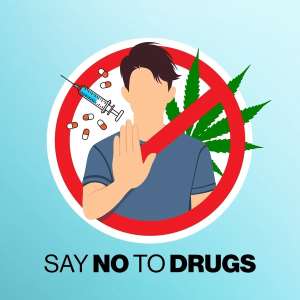
Ejura, one of Ghana’s fast growing municipalities, has long been celebrated for its rich agricultural base, vibrant culture and youthful population. However, beneath this promising landscape lies a growing public health emergency which is the alarming rise of drug abuse among the youth.
Drug abuse is no longer a hidden problem in Ejura. From the corners of lorry stations, ghettos and school neighborhoods, one can observe the silent spread of addictive substances such as marijuana, tramadol, codeine based syrups and other dangerous drugs. For many young people, these substances offer a temporary escape from unemployment, poverty or peer pressure. Yet the long term consequences have been devastating including broken families, deteriorating health and an increase in crime rates.
Health experts in the municipality have raised concerns about the surge in mental health cases linked to substance abuse. The Ejura Government Hospital and community health centers often lack the specialized facilities and personnel to address the psychological and physical toll of drug addiction. This gap in healthcare provision leaves many young people untreated, pushing them further into the cycle of abuse.
The political dimension of the problem cannot be overlooked. While politicians often highlight youth empowerment and health in their campaign speeches, real investment in rehabilitation centers, awareness campaigns and preventive health education remains minimal. This neglect not only endangers the future of Ejura’s youth but also undermines the community’s socio economic progress.
One remarkable intervention that has brought a glimmer of hope emerged from the Ejura Sabonline Electoral Area, where Honorable Abubakar Saddy Hussein, the Assembly Member, together with his Unit Committee members, took a bold step to confront the menace head on. With legal backing from the Ejura Sekyedumase Divisional Police Command, they launched a volunteer task force dedicated to fighting drug abuse, stealing and other deviant behaviors among the youth. What began as a local initiative quickly became a model of community action. Nearby electoral areas such as Gonja Line Abota, Ashakoko, Badukrom, Ahenboboano and Dagombaline, inspired by the positive results, replicated the initiative in their own communities.
The beauty of this effort was not only in the courage of the volunteers but also in the collective support it received. Religious leaders, political figures and traditional authorities all joined forces, lending credibility and moral weight to the campaign. Under their watchful eyes, the open abuse of drugs and the rampant smoking of marijuana that once plagued corners of Ejura have now become rare sights. This demonstrates that when leadership, community spirit and institutional support converge, meaningful progress can be achieved.
Yet as commendable as this initiative is, the battle is far from over. Community led volunteerism, though powerful, cannot completely substitute for structured health interventions and long term government investment. Ejura still needs well equipped rehabilitation centers, regular public education campaigns, youth empowerment programs and stronger law enforcement logistics. The encouraging results of the Sabonline model should serve as a call to action for other electoral areas and for national leaders to scale up support.
If this momentum is sustained and strengthened with additional backing from stakeholders at every level, Ejura can become not only a food basket for Ghana but also a shining example of how communities can safeguard the health and future of their youth.

 'Chief Justice was talking as a citizen; you have to look at the context in whic...
 Mandatory towing to remove broken-down, stationary vehicles from roads to begin ...
 Domelevo backs OSP probe into alleged GH¢70,000 payment to Appiagyei despite den...
 WAEC releases 2026 WASSCE results, cancels entire results of 861 candidates for ...
 Baffour Agyeman-Duah explains why profitability may not be only reason behind SO...
 Kofi Bentil defends Mahama’s dissolution of nine State Boards
 5-year-old girl dies after falling into water-filled manhole at Winneba
 Sierra Leone ex-president to return after treason case dropped
 'Explain how you spent your Common Fund' — Boako, Annoh Dompreh challenge Tano N...
 Ghana ends South Africa evacuation; brings home nearly 1,900

