




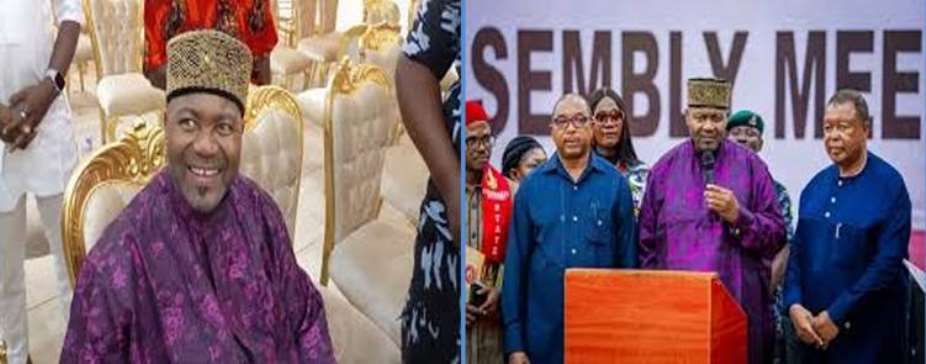
The agitation for a restructured Nigerian Federation that must return greater powers and resources to the federating units is no longer an abstract daydreaming in Nigeria’s public discourse. It has become the defining subject of national survival. From the struggles of the Middle Belt to fortify its independent identity to the cries of the South-East and the resource control demands of the South-South, a new federal order is being called into existence by voices that have become too persistent to ignore. Yet, the voices have chosen not to take for granted those who have persistently sought to sustain the old order which are equally entrenched, wielding both state power and elite patronage to frustrate change. They know it is going to be a battle, a battle of wits, and they are not only ready for it, but awaiting for it with eagerness.
Recent signals from the Middle Belt point to this fresh alignment of forces in the national conversation. Reports suggest that the people of the Middle Belt region have publicly appealed to the Igbo nation, affirming that they should no longer be regarded as enemies but as brothers and sisters. This appeal followed earlier symbolic gestures that carried much political weight. In June 2024, the Middle Belt Youth Council offered to provide accommodation to the Igbo, should they be forced out of northern Nigeria. This followed in the wake of an ultimatum issued by some northern youth groups who demanded that the Igbo vacate northern region within three months or face eviction. That statement captured the Middle Belt’s long-standing insistence that it should not be conflated with the “core North” and that its doors have always been open to people from the South-East, South-South and South-West without discrimination.
Though the Middle Belt youths do not have the authority to dictate the region’s official stance on national issues, their message resonated with the broader Middle Belt Forum, which has consistently projected partnership rather than hostility with the South. Since 2017, the Middle Belt Forum has maintained common grounds with Ohanaeze Ndigbo, Afenifere and the Pan-Niger Delta Forum, which led to forming the Southern and Middle Belt Leaders Forum. The collaboration of these federating units anchored on the pillars of first restructuring Nigeria, on fairness in rotational power sharing, in solidarity against marginalization and in resistance to hegemonic dominance by the core North. And always, this partnership culminated in joint communiqués, collective press briefings that highlighted their shared positions on key national issues.
In March 2024, the Middle Belt Forum endorsed the advisory from Ohanaeze Ndigbo that the Igbo should refrain from participating in hunger protests, calling Ohanaeze “a partner in our struggle for a better Nigeria.” In January 2025, the MBF congratulated the newly elected President-General of Ohanaeze, Senator John Azuta-Mbata, affirming a robust and cordial relationship and pledging continuity in shared programmes. These gestures reveal not only diplomatic courtesies but a deeper political alignment. The MBF’s repeated denunciations of threats to evict the Igbo from the North in 2017, 2024 and earlier years emphasise its consistent positioning as a defender of inclusion.
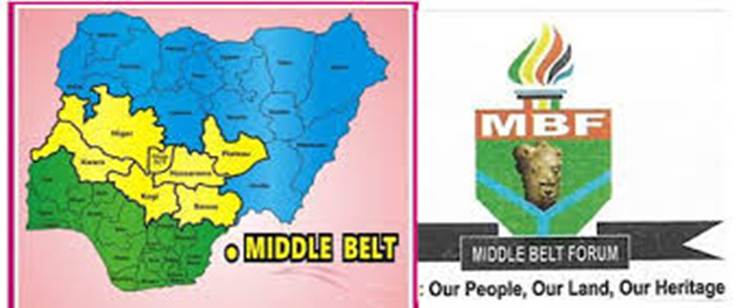
This cooperation is not restricted to the Igbo. In May 2022, the Southern and Middle Belt Leaders Forum, which included MBF, Ohanaeze, Afenifere and PANDEF, jointly demanded that the Presidency be zoned to the South-East. Their rationale was straightforward. Zoning to the South-East would symbolically and substantively promote reconciliation in a country that has been wounded by decades of ethnic suspicion and political exclusion. The Middle Belt Forum signed that communiqué alongside other leaders, signalling that the Igbo quest for fairness was also their quest.
When we examine the wider Nigerian political landscape, it becomes clear why this partnership has taken such firm root. The Middle Belt, geographically situated in the North but culturally and politically distinct from their dominating attitude, has long resisted attempts to be absorbed into the Hausa-Fulani hegemony. Historical tensions over land, ethnic identity, and the scourge that is Fulani herdsmen's violence had sharpened their sense of difference. For this reason, the MBF insists that the Middle Belt is not Northern Nigeria and will not be spoken for by northern elites. This defensive stance naturally pushed the Middle Belt into the arms of southern partners who share a similar experience of marginalization. Among those southern partners, the bond with Igbo is possibly the warmest. Both the Middle Belt and the South-East see themselves as victims of exclusion from Nigeria’s power structure. Both were profoundly impacted by the tragedies of the civil war, and both have consistently been denied access to the highest office of the land. This shared marginalization inevitably translated into empathy, and shared empathy naturally created the scope for political alliance. For the Igbo, the Middle Belt’s solidarity is a strategic reassurance that their calls for equity are not cries in the wilderness. For the Middle Belt, Igbo partnership legitimizes their demand for recognition as a region with its own destiny.
Yet, if these alignments and solidarities hint at a new Nigeria, the forces of resistance remain formidable. The entrenched political elite of the core North still derive enormous benefits from the status quo. For decades, the present federal structure has guaranteed them disproportionate control over oil revenues, political appointments and military dominance. Their hold on key federal institutions provides the levers through which they can resist demands for restructuring. Any movement toward resource control, genuine federalism or rotational power is perceived as a direct threat to the survival of this elite bloc. This explains why, despite multiple communiqués and public demands, the calls for restructuring have been consistently ignored or diluted by successive governments.
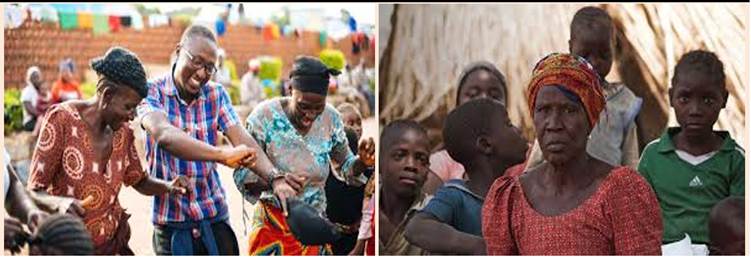 Nigerian families
Another potential undermining force is the country’s fragile political opposition. While socio-cultural organizations like MBF, Ohanaeze, Afenifere and PANDEF speak with relative consistency, the partisan opposition in the National Assembly often failed to translate those demands into legislative strategy. Fragmentation, internal rivalries, and the lure of co-optation by ruling party incentives frequently weakened the opposition’s resolve. Thus, the struggle for restructuring relied heavily on civic voices and regional platforms rather than parliamentary negotiation. Indeed, the opposition Peoples' Democratic Party woefully failed to produce Shadow Officers who would have worked as a responsible Opposition to point things out to the ruling government or offer alternative policies that the voters could buy. In fact, many believe that the APC and the PDP were the two sides of the same counterfeit coin, and they just proved their critics right by woefully failing to raise a Shadow Government in 10 years of APC dominance.
The socio-economic environment could also complicate the prospects of change. Rising insecurity, unemployment, hunger, and inflation create a climate of despair that can be exploited by reactionary forces. Protest movements such as the hunger protests of 2024 capture public anger but often dissipate without achieving structural reforms.
Indeed, the Middle Belt Forum’s endorsement of Ohanaeze’s advisory to stay away from such protests highlighted the tension between immediate survival struggles and long-term restructuring goals. Reactionary actors thrive in such confusion, redirecting grievances toward ethnic scapegoating instead of systemic reform.
There is also the problem of elite ambivalence in the South itself. While Afenifere as a socio-cultural organization maintains solidarity with MBF and Ohanaeze, segments of the Yoruba political elite have historically aligned with the North whenever it served their interests. This ambivalence occasionally weakens the southern coalition, leaving it vulnerable to divide-and-rule tactics. Similarly, among the Igbo political elite, there are those who seek accommodation with the status quo rather than radical restructuring. This has also further complicated the united front.
It is also important that the international dimension must be taken into consideration. Western governments and multinational corporations have vested interests in Nigeria’s stability as an oil producer and security partner in West Africa. Their preference for a “strong central government” often translates into tacit support for the status quo, even when the government is known to suppress restructuring demands. With these external pressures, the ruling elite feels little incentive to concede to reforms.
Despite these obstacles, the persistence of alliances like that between the Middle Belt Forum and Ohanaeze suggests that the dream of a New Nigeria is not that far-fetched. Their repeated communiqués, symbolic gestures of solidarity, and consistent advocacy for fairness demonstrate that civic will is very much alive. More importantly, they reveal that Nigeria’s regional blocs are capable of transcending old enmities in pursuit of common goals. The Middle Belt’s open declaration that the Igbo should see them as brothers and sisters, while not an official state policy, carries immense symbolic weight. It tells the story of a Nigeria that can redefine itself through mutual recognition and needful partnership.
The task now is for the proposition, in all its forms, regional forums, socio-cultural groups, political parties, and civil society movements, not to relent. They must resist co-optation, maintain unity, and consistently articulate the case for restructuring. For if the proposition weakens, the entrenched forces of the old order will continue to prevail, and Nigeria will remain trapped in cycles of insecurity, poverty, and exclusion.
A new Nigeria is indeed possible, but the struggle to achieve it cannot be half-hearted. It requires vigilance, persistence, and above all, solidarity across regional and ethnic lines. Those opposed to restructuring must never be taken for granted, for in their unity to centralise economic and security power in Abuja lies the failure of transforming Nigeria from a wounded giant into a federation that finally does justice to all its peoples. And all true Nigerians must resist this.


 Court to rule on Wontumi’s bail pending appeal on November 4
 Police arrest eight in crackdown on suspected drug trade at Okaishie Drug Lane
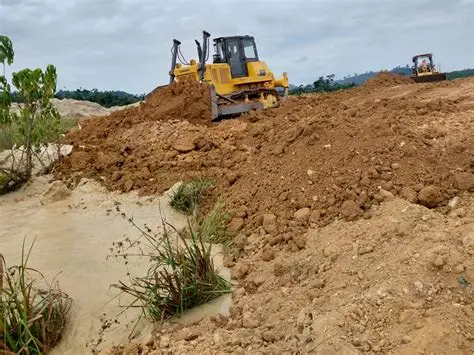 EPA orders halt to reclamation, restoration projects operating without permits
 ECOWAS court elects Charlyne Brumskine as President, Aihou as Vice-President
 EPA orders immediate halt to unapproved land reclamation, mine-site restoration
 Lawyer sues Ghana Standards Authority over restrictions on importation of used v...
 20% tax on TikTok, Uber, Bolt, Netflix, others begin today
 Wife beater jailed three months with hard labour
 Korle Bu appeals for more doctors, nurses amid pressure on emergency centre
 Gamal Gorkeh Nkrumah son of Ghana’s first President dies in Egypt


