




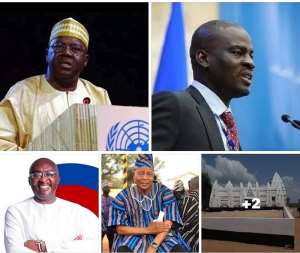
Ghana, a beacon of democracy in West Africa, prides itself on being a peaceful, multicultural, and multi-religious society. Yet beneath the surface of national unity lies a subtle but deeply entrenched pattern of religious, ethnic, and regional discrimination, particularly when it comes to the highest office in the land, the presidency.
Despite constitutional guarantees of equality, it remains a political reality that a Muslim of Ghana, faces significant, if not insurmountable, barriers in becoming president through direct electoral victory. This is not due to lack of competence, leadership quality, or vision among Muslim politicians, but rather due to the complex interplay of religion, ethnicity, geography, and longstanding social perceptions in Ghanaian society.
Ghana’s population is estimated to be around 33 million. According to the 2021 Population and Housing Census, roughly 71% of Ghanaians identify as Christian, while Muslims constitute about 20%, with the remaining population comprising traditionalists, atheists, and other faiths.
Geographically, Muslims are largely concentrated in the northern regions (Northern, North East, Savannah, Upper East, Upper West), as well as in some Zongo communities in southern urban centers. In contrast, the Christian population is heavily concentrated in the southern regions, particularly in the Ashanti, Eastern, Central, Western, and Greater Accra regions, which are not only more populous but also more economically and politically influential.
In practical terms, this demographic spread means that national elections are often decided by the Christian-majority south, where voter behavior is subtly influenced by shared religious identity. A candidate’s religious background, while not always openly discussed, plays a silent yet powerful role in how voters align themselves, especially in closely contested elections.
Ghana’s north-south divide is not merely geographical. It represents historical, economic, and political disparities that go back to the colonial era and continue to shape social dynamics. The north has long been perceived, wrongly or rightly, as less developed, less educated, and less economically powerful.
This perception feeds into national politics. Many in the southern parts of Ghana, whether consciously or unconsciously, view northerners as better suited for supporting roles rather than leading ones. This perception has reinforced a political tradition where northerners, who are often Muslim, are acceptable as vice presidents but rarely as presidential candidates.
The track record reflects this:
• Vice President Aliu Mahama, the first Muslim to serve as Vice President (under President John Agyekum Kufuor from 2001 to 2009), was widely respected, but when he attempted to contest for the NPP flagbearership after Kufuor, he was rejected by delegates of his own party. The flagbearer slot went to Nana Addo Dankwa Akufo-Addo, a Christian from the Eastern Region.
• Dr. Mahamudu Bawumia, the former Vice President, is also Muslim and from the north. Despite his competence and rising popularity, there is already vocal resistance, often couched in “electability” arguments, about whether a Muslim candidate can actually win the presidency in Ghana’s current political climate. Even within his own party, the NPP, his religious and regional identity remains a subtle hurdle.
Ghanaians do not vote purely on issues, policies, or ideology. As much as political elites may preach about development, economic transformation, and social justice, voter behavior often boils down to identity politics, and this includes religion, tribe, and region.
• In many parts of southern Ghana, particularly in the Christian-dominated regions, there exists a quiet but persistent bias, the belief that a Christian president better represents the national character.
• In Muslim-majority or Zongo communities, voters are generally more open to Christian candidates and have historically shown a willingness to support them. The reverse, however, is not often the case.
This asymmetry of religious tolerance in electoral politics is one of the most striking contradictions in Ghana’s democracy.
The only realistic route by which a Muslim, especially a northerner, can currently become president in Ghana is through succession as a sitting vice president. This would happen in one of two ways:
1. Constitutional succession, where a sitting Christian president dies, resigns, or is incapacitated, leading the Muslim vice president to assume office (as happened with John Mahama, a Christian, succeeding Atta Mills).
2. Being elected president after serving successfully as vice president, assuming the Muslim vice president gains national trust and visibility through that role. Even this route is uncertain, as shown by what happened to Aliu Mahama.
In both cases, a Muslim candidate only becomes president because they were first made acceptable to the southern Christian electorate by “proving themselves” in a subordinate role.
Yes, change is possible, but only through deliberate national introspection and long-term cultural transformation.
Ghana’s democracy has matured in many ways, but it remains a democracy of limits, particularly for those whose identity does not align with the dominant religious and regional power centers. While we often celebrate our peaceful coexistence, we must also confront the silent exclusions within our system.
If Ghana is ever to truly fulfill its promise as a united, inclusive, and equitable society, it must break free from the barriers of identity politics. Until that day comes, the harsh reality remains, a Muslim is unlikely to become president of Ghana through direct voting unless first legitimized through the vice presidency under a southern Christian president.

 Don’t let speed of information become your judgement — Chief Justice tells new l...
 ‘Big Push’: Government assures contractors of prompt payments
 GES to develop plan to recover teaching time lost during teachers’ strike – Clem...
 Fire guts Kumasi Central Market near Aboabo Station
 'All human emotions': French astronaut Sophie Adenot's first words since returni...
 French astronaut recounts 'astonishing' emotions after return to Earth
 India's 'cockroach' movement chief detained ahead of major protest
 Strike suspended, but negotiations for teachers’ benefits not over — GNAT
 CSA rejects FBI claims, insists Ghana led cybercrime operation
 Govt suspends enforcement of ban on preaching in moving vehicles



Comments
Great observation but 2 things are overlooked. 1. Party ideology or mindset, 2.Divinity. In the case of 1 the possibility of a northerner and to a large extent a muslim becoming a president of Ghana is highly impossible under the NPP. You gave a good example in the case if Aliu Manama. The NPP see northerners and Muslims as hunting dogs whose only duty is to hunt votes for them to win and then be forgotten of or rewarded with 'ceremonial positions'. Dr. Bawumia with all his economic brilliance ...