




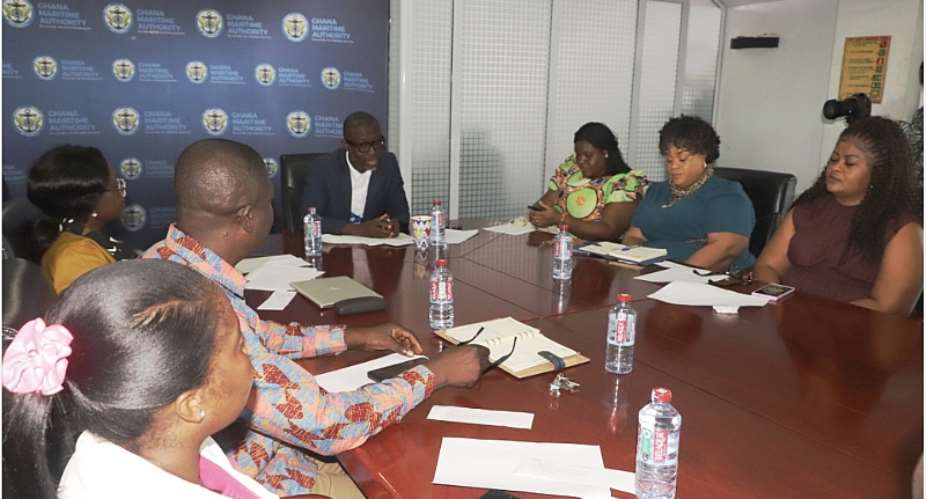
Ghana is making significant strides towards full compliance with the International Labour Organization (ILO) Convention 188 on Work in Fishing, with authorities targeting October 2025 for total compliance, according to Mr Michael Angmor, General Secretary of the National Union of Seamen, Ports and Allied Workers (NUSPAW) of TUC Ghana.
He was speaking at a meeting of the National Tripartite Committee on the first anniversary of Ghana’s ratification of the ILO Work in Fishing Convention (C188).
Although Ghana ratified the convention in August 2024, implementation of its provisions began in 2022. The convention, which came into force globally in 2017, seeks to ensure decent working and living conditions for fishers, as well as insurance protections.
According to Mr Angmor, early adoption was supported by the ILO’s 8.7 Accelerated Lab Project, which brought together regulators, operators and fishers to establish the Work in Fishing Committee.
He said the Ghana Maritime Authority (GMA) would issue Maritime Labour Certificates to vessels that meet the required labour standards.
“Currently, I will say we have gone very far and most of the issues we brought to the table have been addressed, with only a few outstanding,” he said.
Mr Angmor explained that Ghana has already enforced most of the key provisions of the convention. No vessel can now sail without a written contract for fishers. Salary structures are required to be negotiated and approved, while pre-departure inspections are mandatory. Crew cabins must also be provided on vessels, and payments to fishers are required to go through banks, ending the informal “on-table” cash payments.
“The convention has brought a lot of good things. We expect that the remaining 25% of compliance will be achieved from October, after which we will be fully compliant,” he emphasised.
Mr Awudu Inusa, Chairperson of the Work in Fishing Convention, noted that implementation has started with industrial vessels measuring 24 metres and above. The next stage will cover canoes and smaller fishing boats.
“After that we will target canoes and other boats used for fishing to ensure that the living conditions of fishermen are well catered for,” he said.
Mr Inusa added that monitoring and enforcement are carried out through a mix of inspections and fisher-led reporting. “Fishermen take videos and send them to the authorities for maritime labour inspectors. Then, when vessels arrive at their destination, what is not right on the ship is corrected before it leaves,” he explained.
The Work in Fishing Tripartite Committee is responsible for ensuring effective implementation. It brings together regulators such as the Ghana Maritime Authority, Fisheries Commission and the Labour Department, alongside workers’ representatives including the National Union of Seamen, Ports and Allied Workers (NUSPAW) and the Maritime and Dockworkers Union (MDU). Employers are represented by the Ghana Tuna Association and the Ghana Industrial Trawlers Association.
“This tripartite structure is responsible for implementation and ensures continuous dialogue and cooperation so that the law works within the convention,” Mr Inusa said.
While the convention has greatly improved working and living conditions for fishers, Mr Jerome Selorm Diamesi, a Board Member of the Ghana Industrial Trawlers Association, highlighted the cost implications for industry.
“Although the convention has helped improve the salary and living conditions of fishers, everything is coming at a cost to the industry – from fixing the vessels to training seafarers and other requirements. It is all adding to industry costs,”
Mr Diamesi, lamented the loss of trained seafarers to overseas opportunities. “We have trained about 600 seafarers and at the end of the day, when they are given certificates, they run away to the UK,” he said.
He further explained that while foreign companies receive grants to support their operations, Ghanaian companies do not enjoy similar support. He therefore urged the government to provide assistance to help local firms manage their own vessels.
Mr Diamesi added that the cost of training is very high, noting that a proposal has been tabled before the Ghana Maritime Authority to localise certification. This, he argued, would curb the migration of trained seafarers.

 Afari Hospital Project: “They slept on a 3-year project for eight years” – Brogy...
 Chairman Wontumi seeks plea deal in GH¢30m Exim Bank fraud case
 GH¢7 million Navrongo Youth Resource Centre stalled for nearly nine years amid l...
 BECE graduate feared dead after drowning in River Osen
 Nigerian man escapes from custody during prison van transfer in London
 Claim salaries of presidential staffers have increased under Mahama a flat lie —...
 Africa's 2026 World Cup teams carry continent's hopes — AU
 Niger criminalises same-sex relations with jail terms
 Over 260 Nigerians fleeing xenophobic attacks in S. Africa return home
 How angry mob vandalised Forestry Commission timber checkpoint housing structure...


