




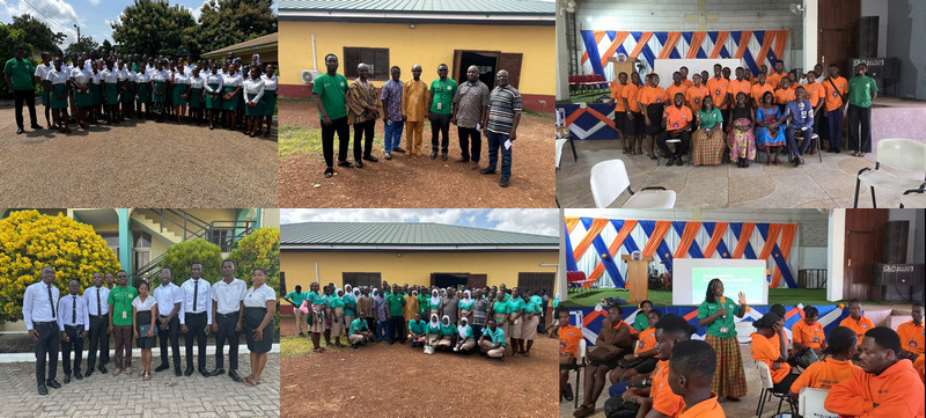
In a significant step toward fostering environmental consciousness and sustainability education in Ghana, the Rights of Nature Ghana Movement (RoNAG) has successfully concluded a week-long series of interactive workshops on the Rights of Nature (RoN) across six Colleges of Education and the Department of Teacher Education at the Kwame Nkrumah University of Science and Technology (KNUST).
Held from June 1 to June 5, 2026, the educational outreach initiative engaged hundreds of student-teachers and academic staff from Bimbilla College of Education, Tamale College of Education, Bagabaga College of Education, Wesley College of Education, St. Joseph’s College of Education, Akrokerri College of Education, and the Department of Teacher Education at KNUST.
The workshops formed part of RoNAG’s growing national campaign to promote the recognition of nature as a rights-bearing entity deserving legal protection, respect, and ethical consideration.
Building a New Generation of Environmental Stewards
The initiative received strong institutional backing from the Dean of the Faculty of Educational Studies at KNUST, Professor Akwasi Acheampong, who encouraged the participation of student-teachers and staff across KNUST’s affiliated Colleges of Education.
Professor Acheampong emphasized the importance of equipping future educators with practical knowledge and skills to integrate the principles of environmental stewardship and nature’s rights into basic school education. According to him, nurturing ecological consciousness among student-teachers would contribute significantly to raising future generations that live sustainably and harmoniously with the natural world.
The workshops sought to deepen participants’ understanding of the Rights of Nature philosophy and its emerging legal frameworks around the world. Facilitators challenged participants to critically examine the prevailing anthropocentric worldview—which places humans at the centre of existence and often treats nature merely as a resource for economic exploitation—and to consider an alternative ecocentric perspective that recognizes the intrinsic value and rights of all living systems.
Reconnecting with Indigenous Wisdom
One of the most compelling aspects of the workshops was the exploration of Ghana’s rich indigenous environmental heritage. Through carefully curated audio-visual presentations, reflective discussions, and participatory learning activities, participants examined traditional cultural practices that embody principles consistent with the Rights of Nature philosophy.
Facilitators highlighted practices such as libation, sacred grove conservation, totemic traditions, traditional agroforestry systems, indigenous hunting and fishing regulations, environmental taboos, proverbs, cultural symbols, folktales, and folksongs. These ancestral knowledge systems, participants learned, historically fostered respectful and sustainable relationships between human communities and the natural environment.
The workshops demonstrated how these traditional values align remarkably with contemporary global efforts to recognize the legal rights of rivers, forests, mountains, and other ecosystems.
Participants also explored inspiring examples from countries that have successfully incorporated nature’s rights into their legal systems, while reflecting on emerging Rights of Nature initiatives in Ghana and elsewhere around the world.
From Awareness to Action
Moving beyond theory, the workshops emphasized practical application. Participants engaged in individual and group exercises that encouraged them to examine how indigenous environmental ethics can be revitalized to address modern ecological challenges.
Student-teachers were tasked with developing lesson plans that integrate Rights of Nature concepts into basic school education using Ghanaian cultural knowledge and local environmental contexts. They also participated in strategic planning exercises aimed at identifying concrete actions they could undertake within their institutions and communities to promote environmental responsibility and ecological justice.
To reinforce personal commitment, every participant received a pledge card on which they outlined specific actions they intended to take in support of nature’s rights and environmental sustainability. Many pledged to become advocates for ecological protection, environmental education, and responsible stewardship of natural resources.
Growing a National Movement
A major outcome of the workshops was the enthusiastic response from participants, many of whom signed up to become members of the Rights of Nature Ghana Movement. New Rights of Nature Clubs were established across the participating institutions, creating a platform for ongoing advocacy, education, and community engagement.
Membership in the newly formed clubs ranged from 80 to 150 volunteers per institution, reflecting growing interest among young educators in environmental activism and ecological governance.
The volunteers unanimously committed themselves to serving as ambassadors for nature and champions of the movement to secure legal recognition and protection for nature’s rights in Ghana.
RoNAG pledged its continued support for the clubs by providing mentorship, educational resources, and technical guidance to ensure the sustainability and effectiveness of their activities.
Strong Institutional Support
The workshops also received enthusiastic support from principals, lecturers, and administrative staff across the participating institutions. Many expressed a strong desire to champion nature-based initiatives within their campuses and surrounding communities.
Several staff members indicated their willingness to serve as patrons of the newly established Rights of Nature Clubs, further strengthening the movement’s presence within Ghana’s teacher education sector.
Dedicated Team Behind the Initiative
The workshops were facilitated by a committed team from the Rights of Nature Ghana Movement led by Dr. Dickson Adom, Director of RoNAG.
The facilitation team included Dr. Prince Edem Dzakpasu, Advocacy and Community Outreach Coordinator and lead coordinator of the workshop series; Dr. Stella Afi Makafui Yegblemenawo, Monitoring, Evaluation and Women Activism Coordinator; Mr. Kwame Adjei Omanhene Boateng, Environmental and Nature Rights Law and Governance Expert; Mr. Marvellous Mensah, President of the RoNAG Youth Wing; Ms. Maureen Jones Nkrumah, Vice President of the Youth Wing; Isaac Perfect Kwame Amede, Organising Secretary of the Youth Wing; and Jeremiah Ampah, a member of the Youth Wing.
A Vision for Ghana’s Ecological Future
As environmental challenges such as deforestation, biodiversity loss, pollution, and illegal mining continue to threaten Ghana’s ecological integrity, the Rights of Nature Ghana Movement believes that transformative change must begin with education.
By empowering future teachers to embrace and teach ecocentric values rooted in both indigenous wisdom and contemporary environmental thought, RoNAG is helping to cultivate a generation capable of reimagining humanity’s relationship with nature—not as owners and exploiters, but as respectful partners within a shared community of life.
The success of the nationwide workshop series marks an important milestone in Ghana’s growing Rights of Nature movement and signals a promising future for environmental education, ecological justice, and sustainable development across the country.
Source: Rights of Nature Ghana Movement

 New DStv sports package will save subscribers over Ghc500 monthly – Sam George
 Your past prescriptions never helped developing countries - TOR MD tells IMF
 Crude Distillation Unit turnaround was funded from TOR's internally generated fu...
 Trump offers $1 million for tipoffs leading to vote fraud conviction as midterms...
 UN cites 'ethnic cleansing' concerns around Israel's Palestinian displacement op...
 UCC-UTAG demands clearer boundaries for GTEC’s regulatory role to avoid interfer...
 Mahama congratulates Lula da Silva on ‘well-deserved’ re-election as Brazil Pres...
 Mahama arrives in Moscow to push for Russia-Ukraine ceasefire at Russia–Africa S...
 'Irresponsible media coverage is hurting Obuasi SHTS abuse probe' – Gender Minis...
 Foreign Affairs Ministry seeks names of evacuees allegedly shortchanged in GH¢5,...


